Fraternizing with the Enemy
Published: 26 April 2026
By Cianna Lee
Special to the Doughboy Foundation web site
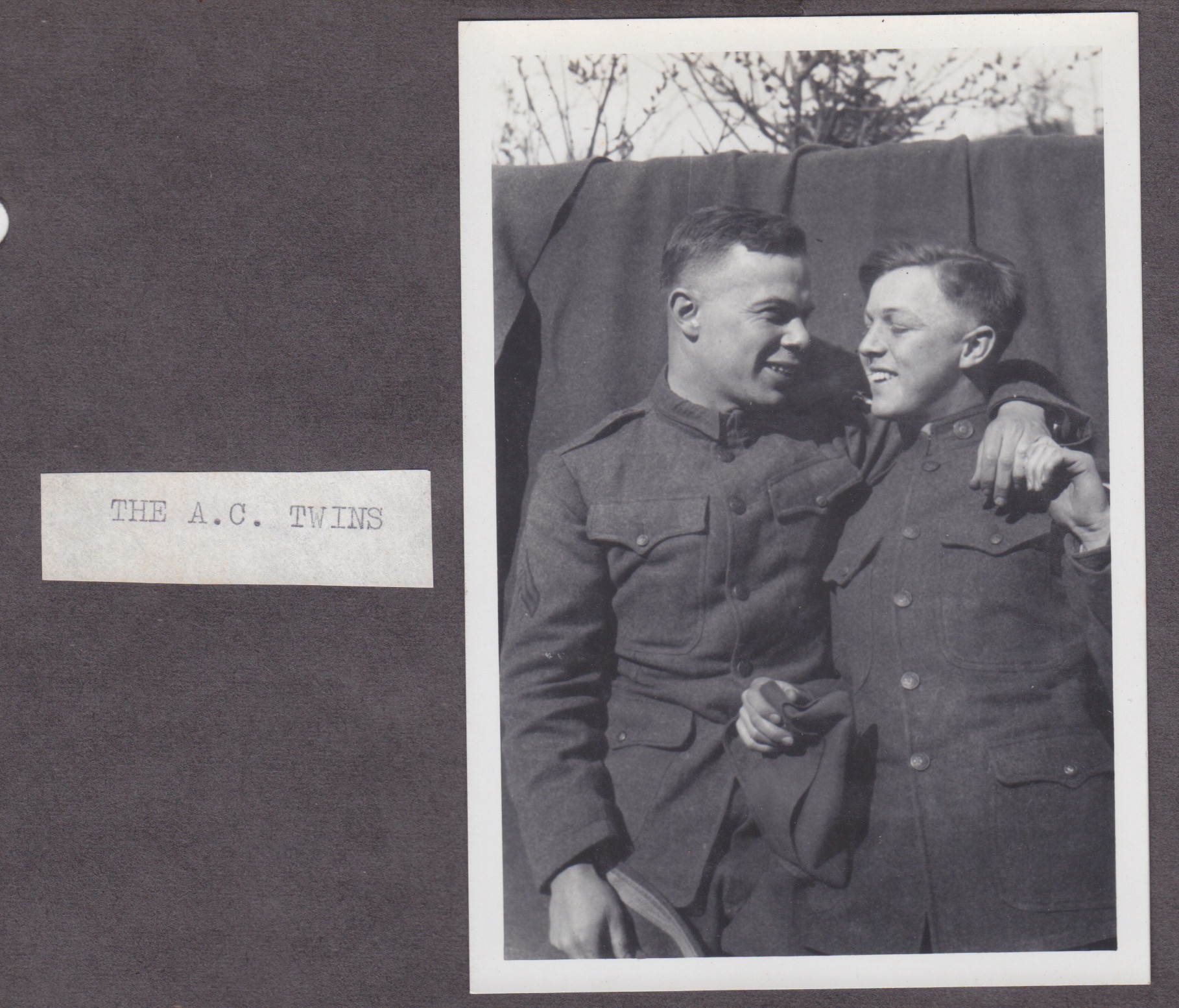
Image of McCorkle & Thomas
Eugene “Reynold” Thomas (right) with his high school and Marine Corps buddy Lou "Mac" McKorkie in France during World War I.
Eugene “Reynold” Thomas was born in 1898, in Pennsylvania, to George and Evelyn Thomas. In 1917, he would enlist in the war as a marine, and see action. After the armistice was signed, he was sent to occupy Germany with the rest of his detachment. During that time, he sent a series of letters to his family describing what it was like in Germany at the very end of the war and during the German occupation (1919). (One of his stories about his Occupation experiences, “Seeing Tina Home,” was previously published on the Doughboy Foundation website.) Later, he wrote a story highlighting some of the experiences he had with his high school buddy “Mac” during the war and during the occupation that followed. In the fourth article showcasing his WWI experiences, here’s more from Thomas about his adventures with (and because of) “Mac.” (Part one of the series is here.) (Part two of the series is here.) (Part three of the series is here.)
For the next two weeks, we ate – and how! Our enemy friends are and their friends ate, white bread for our landlords, all they wanted and with butter on it to boot, to say nothing of bread and jam for our enemy kids.
Mac and I made out all right too. It was a pleasant sensation to see what a German fray could do with a stove, given a few of the proper ingredients. As I said that was for two weeks, then conditions curdled.
All of this was indoors and very much on the quiet, of course, for orders against fraternizing were still strictly enforced, to say nothing of what a military court might have to say about stealing a truckload of government rations under government protection for the government’s enemies in a government truck.
On this day of infamy, I was returning by motorcycle sidecar from an errand to Brigade Headquarters. As we were passing near our billet just fifteen minutes before quitting time at the office, I asked the driver to drop me off. There’s no use driving on overtime, so I walked to the billet. This put me home about half hour earlier than usual.
Much to my chagrin, as I approached the billet, little Herman, the ten year old youngster of the house ran out to meet me on the street. He was jabbering away in German as though I understood the terrible language. I cuffed him one for speaking to me on the street.
He knew better, both his parents and Mac had told him that it was against the law to talk to Americans on the street, but he was too excited to stop.
As I came up the stairs Herr Veibahn was there to meet me and right behind him Minnie, his daughter, and Frau Veibahn, who looked as though she was just about to begin or had just finished crying. They were all talking frantically. They looked frightened.
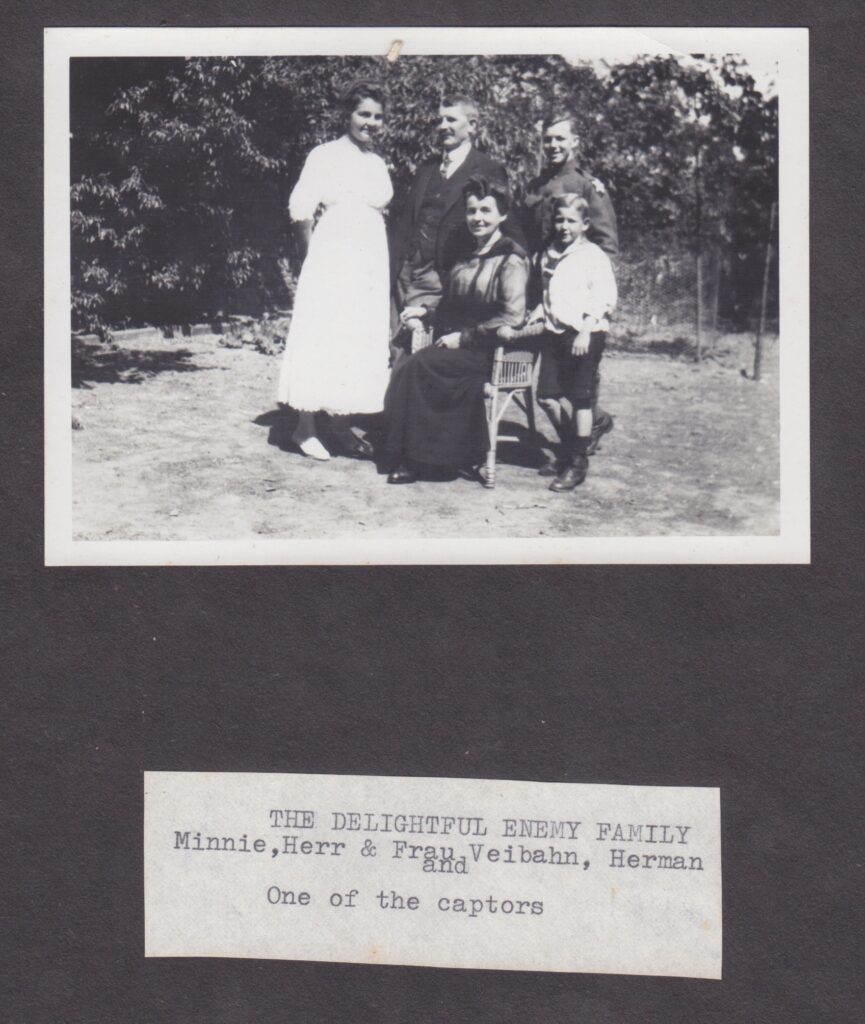
I wondered if she thought she was late with our supper because of my early arrival and making all this fuss or maybe she burned the toast. These sort of things always worried poor ole Frau Veibahn and caused excessive apologies that Mac had to waste time translating to me to satisfy her.
Holy cow, here at the top of the stairs are all the neighbors too. Frau Remy and her daughter Elsa, Herr Wagner and his six foot beauty Tina. Maybe something was wrong. All eight of them were jabbering away at the same time now. I had to dodge enthusiastic gesticulations. Perhaps the place had been robbed.
They were pushing and pointing to our room. I hurried up. The place was painfully clean, as usual. The feather beds were in place, both our dressers were in order as were the two big comfortable chairs, the writing desk and its chair. Only the desk was in slight disorder, an open book and a few papers scattered on top, but she was always reluctant to touch these things. Of course, all my family and girl pictures were cheerfully and properly at their place, either stuck in the side of the mirror or hanging on the wall. Mac’s wife was sitting quietly on his dresser.
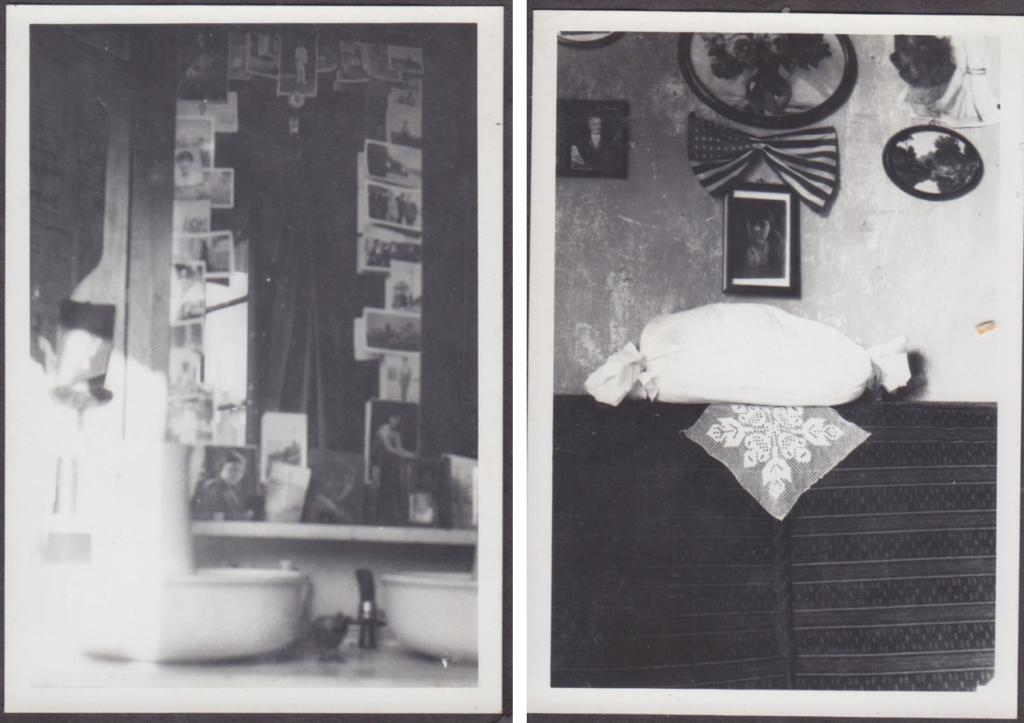
Photos of the room that Reynolds and Mac occupied in the German house.
Everyone was still talking at the same time and at the top of their voice, but I still couldn’t understand.
Finally, when I saw old man Veibahn pointing under the bed and Minnie pulling open a bureau drawer and pointing with her finger and both of them talking frantically at the same time, it dawn on me that out of this loud discord I was hearing the word “offitzer” repeated many times by both of them, in fact all of them.
I began to understand and fear closed in on me like an avalanche. I yelled my best German at them, “Was an officer in here looking around?” “Ya, ya un grossa offitzer un soldatun.” “Did he have a red band on his arm?” “Did he ask you our names?” Nomesm Nama? “Ya, ya, offitzer Tomas and bounced his head.” “Is he coming back?” Oh, Lord, they can’t understand me, they are as dumb as I am when it comes to talking. We’re pinched sure. That M.P. Lieutenant and an M.P. have been here and caught us with the goods.
“Get out of here, all of you. Rousemit, beat it. I suppose you told him there was more under the sink in the kitchen too. Never mind, just beat it!”
The clerk at the artillery Message Center let me use his phone. “Doodlebug one, please. Sergeant McCorkle please. Hello, Mac. Come around to the billet quick — Yes, there is a big hurry — you have? Well, you can finish that tomorrow in the brig. You’ll have lots of time. Come ‘round here on the double. I don’t know what’s wrong, that’s what I want you for, but I’ve a sneaking idea what it is. Shut up —and hurry up, in order named.”
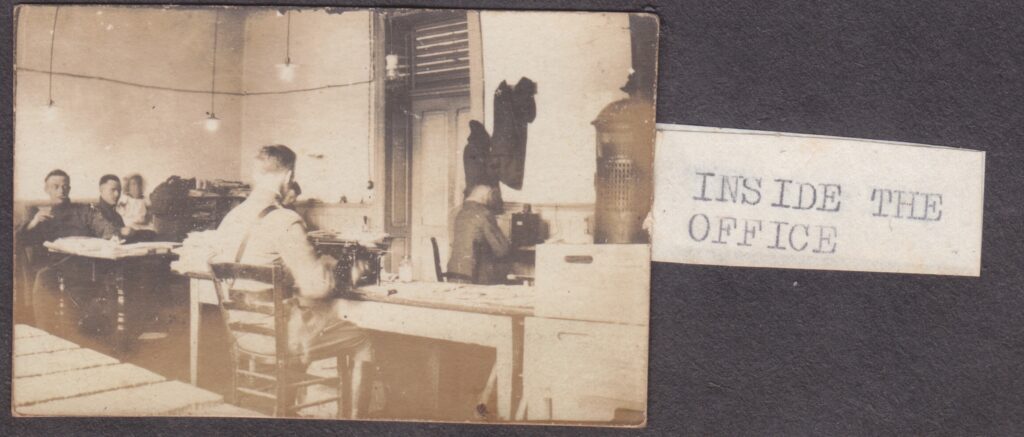
I waited at the corner for him, no use going back among those frightened Dutchmen. Couldn’t learn anything anyhow.
Mac didn’t make such bad time, at that. He puffed up to me with an expression as though he had guessed it.
“Well, what is it, you been caught for not reporting back at the office? Captain Norton was asking about you.”
“Don’t be so damn optimistic. A lieutenant of M.P.’s has broken into the billet with a soldier, found all the swag, and knows we’ve been feeding the Germans and fraternizing with them.
“Who told you all this?”
“The family and all the neighbors.”
As we entered the house they all started on Mac as they had me, but a couple of growls had them quiet and Mac was at work learning the details from Frau Veibahn, for it was she who let them in and showed them to the room when they told her to. Judging from Mac’s face it must be worse than I’d discovered and Frau Veibahn looked miserable. I felt sorry for her.
“What’s the old lady so scared about, Mac, she’s not going to be court martialed?”
“The Civil Police, stupid. They will probably all get on the “black list” for fraternizing with us. A fine mess you’ve got us all in. Come up to the room.”
Friend and foe alike followed Mac up to our room and crowded in. The exercise of walking up the stairs must have loosened their tongues, for once in the room everybody started in at the same time again. I was standing back by my washstand. Quite accidentally my eye fell on a plain white calling card. I turned it over. I read it. I almost fell over.
I pushed my way through the enemy lines surrounding Mac and shoved the card under his nose.
“Here, read this. It’s in English.”
He never even touched it, so I held it under his nose while he read:
“Lieutenant Robert Parks
Chaplain, 5th Regiment, U.S.M.C.
Dear Tommy:
Just stopped in to say “hello”. Have your old friend Parker with me. Sorry we missed you. It looks as though you were about ready to have another feed. I hope you invite me.”
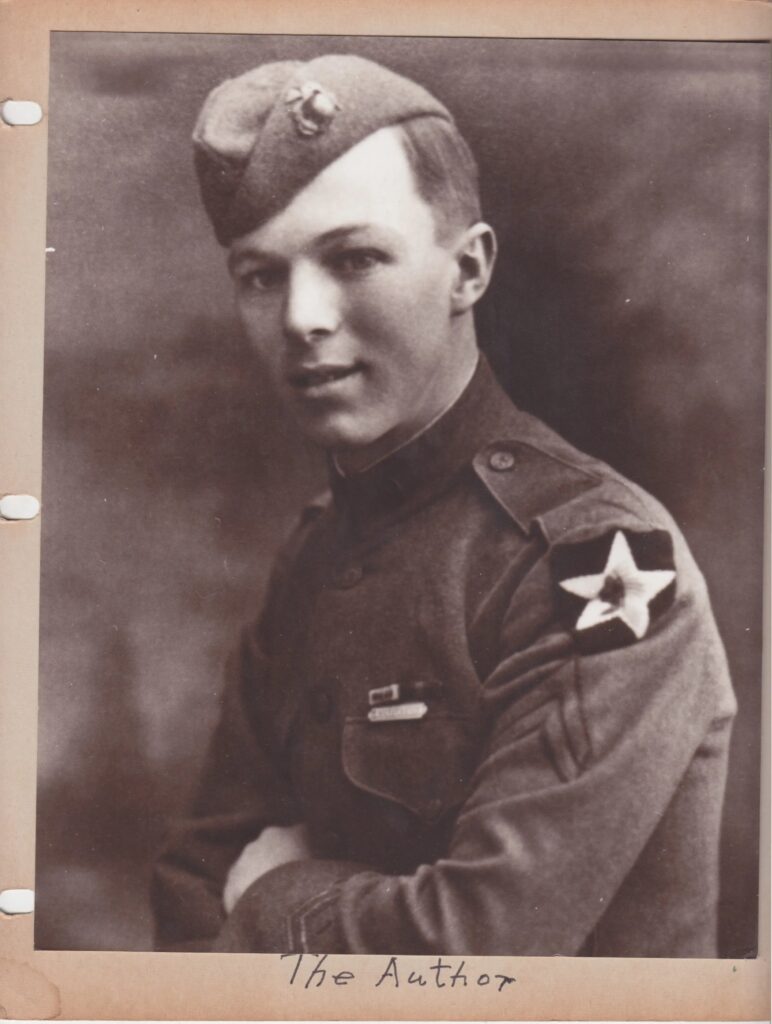
Eugene “Reynold” Thomas
In August of 1919, Reynold would be sent home to New Jersey.
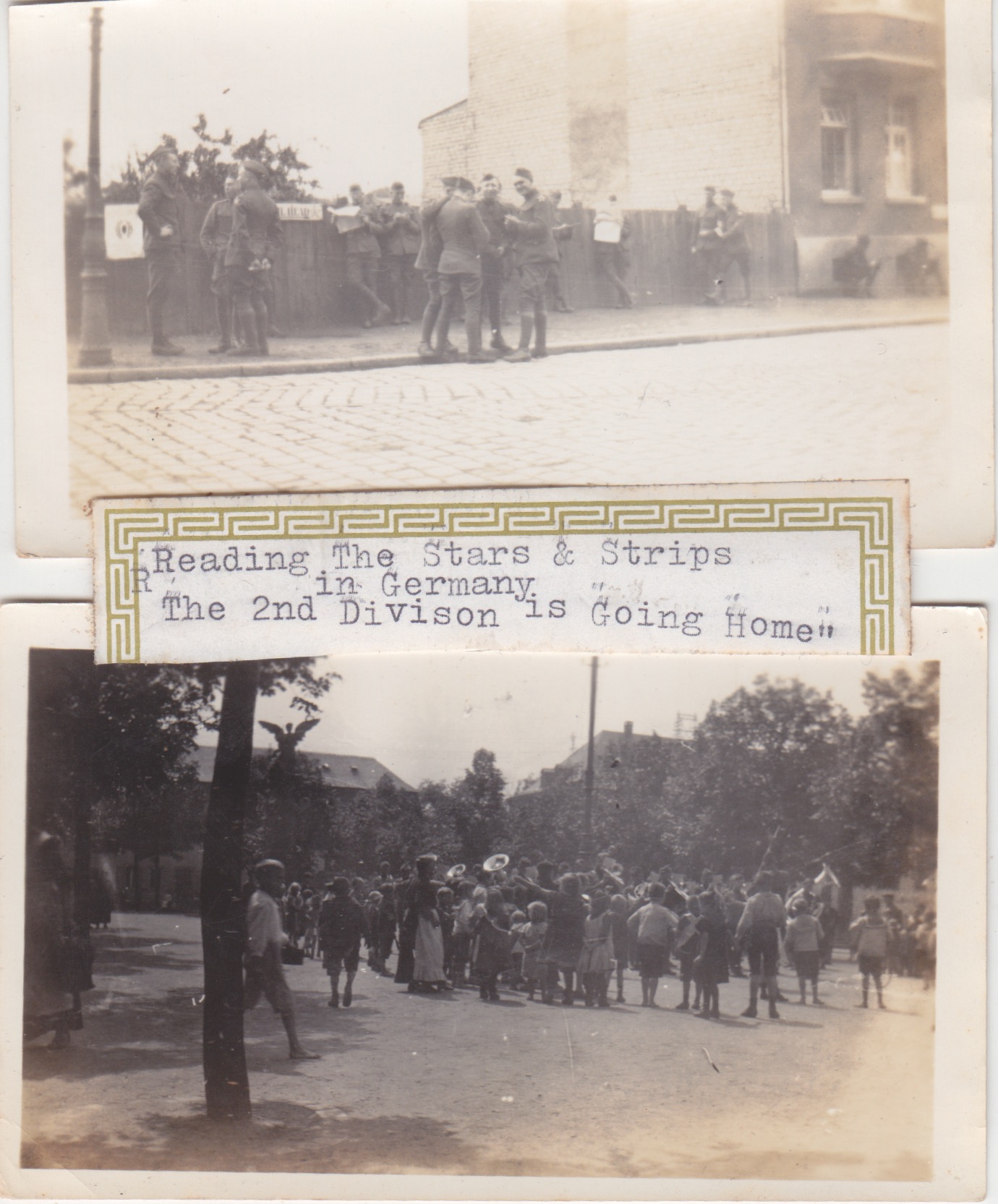
He would move to Harvey Cedars, NJ, working in his uncle’s eel grass business. Later, when he was working in Manhattan, he met his wife, Josephine Lehman, an editor and ghost writer for Lowell Thomas. They married in 1931 and two years later, at the depth of the Great Depression, moved back to Harvey Cedars, where he became a fisherman in order to “ride out the Depression.” He did not succeed at this and eventually started a dredging company, which became a success. In 1955, he was elected mayor, and continued to be a public servant until his death in 1983. Reynold’s daughter, Margaret, is a writer with Down The Shore publishing, writing about local history and a book focused on her mother’s participation in World War I. You can find her books here.
Cianna Lee is a Senior at Bennington College in Vermont.
External Web Site Notice: This page contains information directly presented from an external source. The terms and conditions of this page may not be the same as those of this website. Click here to read the full disclaimer notice for external web sites. Thank you.