“Oh, so you’re the Marine.”
Published: 16 February 2026
By Cianna Lee
Special to the Doughboy Foundation web site
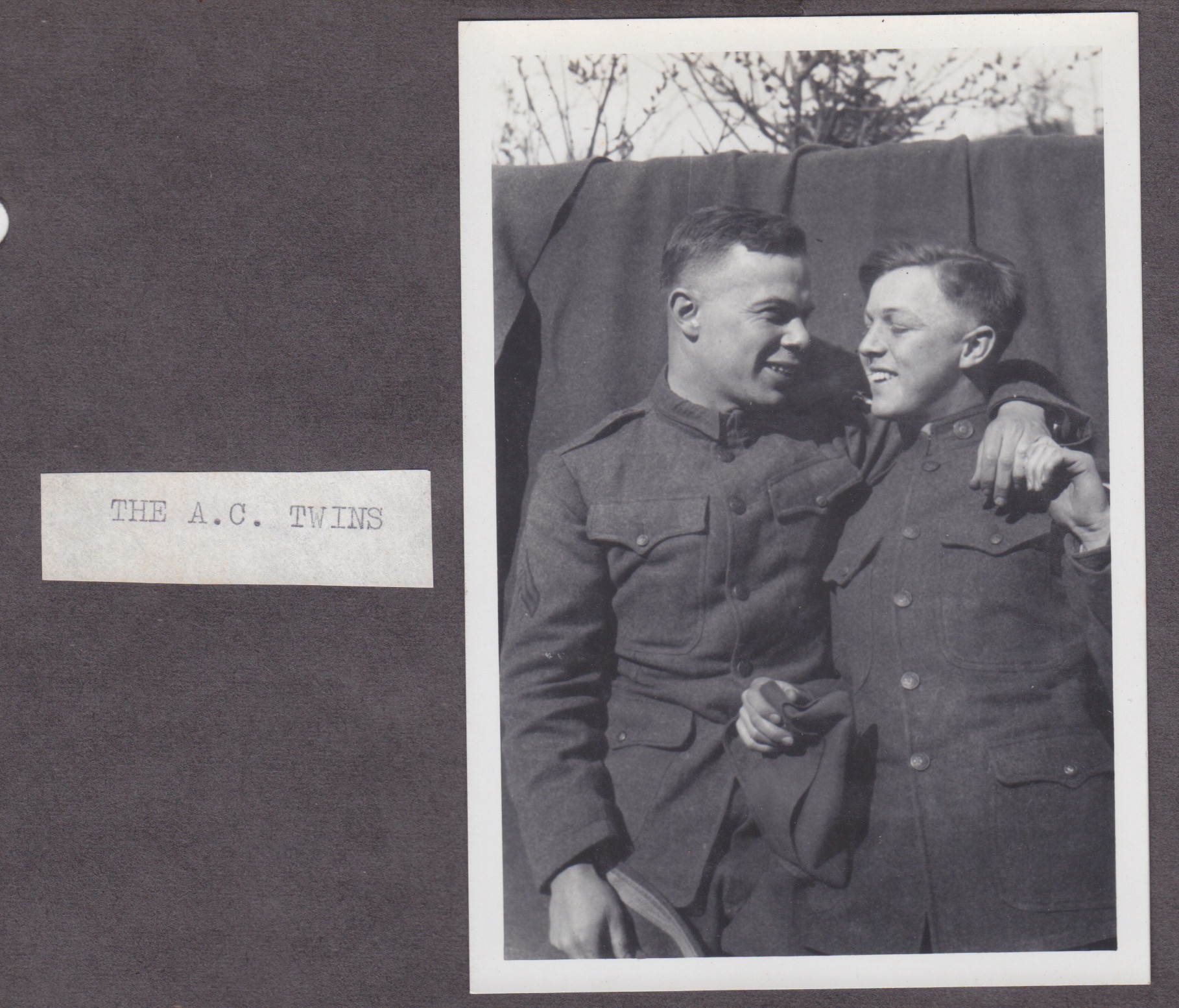
Image of McCorkle & Thomas
Eugene “Reynold” Thomas (right) with his high school and Marine Corps buddy Lou "Mac" McKorkie in France during World War I.
Eugene “Reynold” Thomas was born in 1898, in Pennsylvania, to George and Evelyn Thomas. In 1917, he would enlist in the war as a marine, and see action. After the armistice was signed, he was sent to occupy Germany with the rest of his detachment. During that time, he sent a series of letters to his family describing what it was like in Germany at the very end of the war and during the German occupation (1919). (One of his stories about his Occupation experiences, “Seeing Tina Home,” was previously published on the Doughboy Foundation website.) Later, he wrote a story highlighting some of the experiences he had with his high school buddy “Mac” during the war and during the occupation that followed. In the second of four articles showcasing his WWI experiences, here’s more from Thomas about his adventures with (and because of) “Mac.” (Part one of the series is here.)
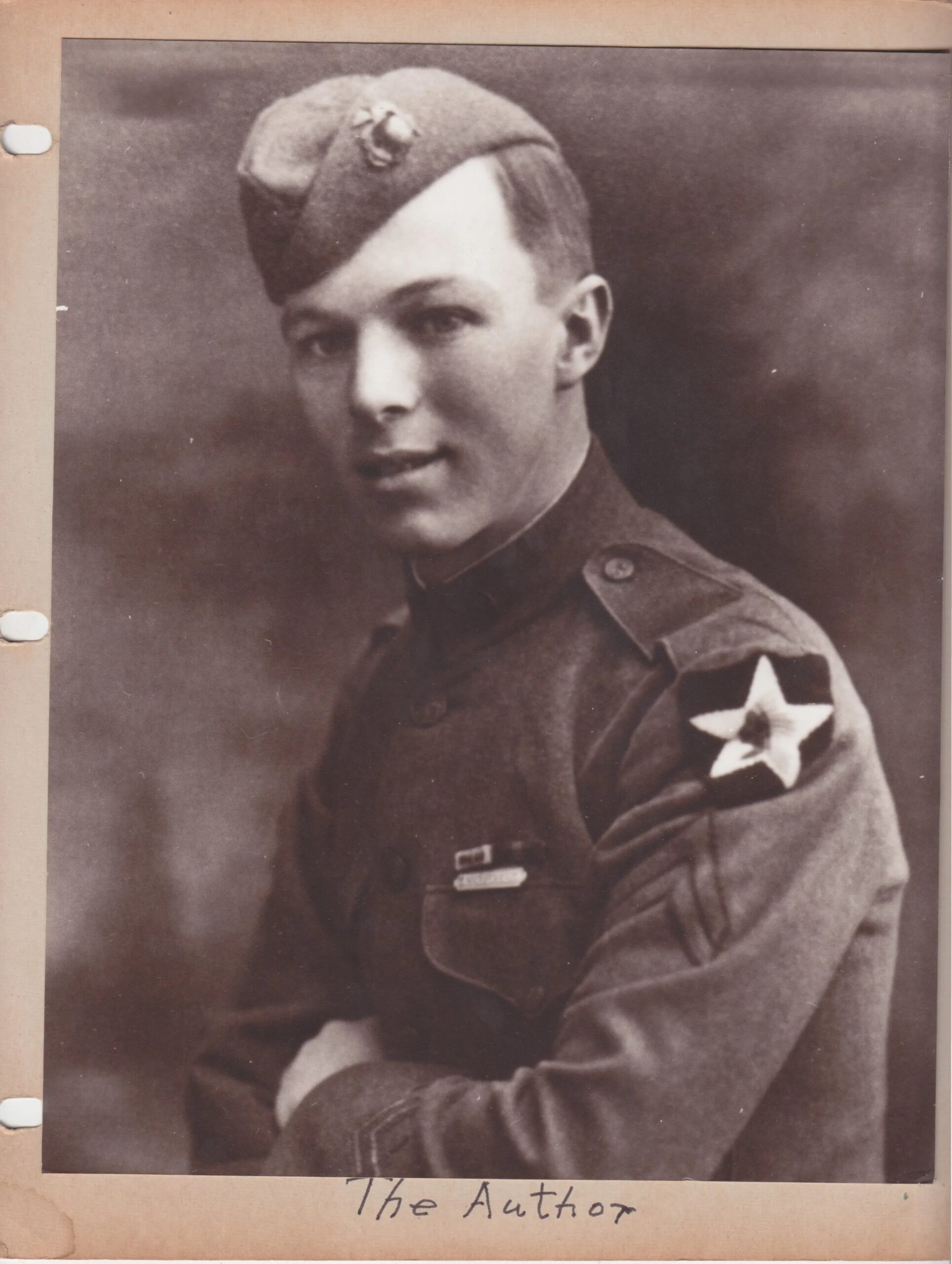
Eugene “Reynold” Thomas
Then one day I received orders to report forthwith to Division Headquarters for duty as stenographer to the Division Personnel Adjutant, a Captain Norton.
I figured immediately, and later confirmed it, that Mac just got tired of going all the way back to the regiment every time he was hungry for some extra chow, so he saw to it that somebody put my glowing, however false, stenographic qualifications before that poor harried adjutant just at a time he was desperately in need of such a man. I received my orders and started out to find Division Headquarters just after daybreak, with all my earthly possessions strapped to my back, a rifle on my shoulder and a full ammunition belt chafing at my waist. After a day and a half of hiking and hitching rides on army trucks, I located Division Headquarters late in the afternoon and, with the help of some M.P., Captain Norton’s office. The M.P.’s also let me wash up in their quarters, where I brushed the dust off my uniform and shoes, cleaned my rifle and dressed up my pack. I wanted to look ship-shape when I reported to this Captain Norton.
His office was in a big noisy barn-like room with concrete floors and small windows high up on concrete walls. A Sergeant Major told me where to stow my pack and rifle and indicated Captain Norton’s desk. It was one of about twenty or more large packing boxes turned on their side and being used as desks. It sounded as though there were at least a half dozen banging typewriters on each desk.
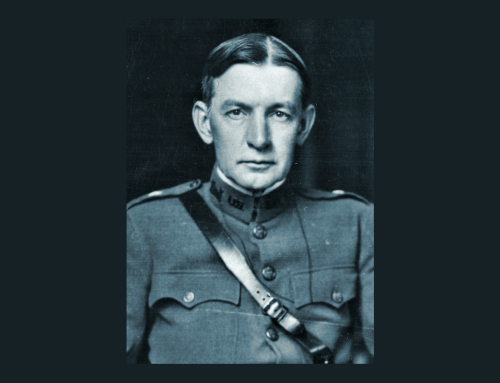
Our first meeting was not exactly a propitious one. It turned out that the Captain was an Army Officer and by my standards, not a very military looking one either. His overseas cap dangled from the back of his disheveled yellow hair, his tunic was unbuttoned at the throat and a lighted cigarette drooped from one corner of his mouth.
His desk was a mess, too. It was heaped high with all kinds of papers, some books, a half-eaten sandwich and a couple of overflowing ash trays.
As I approached the desk, a soldier was standing by at one side, apparently a messenger waiting for something, while the Captain was reading a paper he held in his hand. Neither one looked up as I came to a halt a few paces in front of the desk, so I just stood there quietly at attention and waited for an opportunity to submit my orders to the Captain and to be interviewed.
Finally, the Captain handed some papers to the messenger, saying something to him as he did so. The messenger took the papers, said “OK” and walked away; no “Sir”, no “salute”, and no comment from the officer.
That was the most flagrant breach of etiquette between officer and enlisted man I’d ever experienced in all my military career, all nine months of it.
But what the hell, that’s their business and besides I’m not in the Army.
What I want right now is a chance to deliver my orders, report for duty, be interviewed by the Captain and see what’s going to happen to me. First, I have to get his attention.
So, I clicked my heels just a little and the Captain glanced up, but otherwise never moved. Then I threw a real snappy salute and formally recited, “Sir, Corporal Thomas, 55th Company, 5th Regiment, Marines, reporting for duty, Sir, as ordered.”
I placed the orders on the table in front of him. He glanced down at the envelope but never touched it. “Oh, so you’re the Marine.”
I couldn’t quite understand what that remark meant, but something about the tone of voice made me feel that it was not intended to be a friendly welcome.
Then, after two quick double-barreled questions fired at me by the Captain and my reply to the effect that I wasn’t quite sure what a “short-hand” was so couldn’t say how fast I’d be with one and that I had never tried to run a typewriter, I really became concerned about the prospects of my proverbial “goose.”
The Captain moaned, “I knew it, I knew it” and slapped the palm of his hand on the desk with a terrific bang, upsetting one of the over-loaded ash trays in the process. He also yanked the cap from his head, slammed that on the desk, then rumpled his hair vigorously with all his fingers.
My goose is cooked, this guy is really mad, I’m either going to be shot or sent back to the trenches. I felt a silence in the room and from the corner of my eye (for I was still at rigid attention), I could see that no typewriters were moving, no one was walking about or calling to nearby desks. They were all just sitting and looking at us.
About ten minutes later the Captain barked at me, “Do you know your A.B.C.’s?” “Yes, sir.” I replied. “Well sit down over there on that bench and someone will tell you what to do with them.”
“Aye, Aye, sir.” I saluted, made a perfect right turn and headed smartly for the bench. (I heard him mumble half about something about stupid sea-talk.)
After about half an hour of sitting upright on that bench, I heard the Captain call out to a desk across the aisle. “Sergeant, we have another A.B.C. expert here. Use him on the card files, but first, Sergeant, show this “parade-ground” Marine to his stateroom. I really ought to have him shot at sunrise, but I’m too damn tired to get up that early or to fill out that many forms.”
Well my goose isn’t cooked after all, just scathed a bit, but at least I’ve been assigned to duty in the office of the Personnel Adjutant and that makes me officially a member of the Marine Detachment, Second Division Headquarters. Boy, I’m in.
It wasn’t long before we were both back in a routine, me dropping cards into the file or pulling them out, as required by a list handed to me every morning to show who was wounded, killed or transferred. I even saw that I had been transferred.
In August of 1919, Reynold would be sent home to New Jersey.
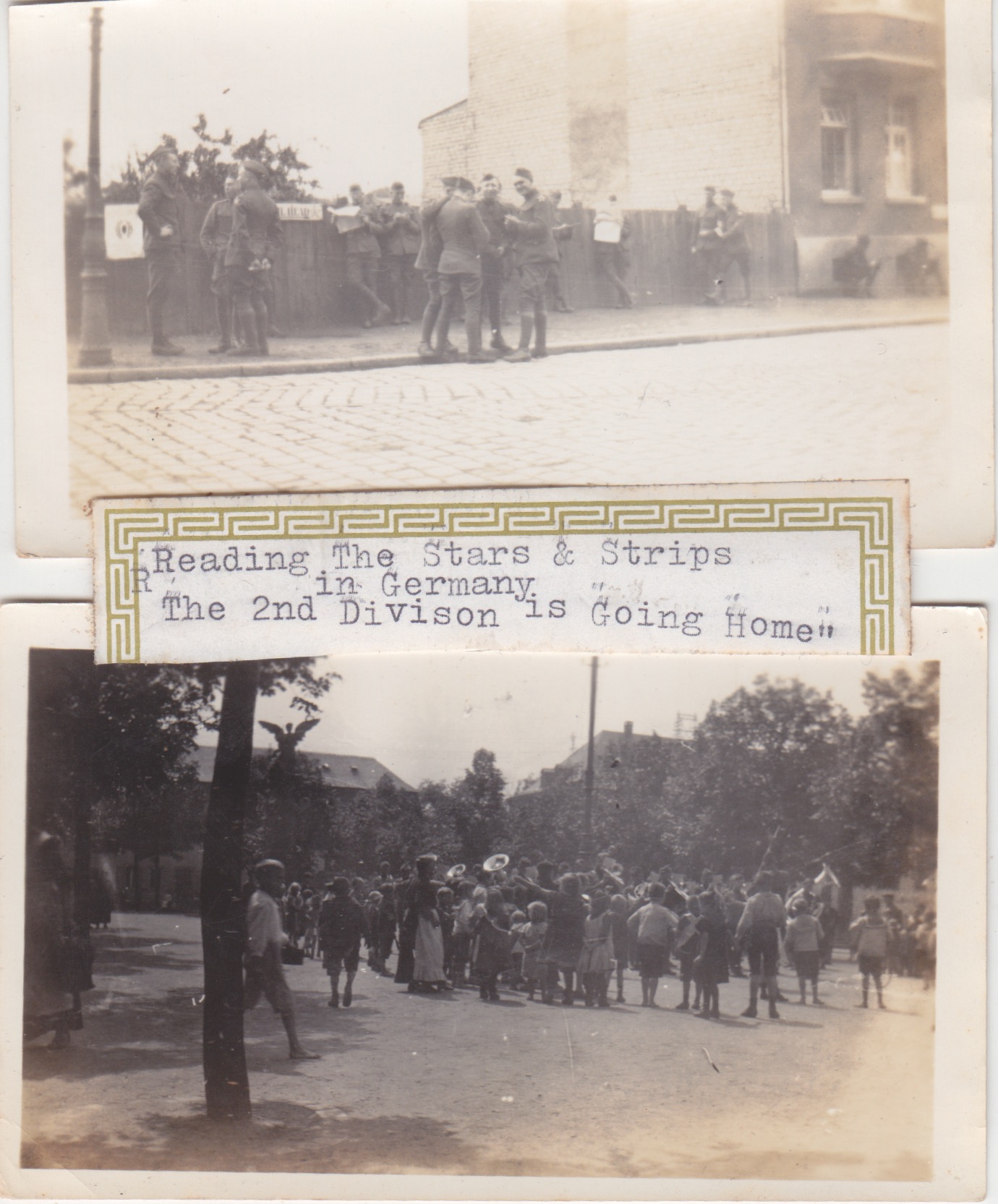
He would move to Harvey Cedars, NJ, working in his uncle’s eel grass business. Later, when he was working in Manhattan, he met his wife, Josephine Lehman, an editor and ghost writer for Lowell Thomas. They married in 1931 and two years later, at the depth of the Great Depression, moved back to Harvey Cedars, where he became a fisherman in order to “ride out the Depression.” He did not succeed at this and eventually started a dredging company, which became a success. In 1955, he was elected mayor, and continued to be a public servant until his death in 1983. Reynold’s daughter, Margaret, is a writer with Down The Shore publishing, writing about local history and a book focused on her mother’s participation in World War I. You can find her books here.
Cianna Lee is a Senior at Bennington College in Vermont.
External Web Site Notice: This page contains information directly presented from an external source. The terms and conditions of this page may not be the same as those of this website. Click here to read the full disclaimer notice for external web sites. Thank you.