Why Did The U S Enter World War I? Key Reasons Explained
Published: 10 March 2026
By Clara Davis
via the Alibaba.com website
Why did US enter WWI framed
In April 1917, after more than two and a half years of neutrality, the United States declared war on Germany, marking its official entry into World War I. President Woodrow Wilson, who had campaigned in 1916 on the slogan “He Kept Us Out of War,” reversed course, asking Congress to commit American forces to a conflict that had already devastated much of Europe. The decision was not made lightly. It emerged from a complex mix of diplomatic tensions, economic interests, military provocations, and shifting public sentiment. Understanding why the U.S. entered the war requires examining several pivotal factors that gradually eroded American neutrality.
Unrestricted Submarine Warfare: A Turning Point
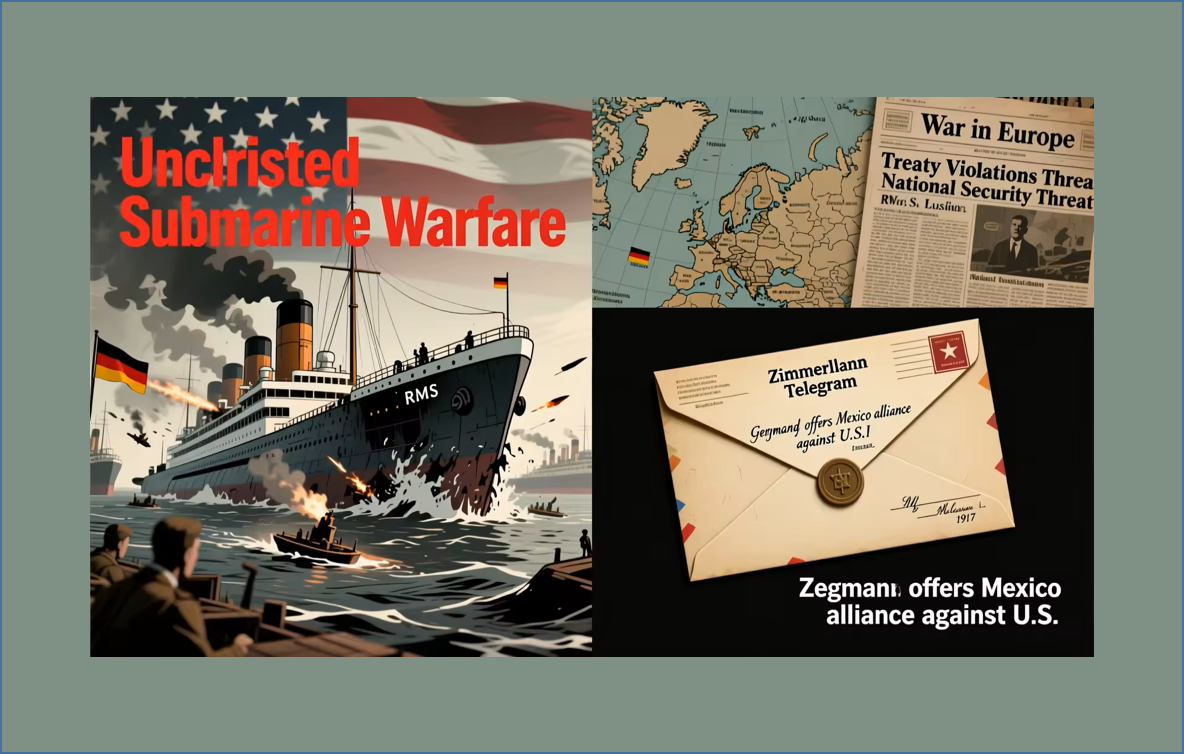
The most immediate catalyst for U.S. involvement was Germany’s policy of unrestricted submarine warfare. In early 1917, Germany resumed sinking merchant and passenger ships without warning in the waters around Britain, aiming to cut off supplies to the Allied powers. This strategy directly threatened American lives and commerce.
The sinking of the British ocean liner Lusitania in May 1915 had already stirred outrage in the U.S., killing 1,198 people—including 128 Americans. Though Germany temporarily halted unrestricted attacks after diplomatic protests, it reinstated the policy in February 1917, calculating that it could defeat Britain before the U.S. could mobilize.
This decision proved disastrous for German diplomacy. Over the next few months, several American merchant ships were torpedoed in the Atlantic. The final straw came with the sinking of the SS Aztec in April 1917—after Wilson had already asked Congress for a declaration of war. These attacks demonstrated that neutral shipping was no longer safe, undermining the principle of freedom of the seas that the U.S. had long defended.
The Zimmermann Telegram: Diplomatic Provocation
While submarine warfare strained relations, the revelation of the Zimmermann Telegram turned American public opinion decisively against Germany. Intercepted by British intelligence in January 1917, the telegram was a secret message from German Foreign Minister Arthur Zimmermann to Mexico’s government.
In it, Germany proposed a military alliance: if the U.S. entered the war, Mexico should declare war on America. In return, Germany promised financial support and the restoration of lost territories—specifically Texas, New Mexico, and Arizona. The British shared the decrypted message with U.S. authorities, and it was published in American newspapers by late February.
The impact was explosive. Many Americans had previously viewed the war as a distant European affair. Now, they faced the prospect of invasion or sabotage on their own soil. Even skeptics of intervention saw the telegram as proof of German aggression and disrespect for U.S. sovereignty.
“The Zimmermann Telegram was not just a diplomatic misstep—it was a geopolitical miscalculation of historic proportions.” — Dr. Helen Reeves, Historian of Early 20th Century Diplomacy
Economic Ties and Financial Interests
Beyond direct provocations, deep economic connections between the U.S. and the Allied powers influenced the path to war. Although officially neutral, American banks and industries increasingly supported Britain and France through loans, arms sales, and raw material exports.
By 1917, U.S. banks had loaned over $2 billion to the Allies—equivalent to roughly $40 billion today. Companies like DuPont and Bethlehem Steel expanded production to meet wartime demand. In contrast, trade with Germany dwindled due to the British naval blockade.
While these ties did not cause the war, they created a vested interest in an Allied victory. A defeat of Britain or France would jeopardize billions in American investments and destabilize the global economy. As historian Niall Ferguson has argued, the U.S. was economically “allied” long before it became militarily involved.
Read the entire article on the Alibaba.com website here:
External Web Site Notice: This page contains information directly presented from an external source. The terms and conditions of this page may not be the same as those of this website. Click here to read the full disclaimer notice for external web sites. Thank you.