Thomas Edison’s World War One
Published: 18 February 2026
By Mike Hanlon
via the Roads to the Great War website
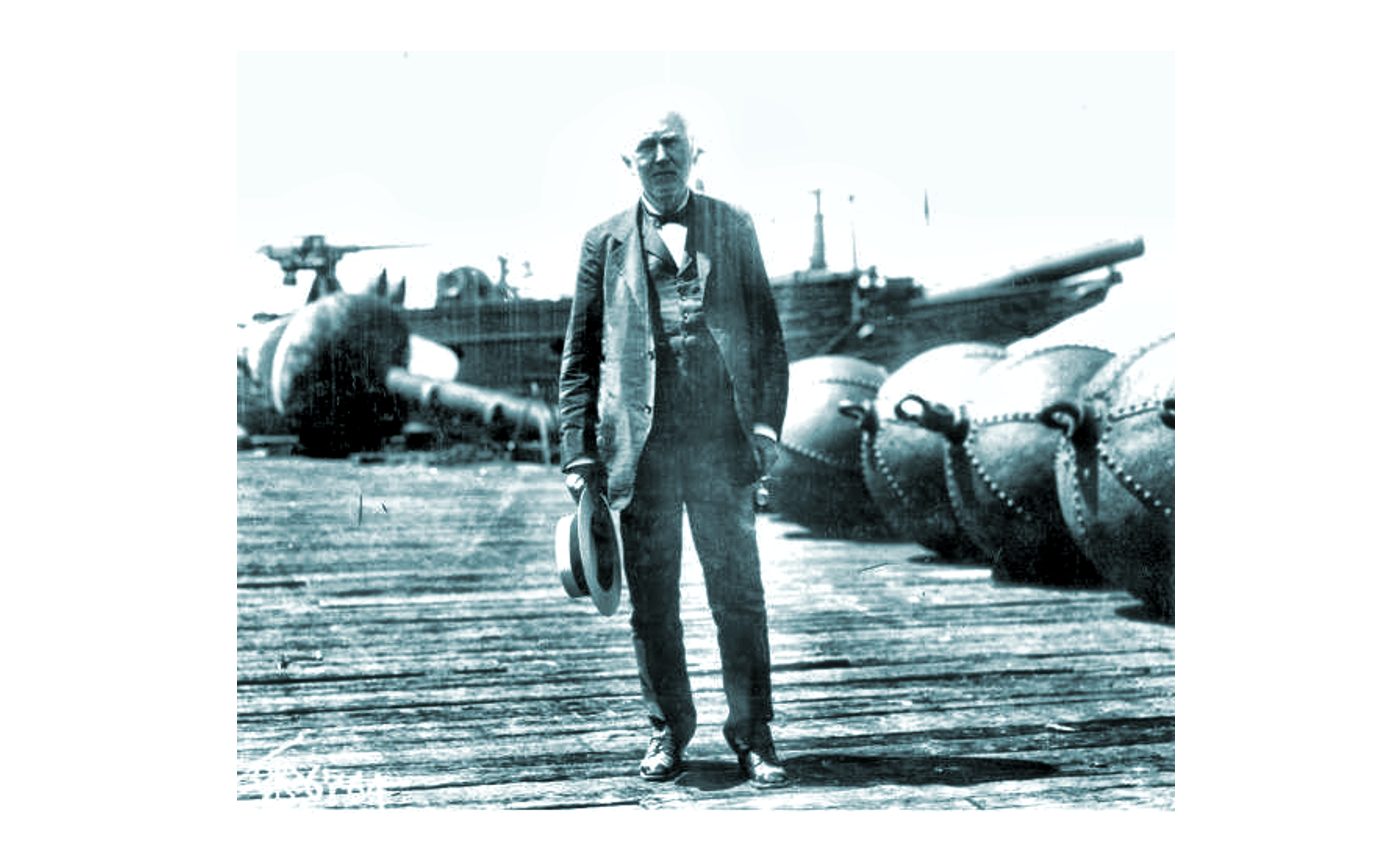
Edison in WWI framed
Thomas Edison During the Great War
Science is going to make war a terrible thing–too terrible to contemplate.
Thomas Edison, October 1915
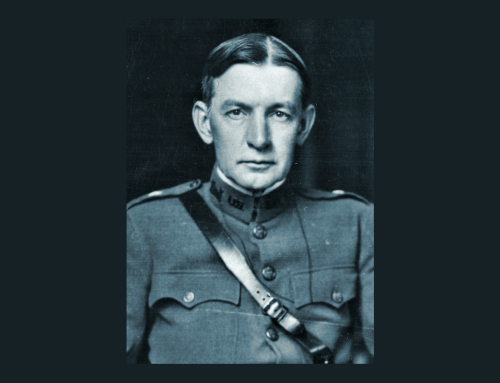
Thomas Alva Edison (1847–1931) is revered as America’s greatest inventor. While also a highly successful businessman, he is best known for developing many devices such as the phonograph, the long-lasting light bulb, and the motion picture camera. He was also a dedicated and energetic contributor to America’s war effort
Soon after war broke out in Europe, disaster struck Edison’s enterprises. On 9 December 9 1914, a massive explosion and fire destroyed much of Thomas Edison’s West Orange, New Jersey, research laboratory and factory complex. Fueled by highly flammable nitrate film and chemicals, the blaze destroyed 13 to 14 buildings. He would overcome this challenge while keeping busy supporting his country’s military. Ultimately, the war would also place a strong personal strain on Edison and his family. His oldest daughter, Marion, spent much of the war behind enemy lines as the wife of a German Army officer, while his son William served in France as a sergeant in the U.S. Tank Corps.
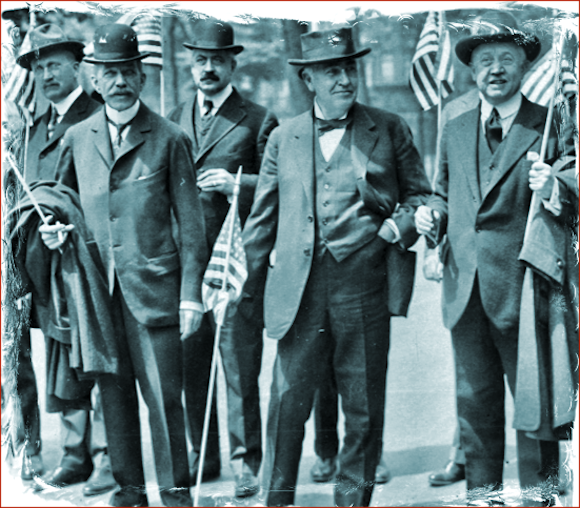
Edison at a Preparedness Day Event, New York City
Edison became a major spokesman for preparedness, and his ideas spurred the creation of the Naval Consulting Board, on which he was appointed as president by Navy Secretary Josephus Daniels. Although a naval-focused group, the board also supported the Army’s efforts and the aviation programs of both services.
To overcome the shortages of chemicals previously obtained from Germany, he quickly built new manufacturing plants and became a major chemical supplier not only to American industries but also to the European allies and Japan as well.
In February 1917, a few months before the United States entered the war, Edison and his assistants began conducting anti-submarine experiments for the U.S. Navy, as well as other military research, at a specially equipped new laboratory at the top of Eagle Rock Mountain in West Orange. Over the next two years, Edison would continue his research aboard the USS Sachem in Long Island Sound, at an office in Washington, D.C. formerly occupied by Admiral George Dewey, and at the U.S. Naval Station in Key West, Florida.
Read the entire article on the Roads to the Great War website here:
External Web Site Notice: This page contains information directly presented from an external source. The terms and conditions of this page may not be the same as those of this website. Click here to read the full disclaimer notice for external web sites. Thank you.