The United States’ Path to World War I: A Complex Decision
Published: 20 January 2026
via the Oreate AI Blog website
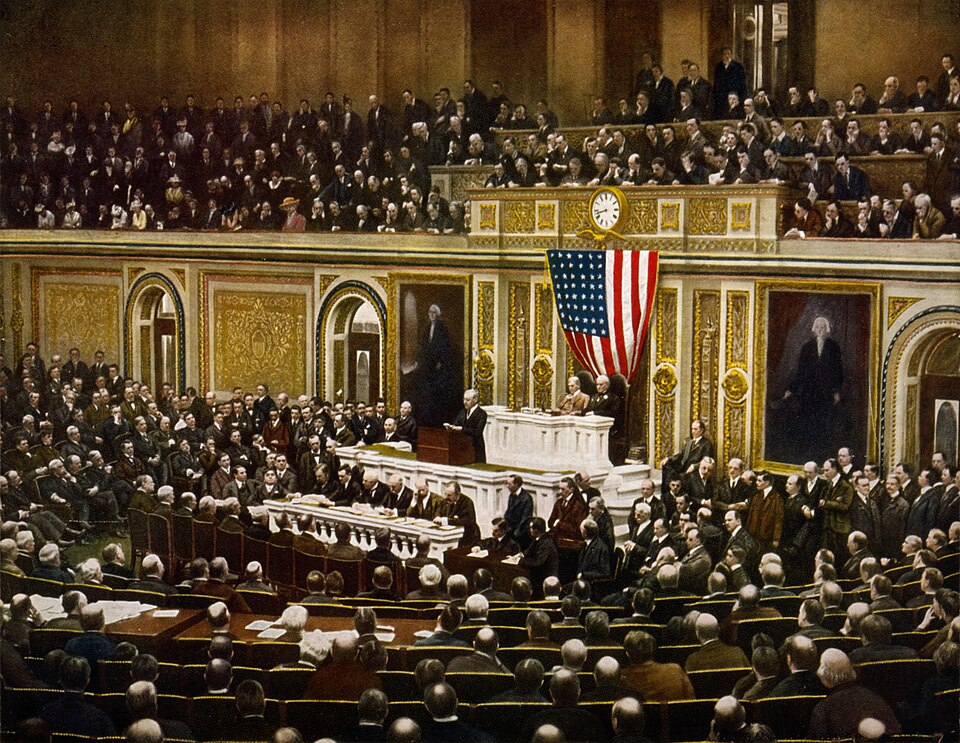
President_Woodrow_Wilson_asking_Congress_to_declare_war_on_Germany,_2_April_1917
President Woodrow Wilson asking Congress to declare war on Germany on April 2, 1917.
In April 1917, the United States made a pivotal decision that would alter its course in history—entering World War I after more than two years of maintaining neutrality. President Woodrow Wilson had campaigned on the promise of keeping America out of foreign conflicts, famously declaring in 1916, “He kept us out of war.” Yet by early 1917, the landscape had shifted dramatically.
One major catalyst for this shift was Germany’s resumption of unrestricted submarine warfare. In January and February alone, German U-boats sank nearly 500 ships belonging to both Allied and neutral nations. This aggressive strategy aimed at crippling Britain’s supplies directly threatened American lives and commerce—a breach that struck at the heart of international norms protecting civilian shipping.
The sinking of RMS Lusitania back in May 1915 had already ignited outrage among Americans when it claimed the lives of 128 citizens. Although Germany temporarily halted such attacks due to diplomatic pressure, their return to unrestricted warfare was a stark violation that President Wilson could no longer ignore. It wasn’t just about lost ships; it represented an unacceptable disregard for human decency.
Then came another blow—the Zimmermann Telegram intercepted by British intelligence in January 1917. This secret communication from German Foreign Minister Arthur Zimmermann proposed a military alliance with Mexico should the U.S. enter the war, promising support for Mexico to reclaim territories like Texas and New Mexico. When news broke publicly later that month, it stirred intense anger across America as citizens felt their national security was under direct threat.
While Mexican leaders wisely dismissed this proposal as impractical—recognizing they were not equipped to invade their powerful neighbor—the psychological impact resonated deeply within American society. The telegram shattered any remaining trust towards Germany and solidified arguments against continued neutrality.
Beyond these immediate provocations lay deeper economic ties binding America to its Allies—particularly Britain and France—which extended into billions worth of loans and supplies vital for sustaining their war efforts. By early 1917, U.S exports surged tenfold compared to pre-war levels; thus a Central Powers victory posed serious risks not only economically but also geopolitically, because it could reshape global trade patterns detrimental to American interests.
Yet Wilson framed America’s entry into WWI through a lens beyond mere retaliation or financial stakes; he presented it as part moral crusade—to make “the world safe for democracy.” His address before Congress on April 2nd emphasized fighting against autocracy while promoting self-determination worldwide—a vision many Americans found compelling amidst growing fears over militarism threatening democratic values globally.
Read the entire article on the Oreate AI Blog website here:
External Web Site Notice: This page contains information directly presented from an external source. The terms and conditions of this page may not be the same as those of this website. Click here to read the full disclaimer notice for external web sites. Thank you.