The Power of Sweetness: Memories of Chocolate During Wartime
Published: 18 February 2026
By Megan Harris
via the Library of Congress website
Kaufmann-chocolate-crop-2048×895
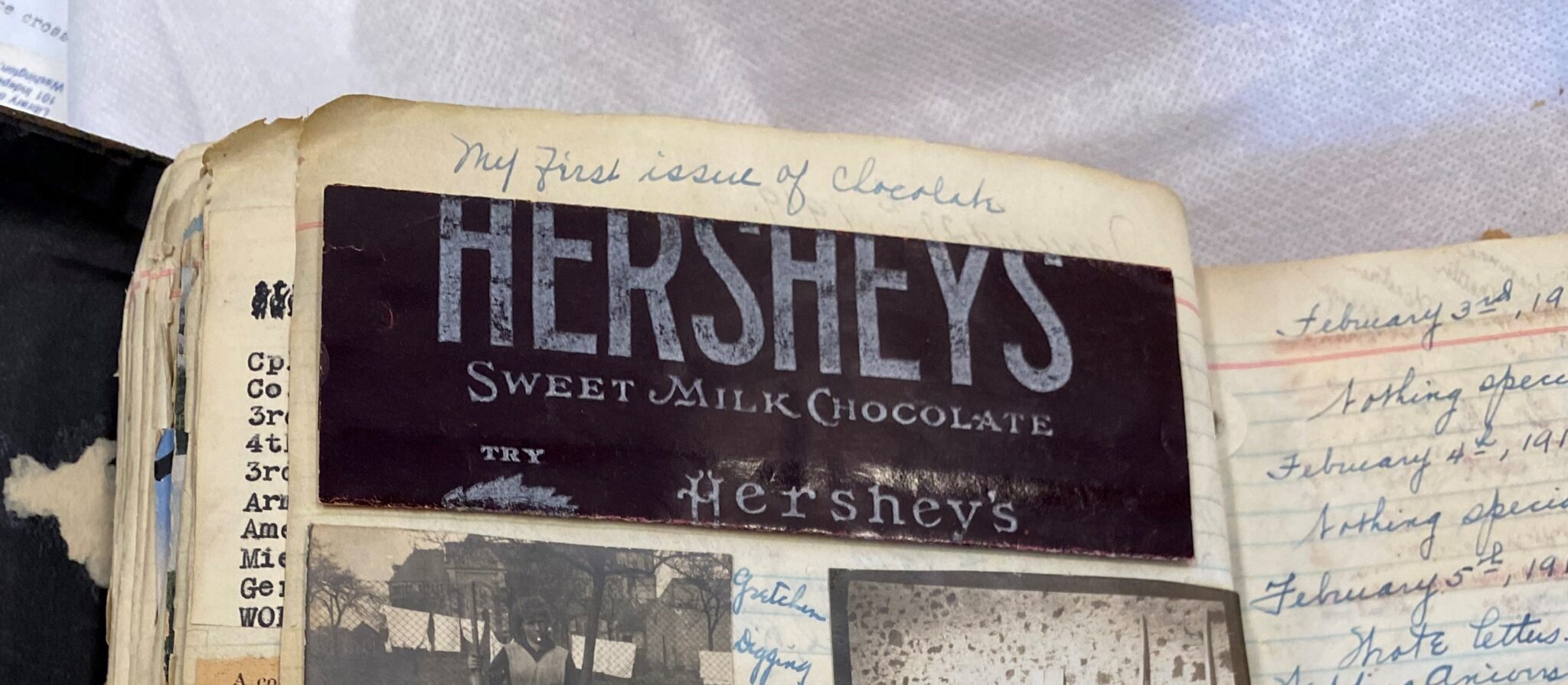
A closeup of a WWI scrapbook page featuring the wrapper of a Hershey's chocolate bar. Walter Kaufmann Collection, AFC2001/001/130613, Veterans History Project, American Folklife Center, Library of Congress.
Beginning in World War I, chocolate bars were included in military field rations.
Beginning in World War I, chocolate bars were included in military field rations.If you’re reading this in the wake of Valentine’s Day, maybe you’re still savoring a few heart-shaped chocolates or just remembering the sweetness of last week’s sugary indulgences. While chocolate has a starring role in mid-February, the part it has played during wartime is perhaps lesser known—but no less significant.
I began thinking about the topic of chocolate during wartime a couple of years ago, when the Veterans History Project (VHP) received the Arthur Bert Singleton collection. In addition to Singleton’s original diaries, personal correspondence and photographs pertaining to his World War I service in France, we found an unexpected object: an original, intact field ration of chocolate.
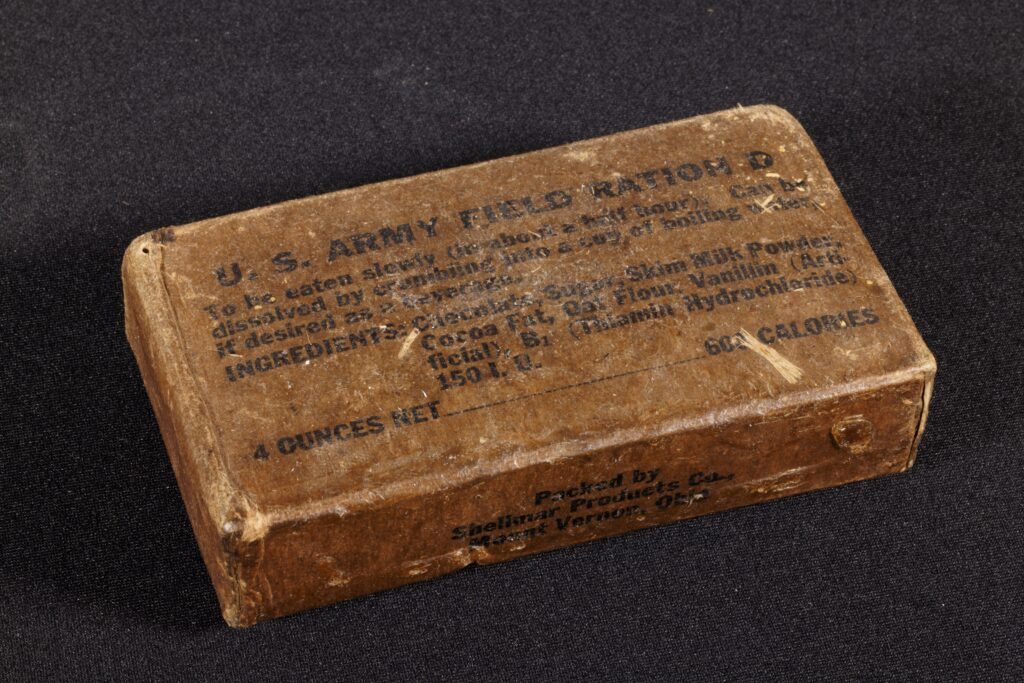
A World War II chocolate ration. Arthur Bert Singleton Collection, AFC/2001/001/125758, Veterans History Project, American Folklife Center, Library of Congress. Photo by Shawn Miller/Library of Congress.
Curiously, Singleton served in World War I and this ration dates to World War II; it’s unclear how it wound up with Singleton’s materials. Typically, VHP is unable to accept three-dimensional artifacts, but after consulting with the Library’s Conservation Division, we made an exception in the case of the Singleton chocolate ration. One question was easy to answer: no, it does not still smell like chocolate.
Yet its presence in the archive points to something larger. Just as in the case of canned peaches—another frequently consumed and discussed element of military rations—for those in the service, chocolate has represented more than just sustenance to servicemen and women. Depending on the form it took, chocolate could be a comforting treat or drink, a token of friendship, a currency to be traded, or in certain cases, the difference between life and death.
In the spirit of the Veterans History Project, this blog post is about veterans’ memories of chocolate during wartime, rather than the history of chocolate in the military. Nevertheless, a bit of framing background context might be helpful. Beginning in World War I, chocolate bars were included in military field rations. During World War I, these took the form of small pieces of chocolate in bar form, the precursor to modern candy bars. Walter Kaufmann, who served as an Army messenger in France during World War I, pasted the wrapper from one such chocolate bar in his diary/scrapbook, which was recently donated to the Veterans History Project by his family.
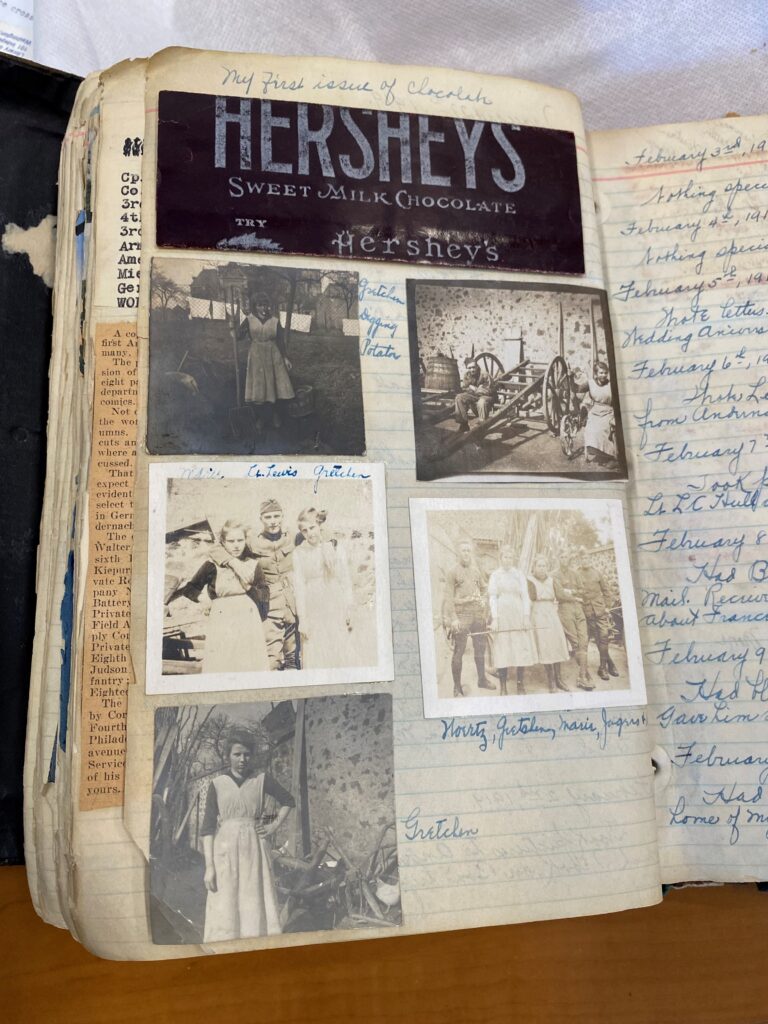
A page from Walter Kaufmann’s WWI scrapbook containing his “first issue of chocolate.” Walter Kaufmann Collection, AFC2001/001/130613, Veterans History Project, American Folklife Center, Library of Congress.
In addition to Army-issued chocolate, many Americans serving in France during World War I relished the chocolate provided at relief centers operated by the Knights of Columbus, the YMCA and the Red Cross, as well as that sold in local shops and by civilians. Irving Greenwald’s pocket diary, in which he chronicled his time in France, includes no less than 63 references to chocolate! On Friday, May 3, 1918, Greenwald wrote in his diary, “[Went] to village to get chocolate for which I pay a very high price. I must have it at any cost.” Perhaps Greenwald had an especially sweet tooth, but his references make clear how a little bit of chocolate could lighten the burden felt by those serving in combat, far away from the comforts of home.
Read the entire article on the LOC website here:
External Web Site Notice: This page contains information directly presented from an external source. The terms and conditions of this page may not be the same as those of this website. Click here to read the full disclaimer notice for external web sites. Thank you.