Sergeant Stubby: World War I’s Most Famous Dog
Published: 20 February 2026
By Neal McLaughlin
via the A-Z Animals website
Sergeant_Stubby-2048×1536
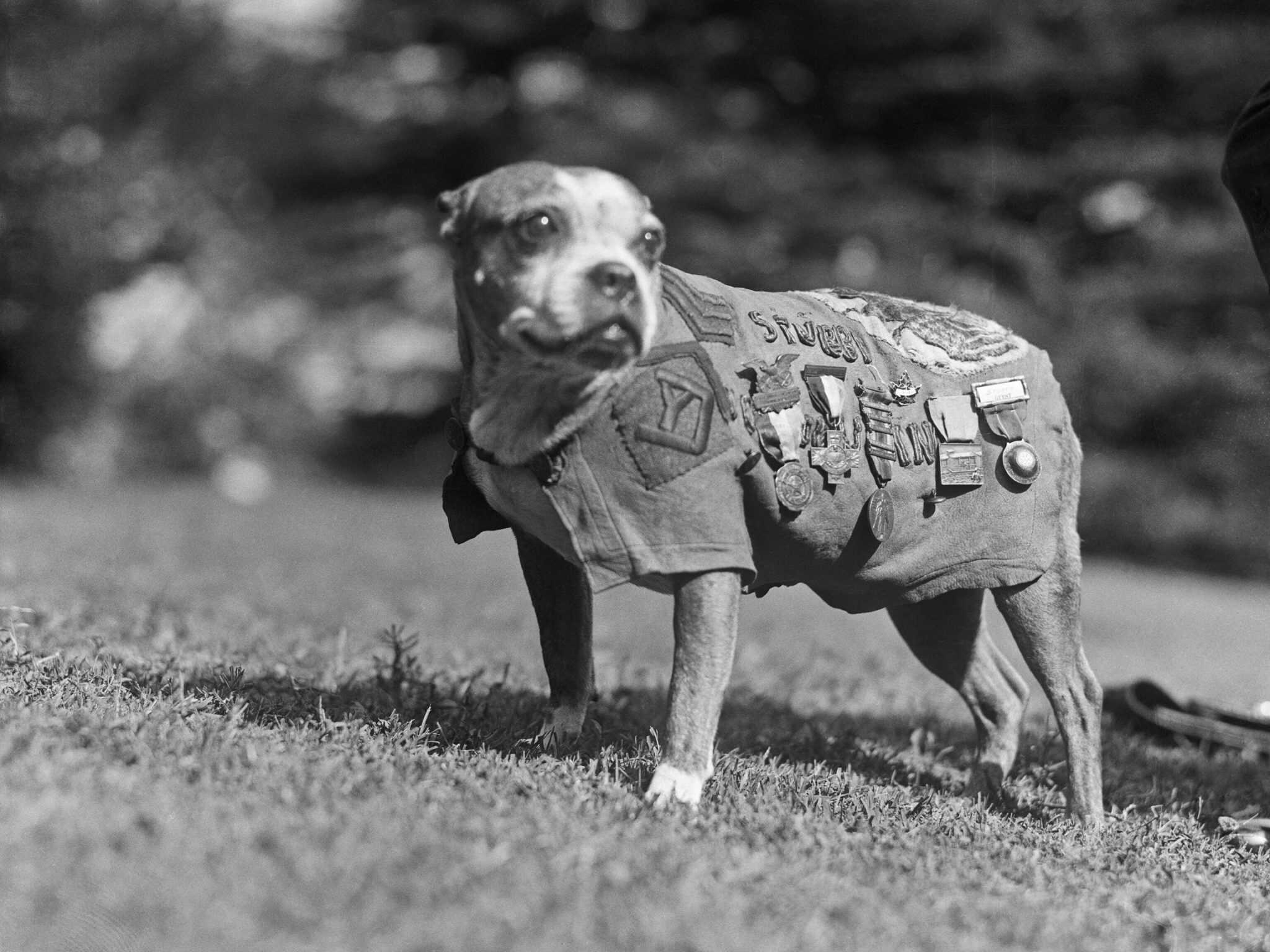
Sergeant Stubby began life as a stray at Yale Field in 1917, where soldiers of the 102nd Infantry trained before shipping out to France.
Quick Take
- Sergeant Stubby provided emotional comfort to World War I soldiers, offering companionship and morale support amid constant fear and trauma.
- His presence in hospitals and among wounded troops reflected an early, informal form of animal-assisted therapy.
- Stubby’s legacy continues to resonate today as service and therapy animals play an expanding role in supporting veterans’ mental health.
World War I is often remembered for its overwhelming scale and brutality. Trenches stretching for miles, artillery thundering day and night, soldiers enduring constant fear, exhaustion, and loss. In the middle of that devastation, moments of comfort were rare and precious. For men of the 102nd Infantry Regiment, one unexpected source of relief came in the form of Sergeant Stubby. Sergeant Stubby wasn’t a great military leader—at least not in the traditional sense. In fact, he wasn’t even an actual sergeant. He couldn’t have been because the military doesn’t assign rank to dogs.
A Stray Becomes a Soldier
Stubby’s story began in 1917 at Yale Field in New Haven, Connecticut. The United States had just entered World War I, and soldiers of the 102nd Infantry were training before being shipped overseas. A stray dog wandered onto the field and quickly bonded with Private J. Robert Conroy. The dog followed the men through drills, slept in the barracks, and learned basic commands, including bugle calls. He even learned a dog-modified version of a military salute by placing his right paw on his right eyebrow.
When the regiment left for France, Conroy smuggled the dog aboard the troop ship. He wasn’t discovered until after the ship had set sail. His calm demeanor and obvious attachment to the troops won over officers. Rather than being thrown overboard or sent back, the dog was allowed to stay. Over time, he became the regiment’s mascot. The soldiers named him Stubby, likely because of his short tail, and fashioned a uniform for him. What began as a bit of lighthearted defiance soon turned into something far more meaningful.
A Dog in the Trenches
Once in France, Stubby experienced the same dangers as the men he accompanied. The Western Front exposed soldiers to constant shelling, sniper fire, and chemical weapons. Stubby was once caught in a gas attack, which understandably made him quite sensitive to its smell. Through this experience, he developed an ability to alert soldiers to incoming gas attacks by reacting to the smell before humans noticed. But while this skill had practical value, many historians argue that his greatest contribution was emotional rather than tactical.
This contribution really shone after Stubby suffered an injury in a grenade attack, taking large pieces of shrapnel in his chest and leg. He was treated at a field hospital where, once he recovered, he visited the wounded soldiers. His presence lifted spirits and reminded injured men of home.
These visits mattered. World War I hospitals were crowded, understaffed, and grim. Soldiers recovering from wounds or gas exposure were not only in physical pain, but also dealing with shock and grief. The concept of psychological trauma was poorly understood at the time. These were soldiers—warriors—engaged in a deadly conflict with global stakes. They were expected to be hard and tough. Shell shock carried a heavy stigma. A friendly dog offered something rare. He was nonjudgmental, familiar, and comforting.
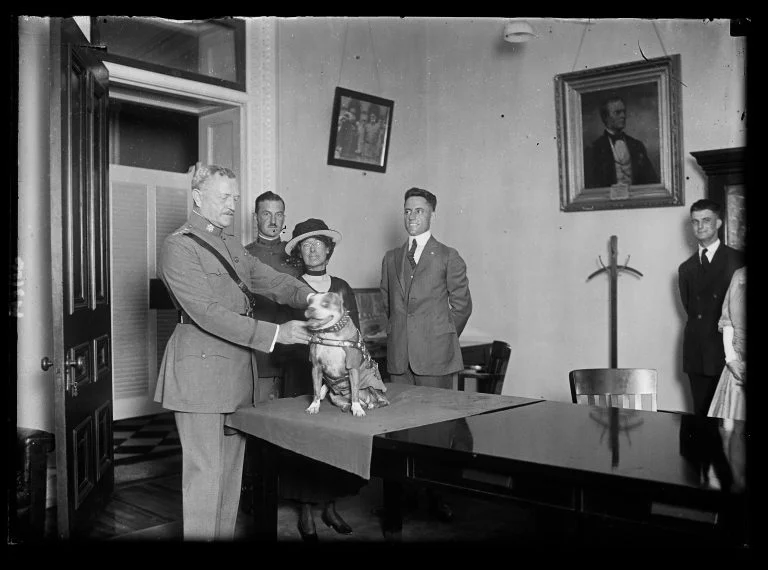
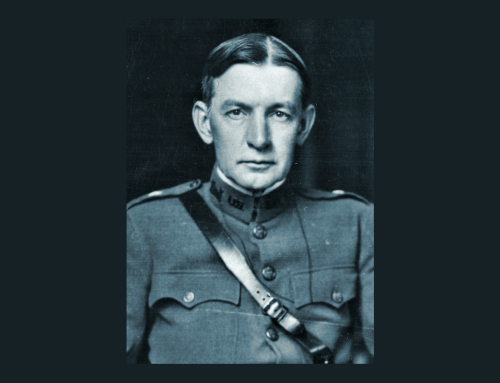
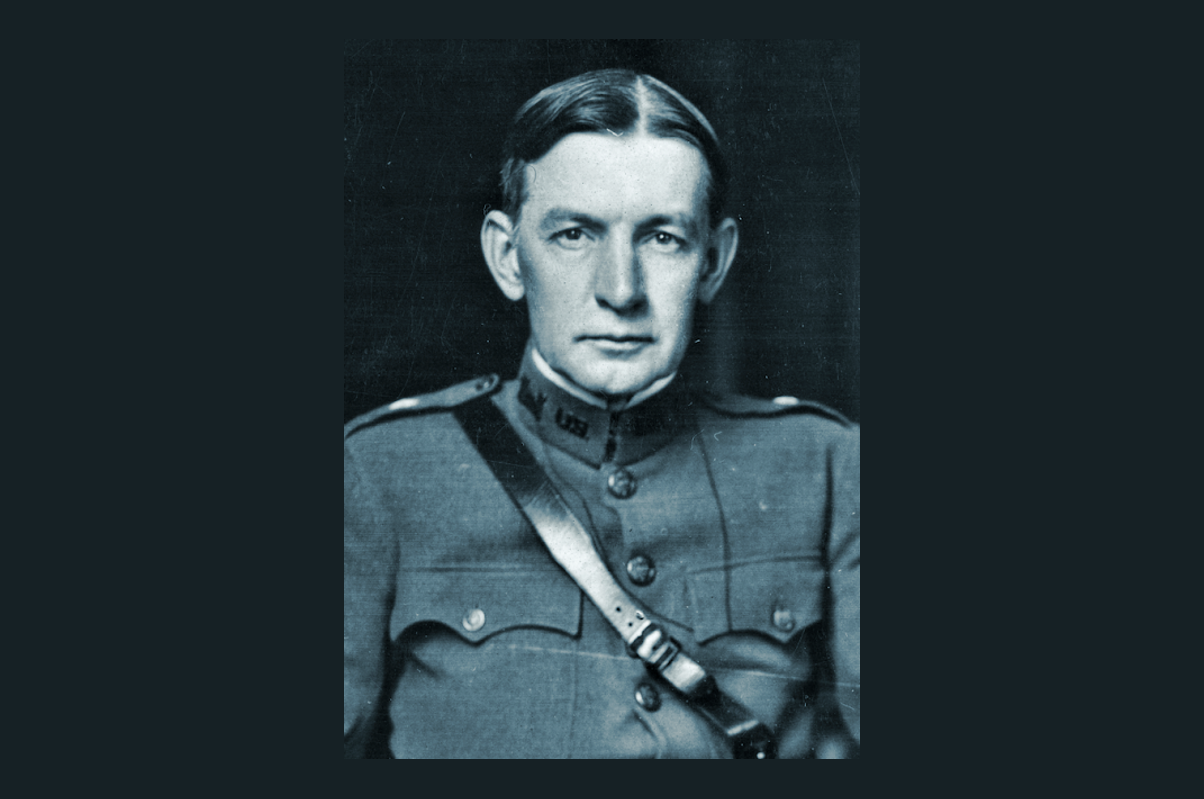
General John J. Pershing awards Sergeant Stubby with a medal in 1921 as Robert Conroy, wearing suit, stands behind them.
Animals in War
Stubby was not unique in providing emotional support during wartime, though he became the most famous example. Throughout history, animals have accompanied soldiers in many roles. Horses, mules, dogs, pigeons, and even cats were common in World War I. While many were used for transport or communication, their emotional impact was just as significant.
Modern psychology helps explain why. Humans are social beings, and stress increases when social bonds are disrupted. Soldiers far from home often experience isolation alongside fear. Animals can help fill that emotional gap. Studies on human-animal interaction show that contact with animals can lower heart rate, reduce stress hormones, and increase feelings of calm. These effects do not require training or language. They happen through simple presence and routine interaction.
In the trenches, Stubby gave soldiers a sense of normalcy. Feeding him, petting him, and watching him play briefly returned them to a world outside the war. That kind of mental break was invaluable, even if it lasted only a few minutes. When the war ended, Stubby returned to the United States as a celebrity. He led parades, appeared at war bond rallies, and met several U.S. presidents: Woodrow Wilson, Warren G. Harding, and Calvin Coolidge. Newspapers celebrated him as the most decorated war dog in American history, assigning him the honorary rank of sergeant.
In postwar times, Stubby continued to function as a bridge between civilians and veterans. World War I left deep scars on American society. Families struggled to understand what returning soldiers had experienced. The story of Stubby offered a gentler entry point into conversations about the war. He represented loyalty, endurance, and survival without forcing people to confront the full horror of the trenches.
From WWI Mascot to Modern Service Animals
Stubby’s reported visits to wounded soldiers are especially notable because they resemble what we now recognize as animal-assisted therapy. Today, therapy dogs are commonly brought into hospitals, rehabilitation centers, and veterans’ facilities. In 1918, this idea was informal and largely unstudied, but its effects were visible to those who experienced it.
In France, nurses and doctors allowed Stubby to visit wards because they saw how soldiers responded. Men who were withdrawn or despondent often became more engaged when Stubby appeared. Even brief interactions could improve mood and encourage social connection.
This didn’t cure injuries or erase trauma, but it helped soldiers cope. In an era with limited mental health resources, that mattered more than anyone fully understood at the time. Stubby’s legacy resonates strongly today because the role of animals in supporting veterans has become more formalized and better studied. Service dogs are now trained to assist veterans with physical disabilities, post-traumatic stress disorder, and other conditions. These dogs can help interrupt panic attacks, provide grounding during flashbacks, and create a sense of safety in public spaces.
Stubby wasn’t trained in these ways, but his impact followed the same emotional principles. He offered companionship, routine, and unconditional presence. Modern research supports what soldiers intuitively understood a century ago: animals can help regulate emotional responses and reduce feelings of isolation.
Organizations like the Department of Veterans Affairs now recognize animal-assisted interventions as a valuable complement to traditional care. Therapy dogs regularly visit VA hospitals, and service dogs are paired with veterans to support daily functioning. Stubby’s story is often cited as an early example of this bond in action.
Read the entire article on the A-Z Animals website.
External Web Site Notice: This page contains information directly presented from an external source. The terms and conditions of this page may not be the same as those of this website. Click here to read the full disclaimer notice for external web sites. Thank you.