Remembering the Zimmermann Telegram and the U.S. Entry Into World War I
Published: 1 March 2026
By James M. Lindsay
via the Council on Foreign Relations website
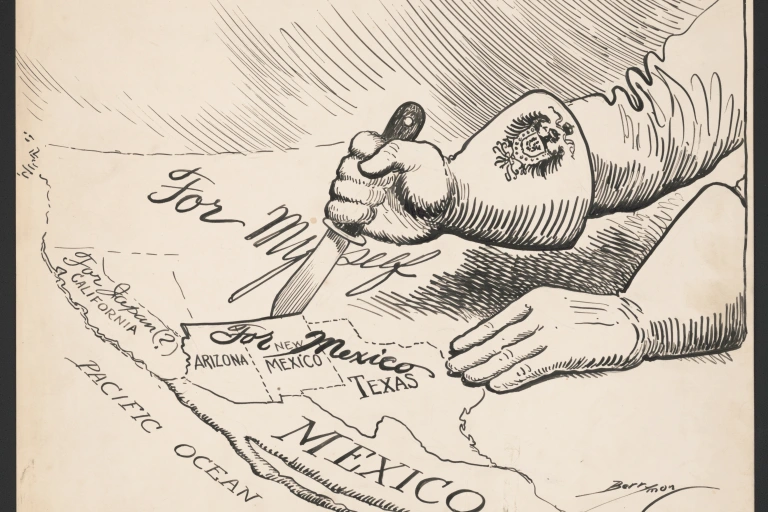
Cartoon_for_a_Telegram
Cartoon in reaction to the Zimmermann Telegram published in The Evening Star, March 4, 1917 in Washington D.C. (Courtesy of the Library of Congress. )
Publication of an intercepted cable exposed a clumsy German effort to forge an alliance with Mexico and helped propel the United States into the Great War.
The revelation of secret communications can propel states to war. German Foreign Minister Arthur Zimmermann learned that lesson at a high price. On March 1, 1917, Americans discovered that Zimmermann had sent a telegram offering Mexico an alliance against the United States and the chance to recover the territory lost in the Mexican-American War. The offer was wildly ill-advised and would have meant nothing if it had remained secret. But it didn’t. News that Germany was encouraging Mexico to attack the United States weakened already eroding American public support for remaining neutral and eased the U.S. entry into World War I. Zimmermann’s bid to secure Germany’s victory helped trigger the events that led to its defeat.
Zimmermann’s Offer
Zimmermann sent his telegram in mid-January 1917. The message ran just 186 words and was breathtakingly simple—Mexico would get the lands it had lost seven decades earlier in the Mexican-American War in exchange for helping Germany:
We make Mexico a proposal of alliance on the following basis: we make war together, make peace together, generous financial support and an understanding on our part that Mexico is to reconquer the lost territory in Texas, New Mexico, and Arizona.
Zimmerman went a step further and suggested that Mexico should invite Japan to join the alliance.
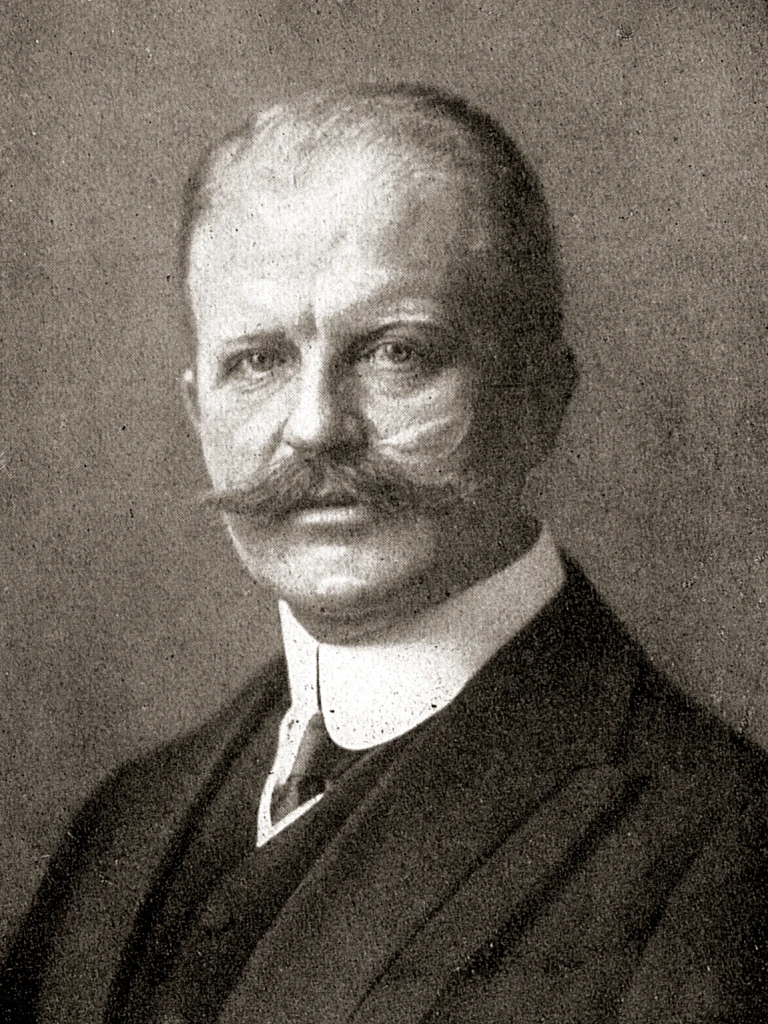
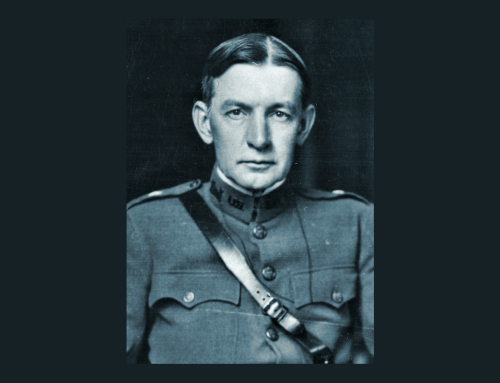
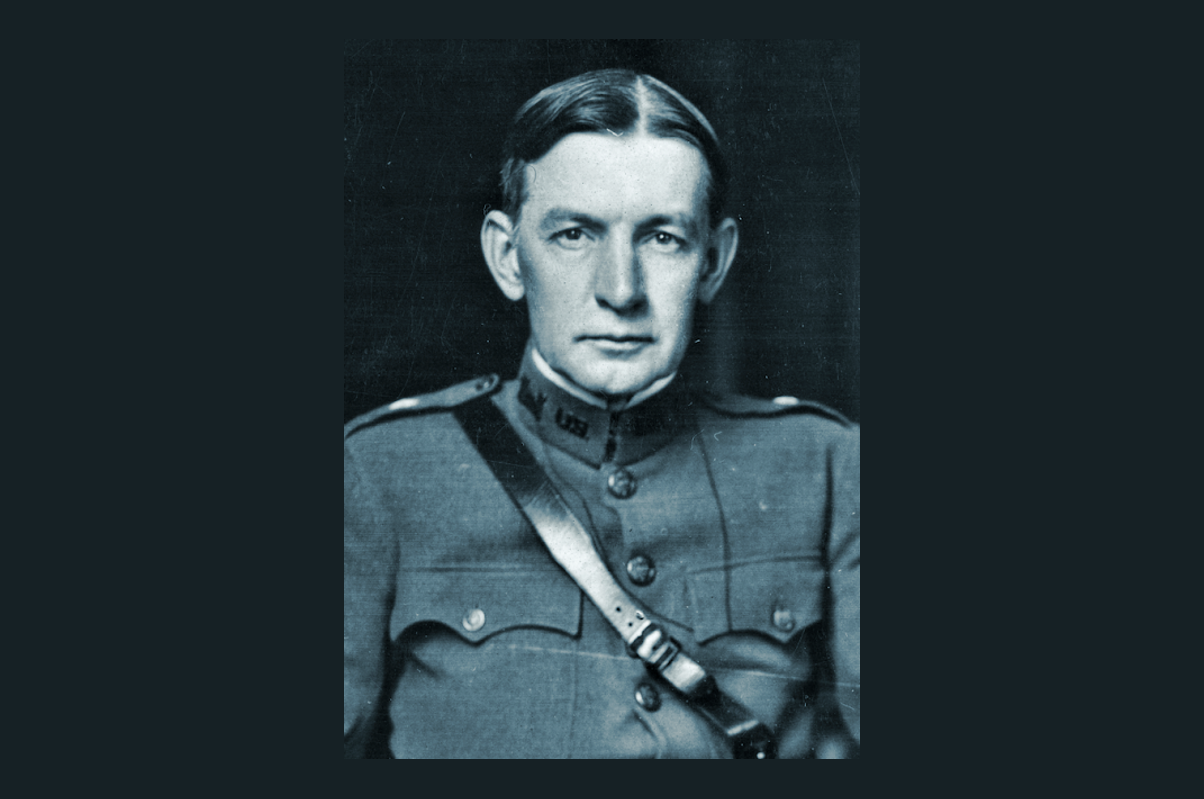
Portrait of Foreign Minister Artur Zimmermann. (Courtesy of Baer Casimir Hermann.)
The memory of the Mexican-American War was not the only reason Zimmermann believed that Mexico might be open to an alliance. U.S. Mexican relations at the start of 1917 were tense. Four years earlier, President Woodrow Wilson had refused to recognize the government of Victoriano Huerta, who came to power by murdering his predecessor, and actively sought to subvert Huerta’s rule. In April 1914, the United States invaded Veracruz, Mexico, in part to prevent Germany from supplying Huerta with weapons. U.S. troops remained there for six months. By then, Huerta had been ousted from power. Wilson tried vainly to influence who would succeed him. He initially supported and then abandoned rebel leader Pancho Villa. At the urging of German agents, an angry Villa led his forces in a raid on Columbus, New Mexico, in March 1916. Wilson responded by sending thousands of U.S. troops into Mexico in a failed effort to capture Villa. While pursuing Villa, the U.S. army clashed with the Mexican army at the Battle of Carrizal in June 1916, nearly triggering a war. Some U.S. troops were still on Mexican soil when Zimmerman wrote his telegram.
In seeking to exploit the divisions between Mexico City and Washington, Zimmermann thought he could be blunt with his offer because he sent his telegram in code.
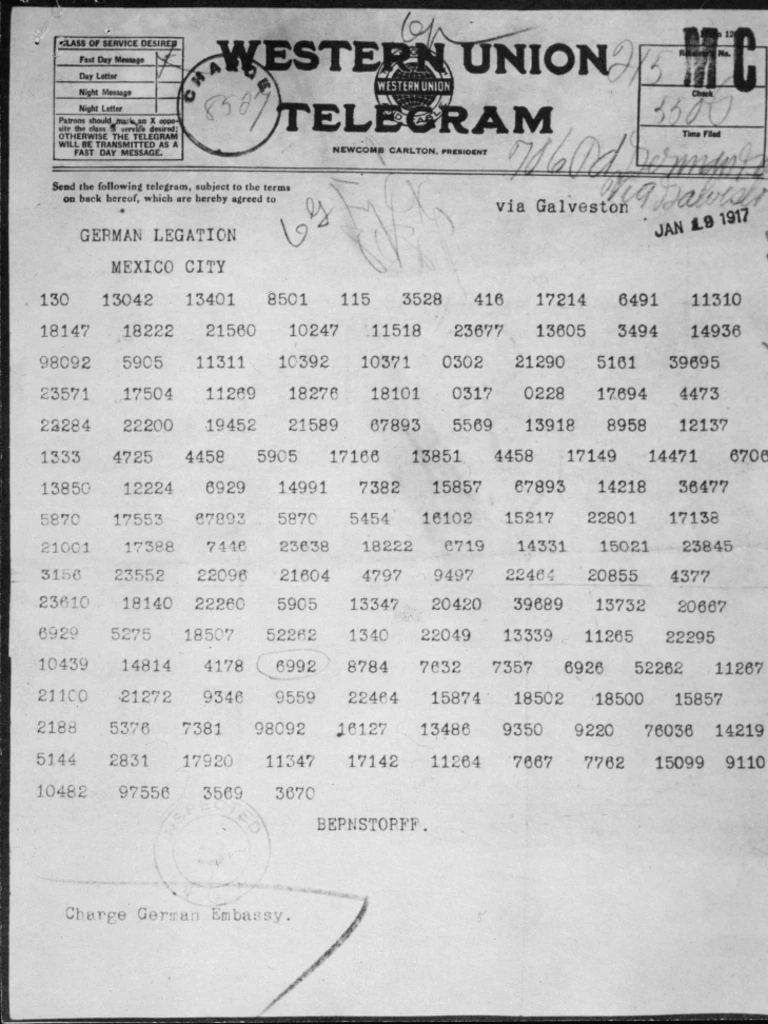
Zimmermann Telegram as received by the German Ambassador to Mexico (Courtesy of the National Archives.)
There were two problems, however, with that calculation. First, the British intercepted the message. Second, they had broken the German code, so they knew what Zimmermann was proposing.
U.S. Neutrality
News of the Zimmermann Telegram came at a crucial juncture in U.S. German relations. When the war began three years earlier, President Woodrow Wilson declared the United States neutral. In choosing neutrality, he was following the practice started by George Washington of staying out of Europe’s wars. Wilson’s decision was so unremarkable that the New York Times reported it on page seven.
Wilson had another reason to embrace neutrality. He feared that joining Europe’s war would split America’s ethnically diverse public. Most Americans instinctively sympathized with the cause of the Allied Powers notably democratic Britain and France, though not necessarily Tsarist Russia. But many Americans did not. Irish Americans detested Great Britain because it had oppressed the Irish people for centuries and its now refused to grant Ireland independence. Many Jewish Americans had fled Russian pogroms. German Americans felt a loyalty to their ancestral homeland. “We definitely have to be neutral,” Wilson noted in 1914, “since otherwise our mixed populations would wage war on each other.”
Read the entire article on the CFR website here:
External Web Site Notice: This page contains information directly presented from an external source. The terms and conditions of this page may not be the same as those of this website. Click here to read the full disclaimer notice for external web sites. Thank you.