“No Stone Was Left Unturned”: A Tomb in the Heart of the Nation: The Origins and Creation of the Tomb of the Unknown Soldier
Published: 25 April 2026
By Allison S. Finkelstein, Ph.D.
Historian, Army National Military Cemeteries
Special to the Doughboy Foundation website
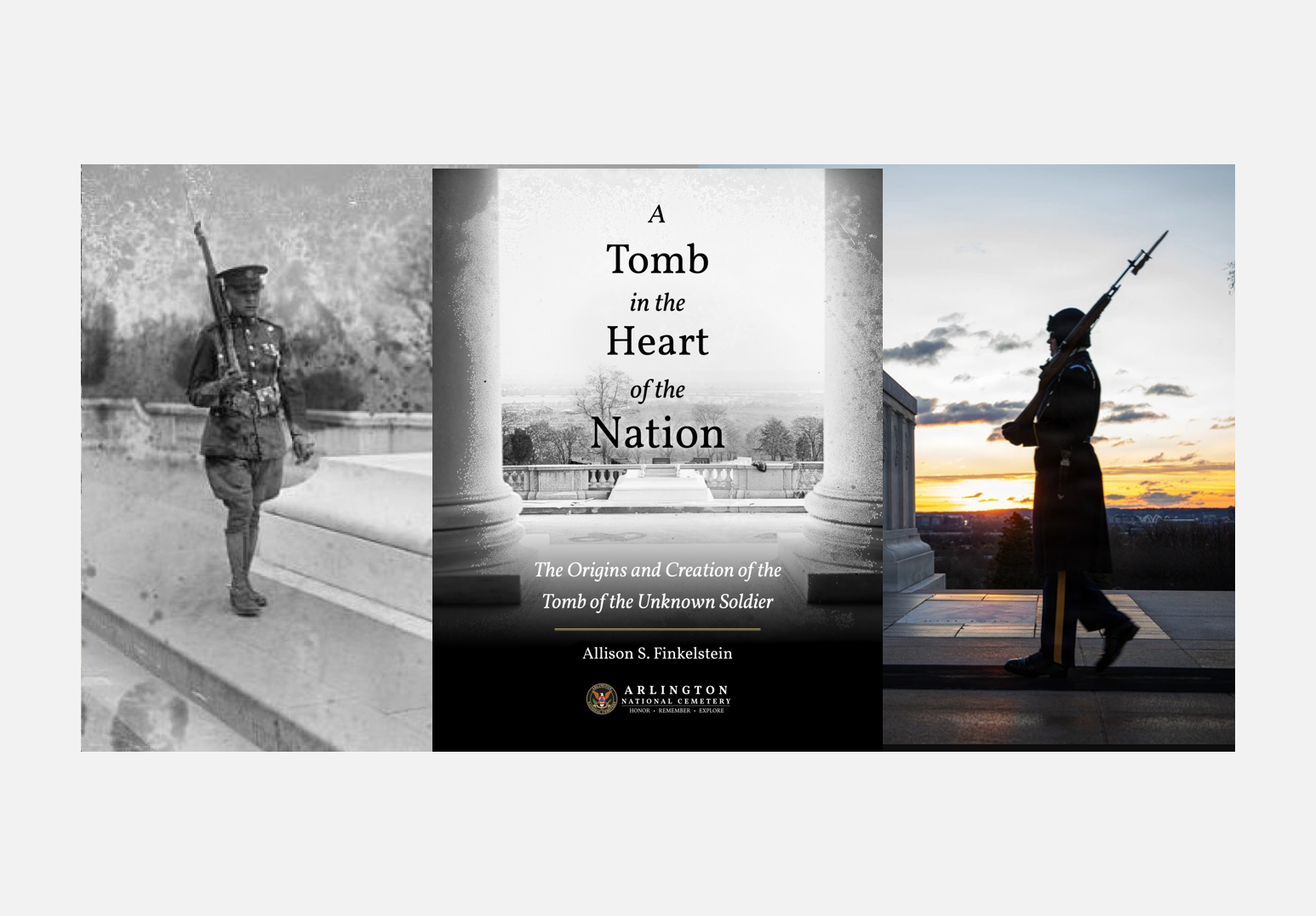
Header image framed
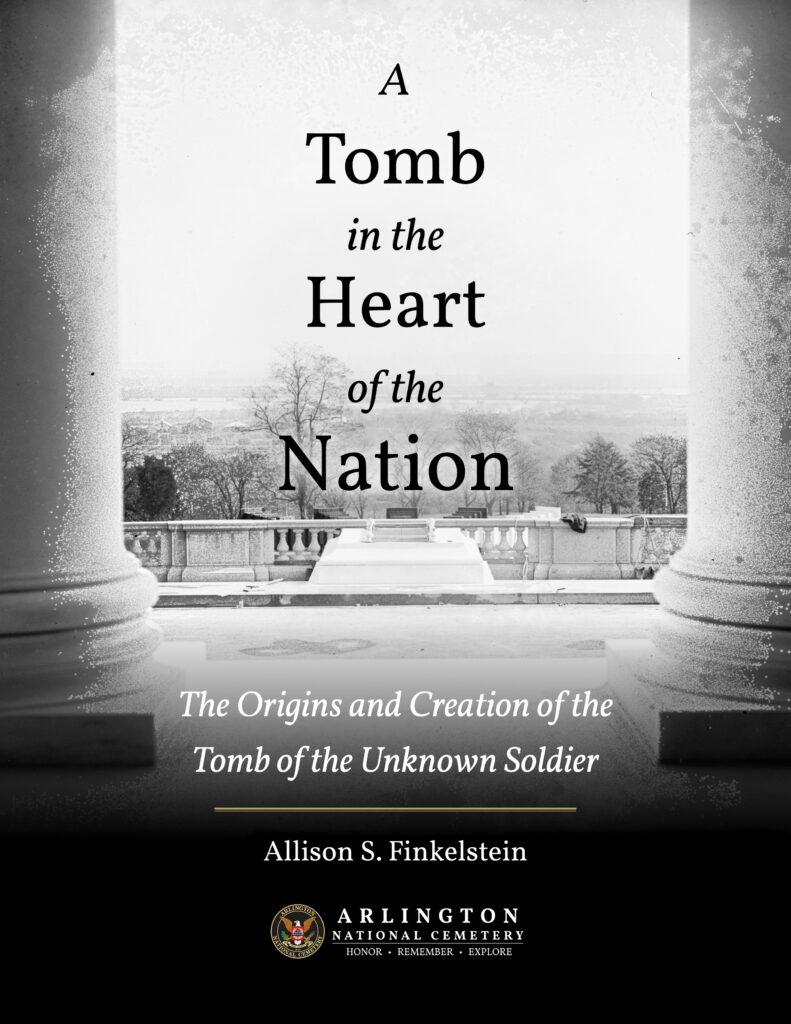
US Army book cover graphic by Johnny Chang (contractor), Army National Military Cemeteries.
Army National Military Cemeteries (ANMC) is proud to share that its new digital open-access publication, A Tomb in the Heart of the Nation: The Origins and Creation of the Tomb of the Unknown Soldier, was released online this past December. As the culmination of years of work, this publication provides a comprehensive history and analysis of the creation of the Tomb of the Unknown Soldier, arguably one of the most sacred American military sites.
While millions of people visit the Tomb each year, too few of them understand what they see at the Tomb, what it represents, or why it is there. This publication aims to make the site’s detailed history available online to anyone interested in learning more about this place of pilgrimage created as a reaction to World War I.
The process of writing A Tomb in the Heart of the Nation began in 2019 as ANMC prepared to serve as the Department of Defense’s official proponent of the 2021 Tomb of the Unknown Soldier centennial commemoration. ANMC historian Allison S. Finkelstein served as the publication’s author, with essential support from many members of the broader ANMC team. This team assisted with in-depth primary source research that accurately documented the process leading to the burial of the World War I Unknown Soldier and the Tomb’s dedication on November 11, 1921. No stone was left unturned in tracing the Tomb’s context and each step in its creation.
A Tomb in the Heart of the Nation fulfils two main objectives. First, it provides a thorough and engaging account of the Tomb’s establishment and situates it in the broader historical context of American military commemoration, leading up to and including the World War I era. Second, it closely analyzes the meanings and significance of the Tomb as a central site of American military memory, revealing the commemorative intentions of those involved with its creation.
The ANMC team learned over the years that there remain far too many misconceptions about the Tomb and factually incorrect myths about it abound, particularly on the Internet. While the Tomb has been included in many excellent monographs, articles, and works of theory, until now, there has been no single, primary source-based volume focused entirely on the Tomb’s origins, rather than using the Tomb as an example or the focus of a single chapter. This publication remedies that. It adds a detailed, nuanced, and analytical examination to the historiography of the Tomb, Arlington National Cemetery, World War I commemoration, military memory, military mortuary affairs, and pilgrimages.
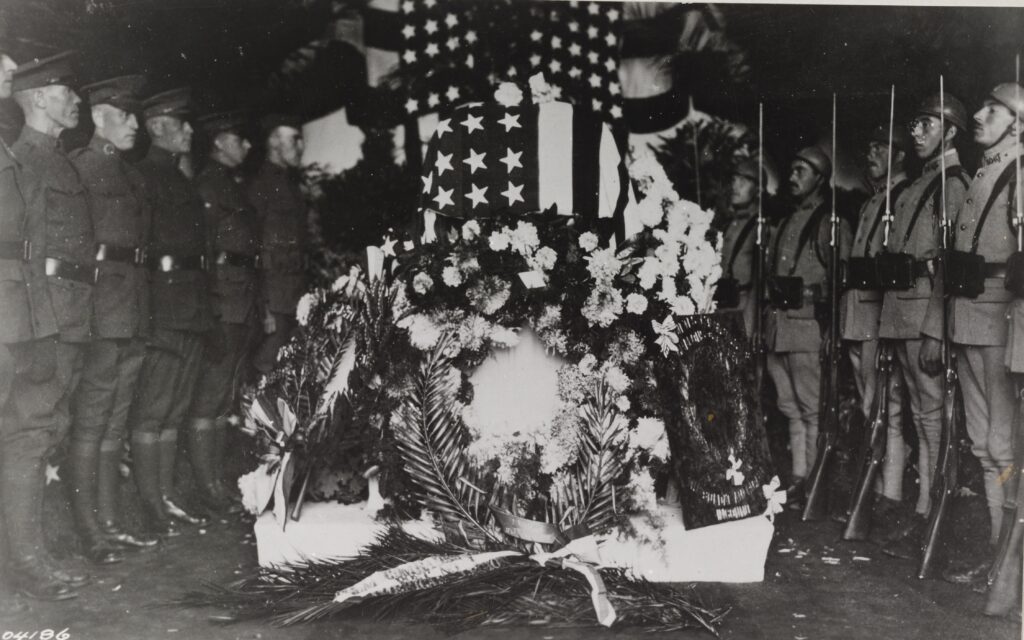
The World War I Unknown Soldier after the selection ceremony in Châlons-sur-Marne, France, on Oct. 24, 1921. National Archives and Records Administration.
From the outset, this digital publication was intended as a public history product, not a scholarly tome for academics or specialists. The mission was to make it widely accessible to the public online. This required careful thought about the style of its prose. While adhering to the highest scholarly standards of primary and secondary source research, historiography, analysis, and citations (so that it would be valuable to scholars), the publication also needed to be written in a way that would be accessible and interesting to a general adult audience.
By releasing the publication as an open-access PDF available to anyone at no cost, ANMC drew inspiration from the government’s intention to make the 1921 ceremonies inclusive of all Americans. In this way, it is a living memorial in digital form to the Unknown Soldiers—a work of history that honors their memory by telling their stories, as indicated in the dedication, and represents the final project of the Tomb Centennial.
Nine chapters are organized chronologically and include sidebars (in an appendix) about related topics. The first four chapters are contextual and provide important background about the history of American military commemoration, mortuary affairs, the American Expeditionary Forces, World War I combat and fatalities, and the British and French tombs that inspired the United States. The subsequent chapters trace the steps that led to the American Tomb’s establishment, starting with the legislation that authorized its creation. The narrative continues with chapters focused on the selection ceremony, the Unknown Soldier’s transatlantic journey, and the ceremonies in the Washington, D.C., area. The conclusion briefly summarizes major moments in the Tomb’s history after 1921 and reflects on its evolution, significance, and functionality as a commemorative site. Throughout each chapter, key individuals, sites, and challenges emerge, transforming the sequence of events into a captivating saga rather than a simple timeline.
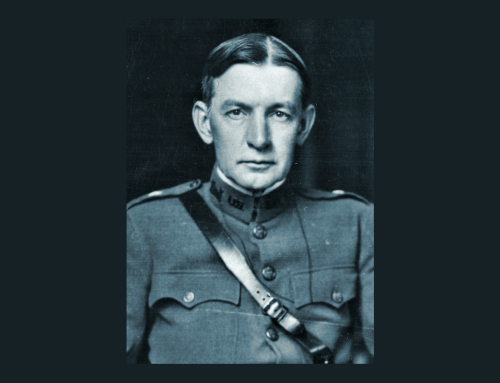
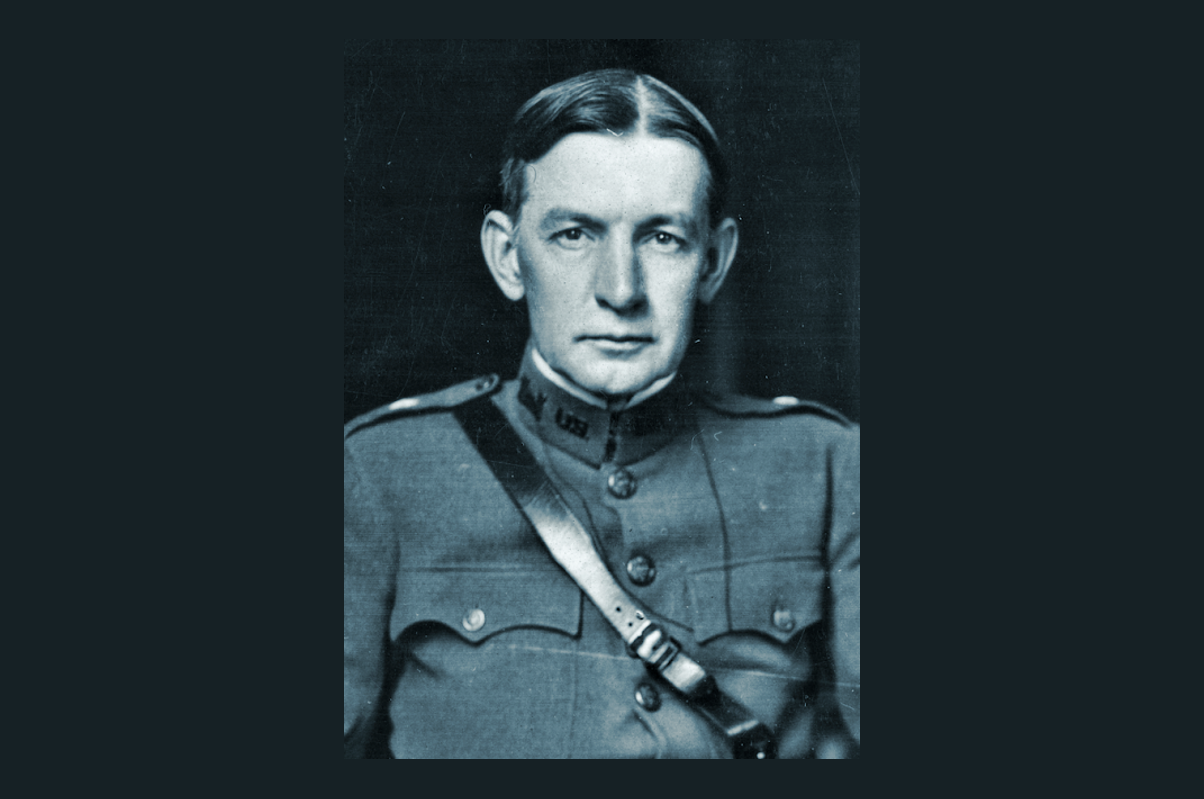
People are at the center of the Tomb’s history. The narrative highlights many of the lesser-known players in the Tomb’s creation, such as Charles Keating, the chief supervisory embalmer at the selection ceremony, himself a veteran who served with the Graves Registration Service and returned to France as a civilian after the war. The book also uncovers the female memory-makers critical to the Tomb’s early development, such as journalist Marie M. Meloney, an advocate for the Tomb, as well as the Gold Star mothers and widows, nurses, and female veterans who took their rightful place at the ceremonies.
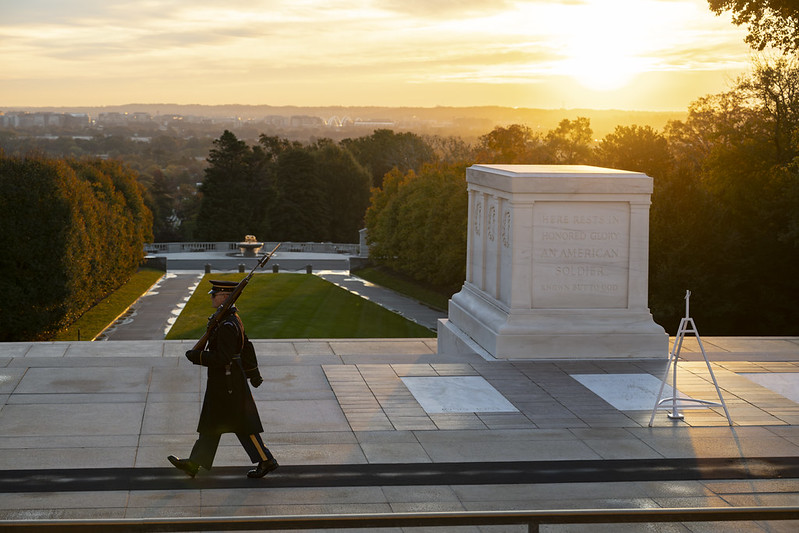
The Tomb of the Unknown Soldier on Oct. 27, 2025. US Army photo by Elizabeth Fraser.
With public service and commemoration as the motivating factors behind it, A Tomb in the Heart of the Nation makes Americans aware of their shared cultural heritage at the Tomb and brings deeper meaning to those who visit this sacred site. Those who read it will gain a greater appreciation for the sacrifices of the World War I generation and the devastating war that compelled the US to create a new place of pilgrimage within Arlington. As more time passes since the Tomb’s dedication, and as World War I becomes an even more distant memory, this publication will remain for posterity as a record of why the Tomb was needed and what it stands for. Access this digital publication here.
 Allison S. Finkelstein earned her Ph.D. in U.S. History from the University of Maryland, College Park, where she also studied historic preservation. She is the Historian, Army National Military Cemeteries. .
External Web Site Notice: This page contains information directly presented from an external source. The terms and conditions of this page may not be the same as those of this website. Click here to read the full disclaimer notice for external web sites. Thank you.