Jim McConnell – Ambulance Driver and Pioneer Fighter Pilot
Published: 9 February 2026
By Steven T. Tom
Special to the Doughboy Foundation website
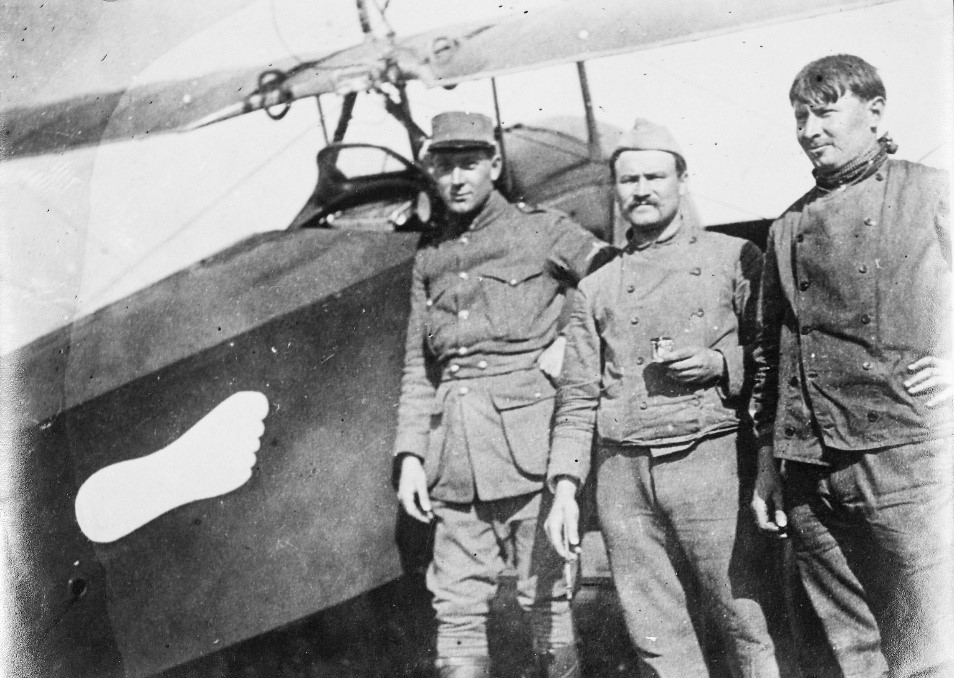
FIgure 7
Figure 7: Jim McConnell with two unknown mechanics beside his Nieuport 11 fighter. Jim had been elected "King of the Hotfoot Society" at UVA and chose the society’s footprint emblem as his personal motif. One mechanic is holding the paintbrush he has just used to paint the emblem. May/June 1916.
Franklin “Doc” Treece was a kindly old man who raised geraniums and petunias for a living. He was also a machine gunner who had been gassed while fighting his way through the shattered forests of the Meuse-Argonne. I didn’t know anything about that when I was growing up. I just knew him as “Grandpa.” Like many veterans he seldom talked about the war, but my grandmother let me play with his helmet and gas mask. That sparked an interest in World War I. I began reading books about the war in middle school, and I’ve been reading about it ever since. That was strictly a personal interest, though. I studied engineering as a profession and spent over forty years working in that field. When I retired, I had time to look back at the war and write about some of the people and events I thought deserved to be remembered. My first book was a biography of Kiffin Rockwell, an American who volunteered to serve in the French Foreign Legion in 1914 and who later became one of the world’s first fighter pilots.
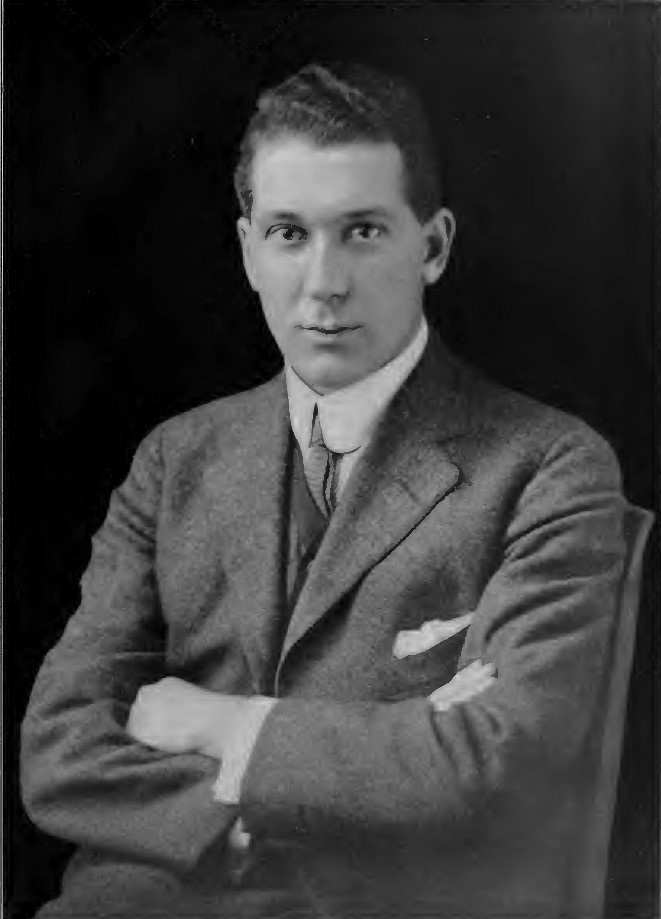
Figure 1: Jim McConnell at the University of Virginia, c1910.
While researching Kiffin I learned about the people he served with. One individual in particular caught my attention. James R. McConnell was a close friend of Kiffin, but a very different personality. Kiffin was extremely idealistic. He declared his intention to fight for France the day before war was declared, and he came to France driven by the idea that he was fighting for all humanity. Jim came to France looking for adventure. The more Jim saw of the war the more he became committed to the French cause, but it never consumed him the way it dominated Kiffin. Jim found time for other interests. He had a sense of humor. He was an excellent writer, and he led what could politely be described as an “active social life.” While he was in pilot training, the danger he faced was highlighted when the French required him to make out a will. They asked him if he wanted to be buried as a Protestant or a Catholic and he replied, “Whichever gives the best send-off.” Later he wrote to a friend in Paris and said, “If I die, tell Marcelle I croaked muttering her name.” He followed this tender sentiment with the words “Tell Betty the same thing.”
I wanted to know more about Jim McConnell, but I had a lot to learn. Despite my years of reading about the war, I knew virtually nothing about the volunteer ambulance services. Jim joined the American Ambulance Field Service (AAFS), which was the largest of several volunteer services. The term “Ambulance” originally referred to a movable hospital, so the “Field Service” delivered patients to forward hospitals. After testing several types of ambulances, they chose a custom-bodied Model T Ford as the best vehicle to navigate the narrow, shell-torn roads and open fields that needed to be traversed to reach wounded soldiers. The lightweight, easy to repair Fords proved superior to larger, heavier, and more expensive European ambulances for this purpose.
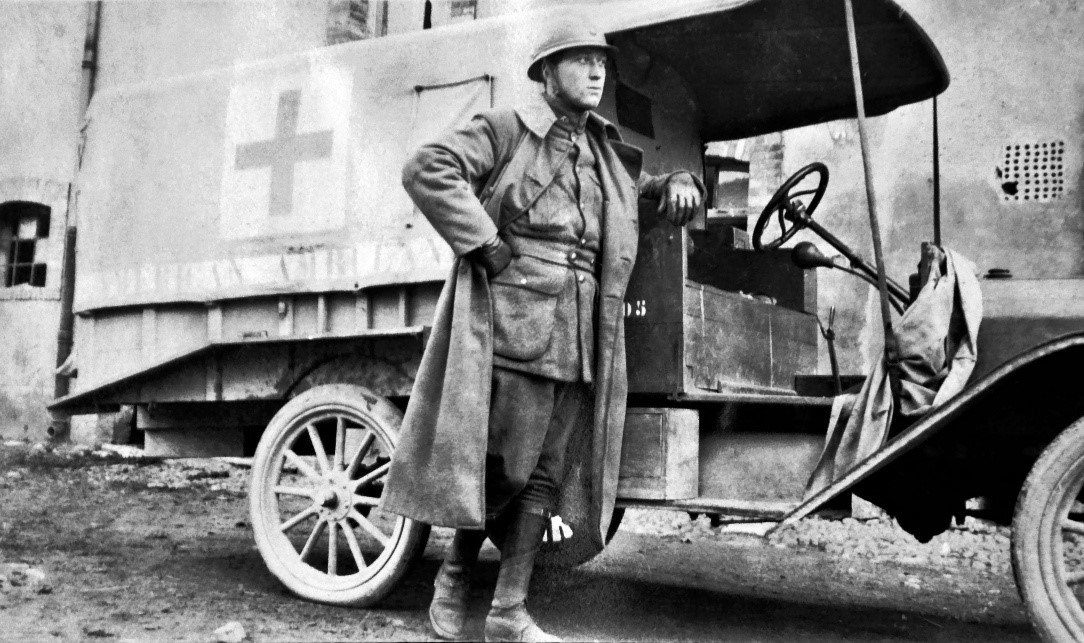
FIgure 2: Jim striking a “heroic pose” next to his Model T ambulance. 1915.
The AAFS sent Jim to Pont-à-Mousson, a town at the root of the Saint-Mihiel salient. The French were fighting desperately to push the Germans out of the salient, and the Germans were fighting just as desperately to hold it. The salient would not fall until the Americans overran it in 1918. Until then, thousands of French and German soldiers were killed or wounded fighting near Pont-à-Mousson.
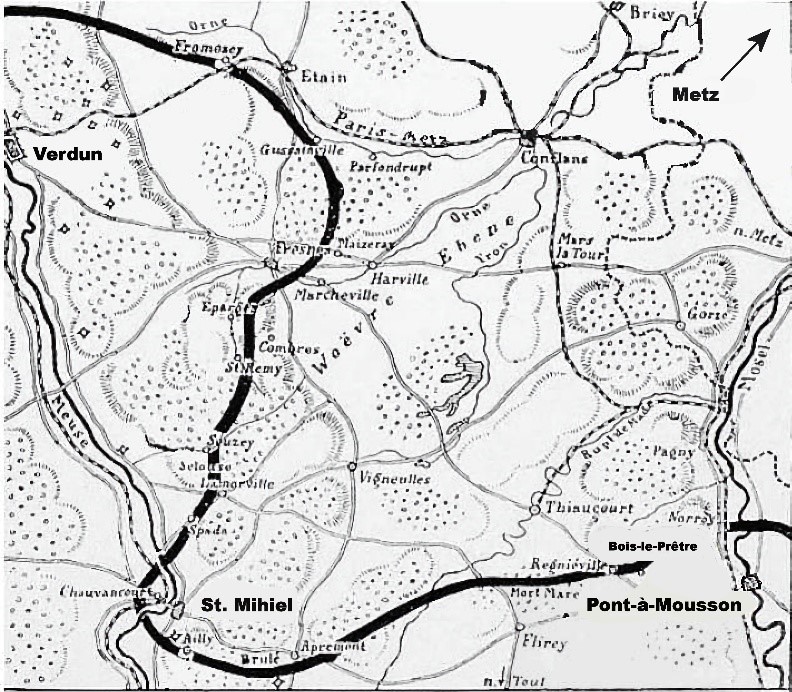
FIgure 3: The St Mihiel Salient
Jim’s job was to drive his ambulance to first aid posts located just behind the front lines, pick up these wounded soldiers, and transport them to the nearest hospital. He was a civilian and a noncombatant, but he was subject to French Army discipline and exposed to small arms fire, artillery fire, and gas attacks. At night he had to drive without lights, and without smoking, as the slightest glimmer would draw fire. He lived in the town of Pont-à-Mousson, which was itself subject to periodic shelling by the Germans. Jim earned the Croix de Guerre for risking his life during an artillery bombardment, picking up a wounded civilian and transporting him to the hospital.
Jim proved to be a talented writer. He wrote an article “With the American Ambulance Service,” which was published in The Outlook magazine, one of the most popular news periodicals of the day. Former President Theodore Roosevelt wrote a forward to the article, praising the Americans who were voluntarily serving France and praising Jim in particular. Despite this praise, Jim didn’t feel that he was doing enough to help France. He was openly critical of the US for not coming to France’s aid, especially after a German submarine sank the Lusitania. Jim didn’t feel that he could continue to serve as a noncombatant. He joined the French Foreign Legion, and through the Legion, he became a fighter pilot.
Another thing that I learned while researching Jim’s life was how rudimentary the training of fighter pilots was, particularly during the first years of the war. Aviation itself was barely 11 years old when the war started, and the first war planes were slow, cumbersome, and unarmed. Planes capable of carrying a machine gun aloft and shooting down other airplanes didn’t emerge until mid-1915, and the pilots who flew them had to develop the tactics to survive and succeed through trial and error. Jim began his flight training on New Year’s Day 1916. This training taught him to how to take off, land, and do rudimentary cross-country navigation. He earned his pilot’s license after 15 hours in the air. He then had a few weeks of “advanced” training that taught him how to do loops, rolls, and other simple aerobatics. Some of the things he wasn’t taught were how to attack another airplane, how to avoid being shot down, how to fly in formation, or even how to fire a machine gun in the air. It wasn’t that he somehow missed these lessons, it was that these concepts were so new the instructor pilots didn’t know how to do these things themselves. Jim could take off and land a sensitive fighter plane without killing himself, so he had learned everything his instructors could teach him. It was the dawn of combat aviation.
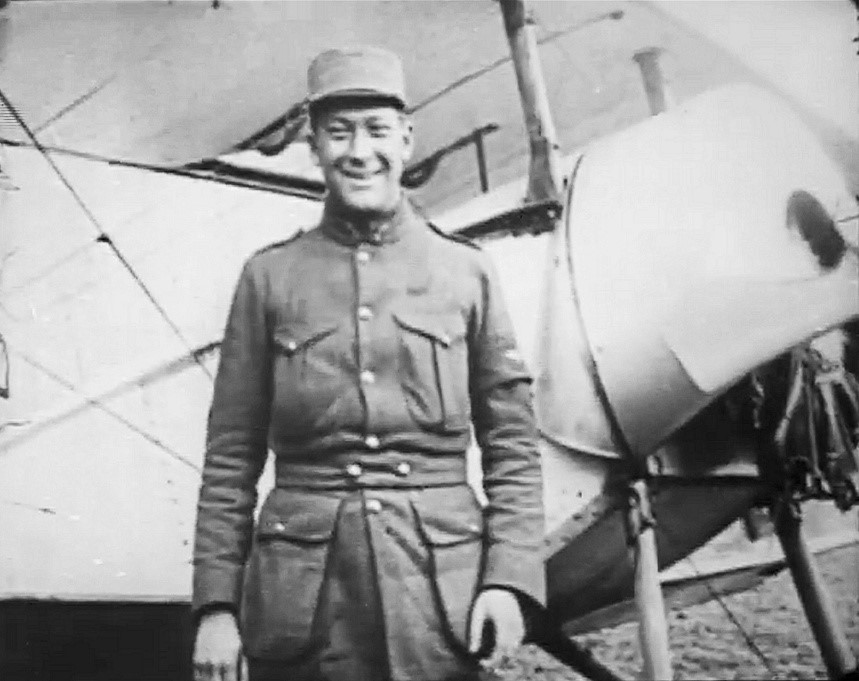
Figure 4: Jim poses beside a Nieuport shortly after being assigned to the Lafayette Escadrille. May 1916.
Jim became one of the original members of the Escadrille Américaine, a fighter squadron of American volunteer pilots that would later be called the Lafayette Escadrille. The Americans flew Nieuport 11 biplanes, the first effective French fighter plane. Powered by an 80 hp rotary engine, the plane was armed with a Lewis machine gun mounted on the top wing so it would fire over the top of the propeller. The gun was fed from a drum magazine that held 47 rounds – enough for a five second burst. After that the pilot needed to change drums, a tricky maneuver that required tipping the gun back, pulling off the empty drum, inserting a new drum, and pushing the gun back into firing position. This had to be done while flying in combat, fighting a 100-mph wind that tended to rip the magazine out of the pilot’s hands, and maneuvering to avoid being shot down by an enemy plane. Jim, of course, hadn’t been taught how to do this. None of the new American pilots had. They were initially sent to a quiet sector, but before they had a chance to gain any real combat experience they were rushed to Verdun, where the first major air battle in history was taking place.
Jim’s first combat mission at Verdun was almost his last. He predictably lost his formation, tried to attack the first German plane he had ever seen, fired a machine gun in the air for the first time in his life, and made a series of rookie mistakes that left him frantically trying to escape the German plane on his tail. Fortunately, Jim’s plane was faster. There were bullet holes through the wings on both sides of his body, some less than a foot from his vital organs, but Jim wasn’t hit. He was, however, hopelessly lost. He tried to land on an empty field and totally demolished his plane, but he survived. Incredibly, he would survive five more months of combat, gradually learning the rules of the game, before another emergency landing sent him to the hospital with a bad back.
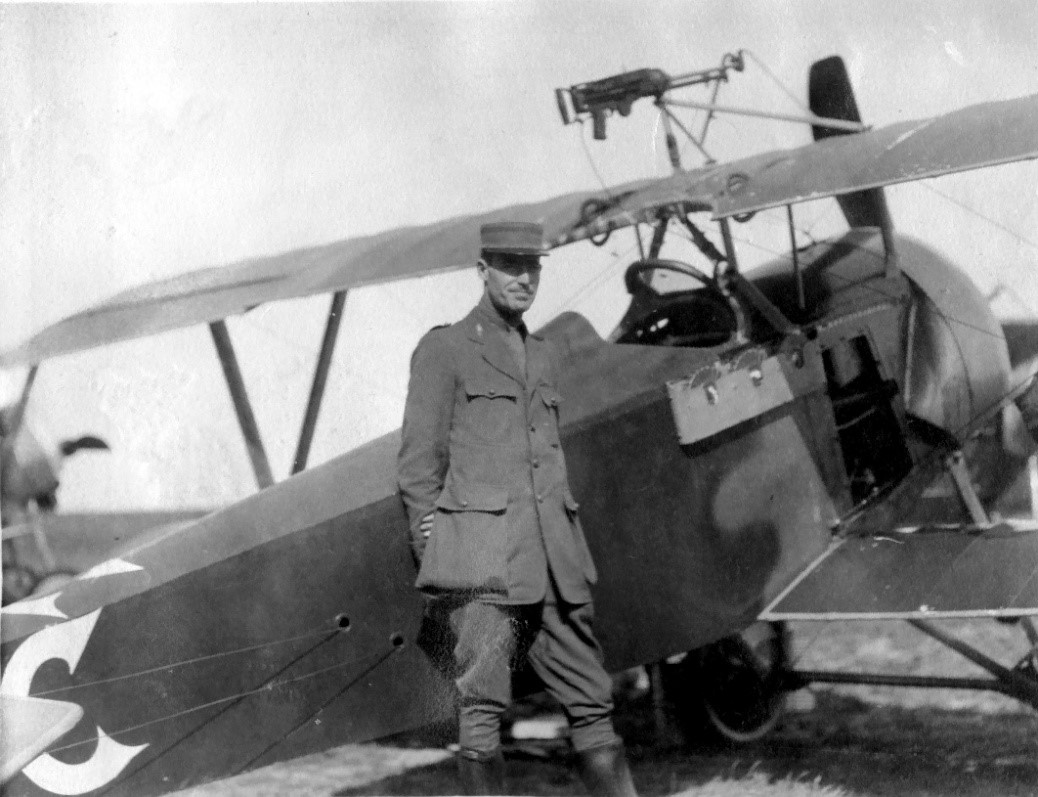
Figure 5: Kiffin Rockwell stands beside a Nieuport fighter. The machine gun on the top wing is clearly visible. Spare ammunition drums are mounted beside the cockpit. Summer 1916.
While Jim was in the hospital, he again demonstrated his writing skills, authoring a series of magazine articles that were compiled into a best-selling book Flying for France. Jim’s book, and the publicity newspapers were giving to the Lafayette Escadrille, inspired many Americans to come to France and join them. When the US finally did enter the war, Jim’s articles and book helped lead to a flood of volunteers for pilot training. (During my research I discovered a long-overlooked magazine article that was supposed to be part of the book, but which arrived at the publisher too late to be included.)
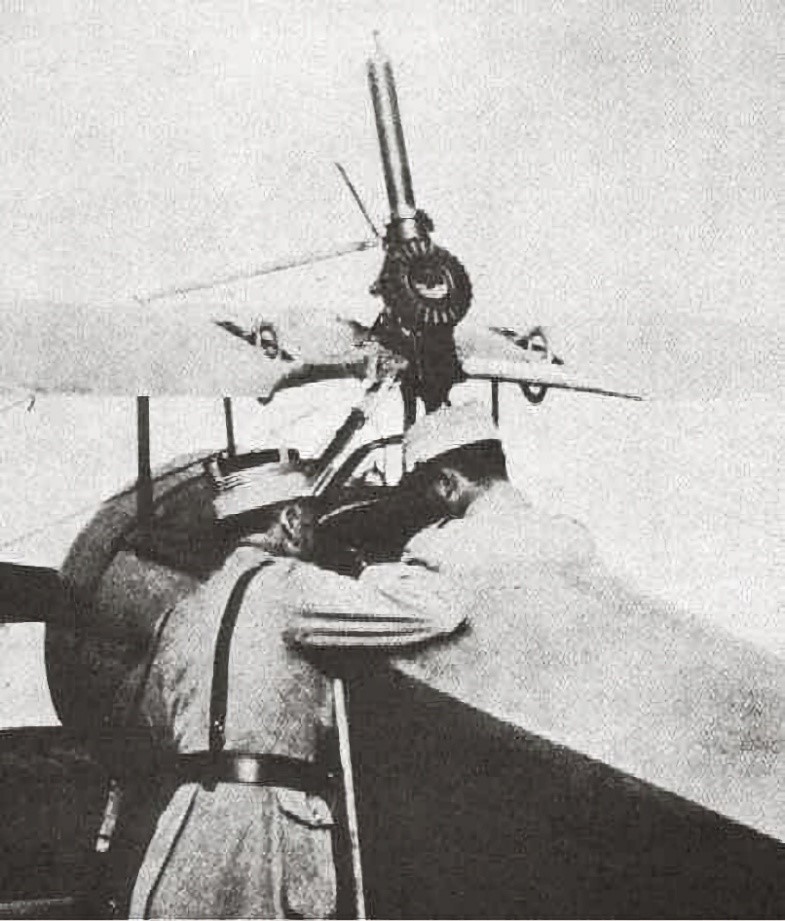
Figure 6: A Nieuport with the machine gun tipped back for reloading. Date unknown.
After several months of hospitalization and convalescent leave, Jim’s back was still so bad he walked with a cane and couldn’t twist around to look behind him. The ability to do this was critical to the survival of a fighter pilot. Fighters can only fire forward. Their only defense against an attack from behind was to see the attacker and turn to face him before he got so close he could follow their maneuvers and stay on their tail. Jim couldn’t do that. Had he told his doctors how bad his back really was, they probably would have grounded him and given him a medical discharge. There is no evidence Jim even considered this. He would not abandon France or his fellow pilots. He returned to his squadron and continued flying combat missions. He also continued to criticize the US for remaining neutral, writing his friends in America and urging the US to come to the aid of France. Jim cheated the grim reaper for another five months before the inevitable happened. A German pilot got on his tail and shot him down on March 17th, 1917. He was the last American to be killed in combat before the US entered the war.
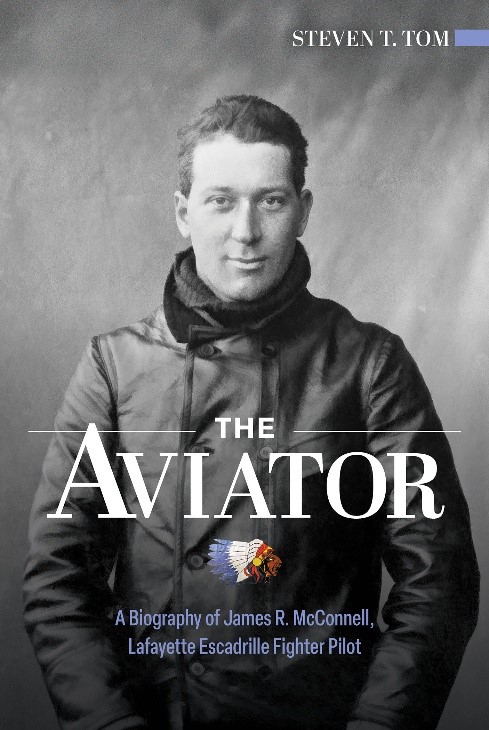 Jim was by no means one of the war’s top aces. The stereotype of the cocksure, “I’m the best pilot the world has ever seen” fighter jock did not apply to Jim. Jim was a man who knew his limitations, knew the risks he was taking, but felt the cause he was fighting for was worth the risk. Like many combat veterans, he also fought for his buddies as well as for a cause. Those are timeless lessons that apply to soldiers today as much as they did to soldiers in World War I. Weapons change, but war doesn’t. Jim’s descriptions of huddling in a basement in a town under shellfire sound distressingly like stories coming out of Ukraine today. An engineer who develops weapons today commented on how the rapid development of fighters in World War I mirrors developments he sees in drones today. Learning about World War I helps us understand and appreciate the world we live in today. As President Truman said, “The only thing new in the world is the history you don’t know.”
I would like to add a note of appreciation to all the librarians, archivists, and museum personnel who made my research for The Aviator possible, especially during the COVID pandemic. They answered many questions, copied and emailed many documents, and provided materials through interlibrary loan when I could not visit their institutions in person. I would also like to thank experts I met through the League of World War One Aviation Historians who answered many questions via email, and noted aviation historian Steve Ruffin in particular, for their invaluable help. Without them, I could not have told Jim McConnell’s story.
 Steve Tom grew up in northern Indiana, traveled around the world during a 20+ year Air Force career, and continued to travel during a 20 year career as a professional engineer. Much of this traveling was done in antique cars, though not the shiny classics you see in museums and car shows. His first car was a 1928 Ford, a rusted relic with fuel problems and a rotted top. For several years that was his only transportation, but when the realities of long distance driving made it clear he needed a more “modern” car he supplemented it with a $50 MGA he found decaying in someone’s back yard. “Flaming Floorboards” tells the story of these and several other well-worn vehicles he drove regularly. When Steve was sixteen his great aunt gave him a copy of “War Letters of Kiffin Yates Rockwell,” a pioneering World War One pilot. This sparked a lifelong interest in that war and led to “First to Fight,” the story of Kiffin Rockwell published by Stackpole Books. Steve is a member of the League of World War One Aviation Historians. His short stories and other writings, including a photo supplement to “First to Fight,” are available on his author web site at www.random-writings.com.
Photo Credits:
Figure 1: Jim McConnell at UVA. Public Domain image from McConnell, James R, Flying for France, The World’s Work Magazine, March 1917, Doubleday, Page, and Company, Garden City, New York, pg. 502.
Figure 2: Jim strikes a heroic pose: Photo courtesy of the National Museum of the United States Air Force®.
Figure 3: The St. Mihiel Salient: 1915 German map (public domain) from “St. Mihiel Salient – Bois le Prêtre, ” French web site https://www.pierreswesternfront.nl/st-mihiel-salient-bois-le-pretre-priesterwald-fey-en-haye-destroyed-village-kuehlewein-brunnen-vilcey-sur-trey, with annotations by author.
Figure 4: Jim McConnell posing beside a Nieuport: Albert and Shirley Small Special Collections Library, University of Virginia.
Figure 5: Kiffin Rockwell beside a Nieuport fighter: Paul Ayres Rockwell Collection, Special Collections Department, Washington & Lee University.
Figure 6: Lewis gun tipped down for reloading: https://www.airdromeaeroplanes.com/PhotoGallery/Historical%20Images/slides/LewisNieuportBebe.html (Public Domain)
Figure 7: Jim with two unknown mechanics. Albert and Shirley Small Special Collections Library, University of Virginia.
External Web Site Notice: This page contains information directly presented from an external source. The terms and conditions of this page may not be the same as those of this website. Click here to read the full disclaimer notice for external web sites. Thank you.