If You Love Animals, You Might Like These Stories About Working Pets
Published: 19 February 2026
By Jonas Grinevičius
via the AOL website
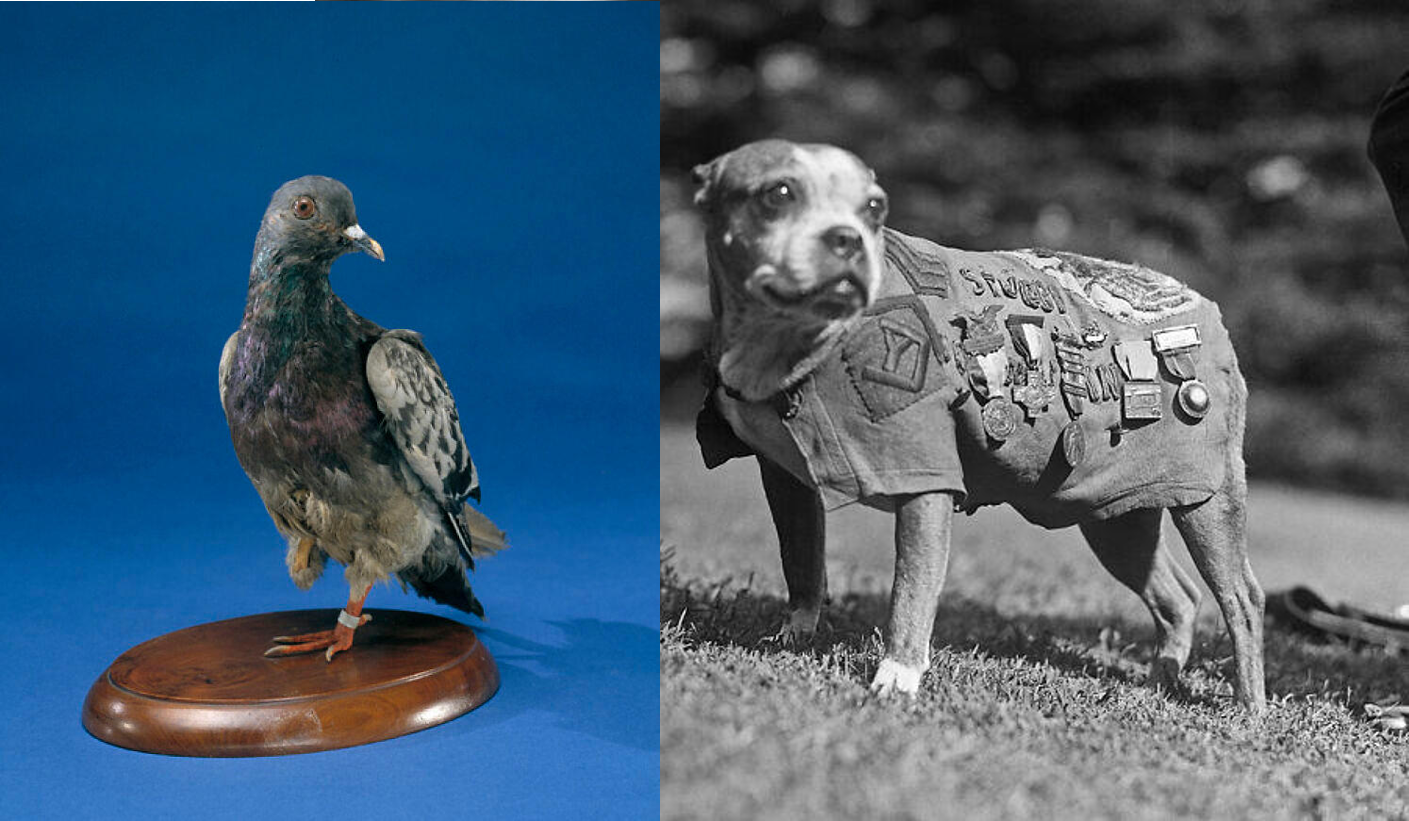
Cher Ami-Stubby
Cher Ami and Stubby: World War I animal heroes.
The history of humankind is also the history of our relationships with the natural world. For centuries and millennia, some animal companions have been more than just wholesome pets. They were expected to fulfil certain roles alongside their owners.
Today, our team at Bored Panda is featuring some of the most iconic working animals from the past. Check out their stories and vintage photos below. They might help you see history from a different perspective.
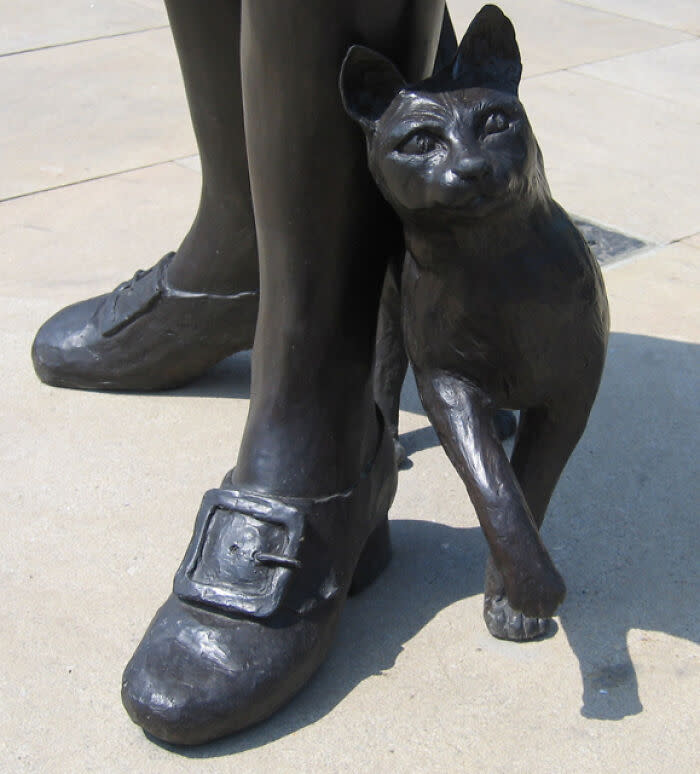
#1 Trim The Cat – Navy Ship Companion
Trim (1799–1804) was a black and white cat known for his strong survival instinct and intelligence, who accompanied a Royal Navy officer named Matthew Flinders on his voyages. Since Trim was faithful, affectionate, and even a little bit cheeky, everyone on board adored him, and Flinders even wrote a biography about him as well as other tributes and poems.
Trim was known to join the captain at his table and sometimes even tried to swipe food off the forks while folks ate. Apart from this, he served as a wonderful furry companion to everyone and even started behaving like a fearless seaman in no time.
#2 Sergeant Stubby – WWI Canine Soldier
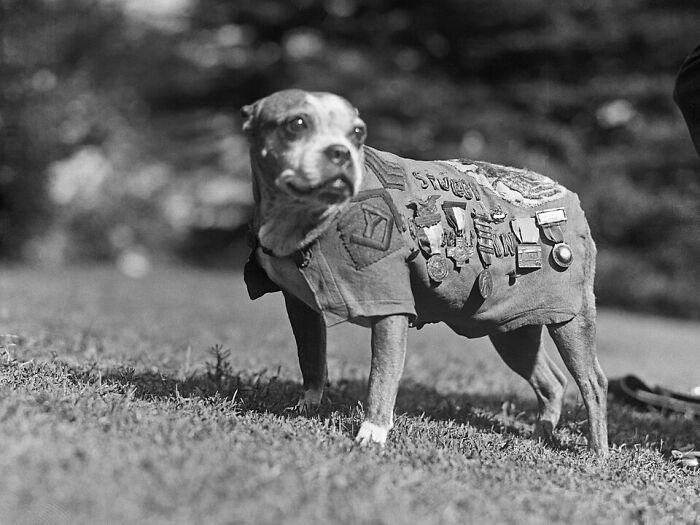
Sergeant Stubby (1916-1926) was a canine soldier who became the unofficial mascot of the 102nd Infantry, 26th Yankee Division due to his bravery in World War I. It all began when he was found wandering around during an army training session, and a soldier, Corporal Robert Conroy, took a liking to him.
He accompanied the corporal aboard a ship to France and protected his fellow army men by using his keen sense of smell to detect dangerous chemicals. He also took on the role of a mercy dog and comforted injured soldiers. By the end of the war, Stubby had served in 17 battles and even learned the bugle calls and drills done by the armymen.
#3 Togo The Sled Dog (On The Far Left)
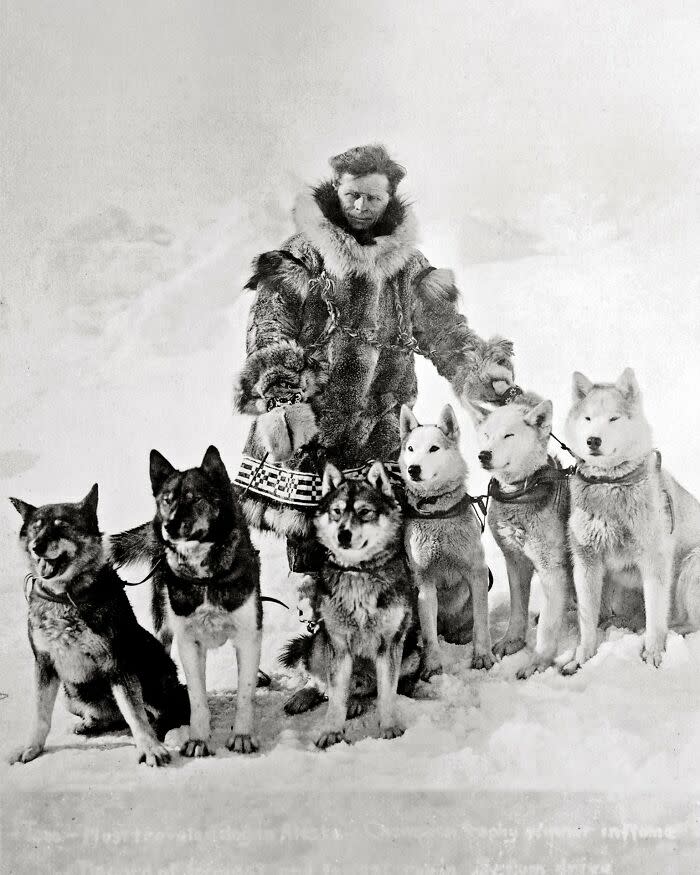
Togo (1913-1929) was a sled dog who helped save a small Alaskan town in 1925 by leading a sled team. This wonderful canine, who was once considered a puppy troublemaker, eventually grew up to show natural intelligence and leadership traits.
That’s why in 1925, when diphtheria broke out in Nome, Alaska, and there were no other ways to get the antitoxin, Togo and the other sled dogs did what nobody else could. They began the ‘Great Serum Run’ in freezing temperatures (-85F wind chill) and almost complete darkness, with Togo cleverly avoiding cracks in the ice and open water.
As the BBC notes, aside from dogs guiding their owners or catching criminals, there are lots of other animals that have jobs.
For instance, donkeys have been used as working animals for at least a jaw-dropping 5,000 years. Over 40 million donkeys are living on our planet, and most of them can be found in underdeveloped countries. These animals are very intelligent, stubborn, and avoid doing things that scare them.
Meanwhile, another well-known working animal is the truffle pig. As the name suggests, this creature hunts for truffles, edible fungi that are incredibly prized in the gastronomic world.
“The pigs have such a good sense of smell they can sniff out a truffle even when it is buried a metre underground. Truffles are found buried between fallen leaves and soil in the forests of Europe and North America. They are a very expensive food, popular in Middle Eastern, French, Spanish, Italian and Greek cooking,” the BBC explains.
#4 Cher Ami – WWI Homing Pigeon
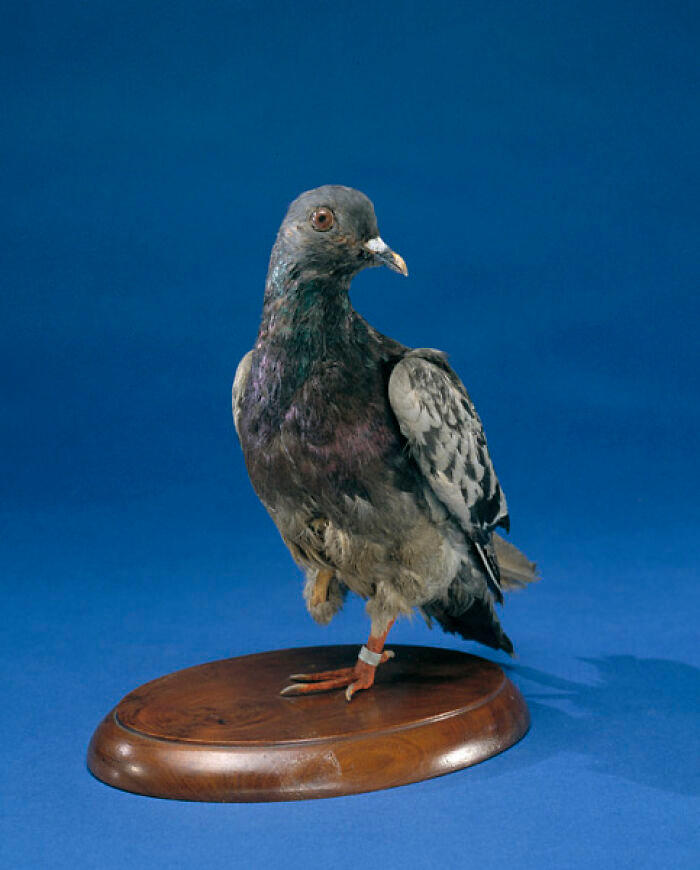
One of the most unlikely heroes in this list might be Cher Ami, a male homing pigeon (1918-1919) who served in World War I. His name means ‘dear friend,’ and that’s exactly what he was to the soldiers of the ‘Lost Battalion’ 77th Division in the Argonne, when he dodged German bullets to deliver a message that saved their lives.
Before that, Cher Ami had worked in 12 successful missions, which is a high success rate among homing pigeons. It was during the Meuse-Argonne Offensive in 1918 that he did his best work yet by covering 25 miles in 25 minutes, in the most dangerous conditions, despite being wounded, to deliver his message to the American base.
Read the entire article on the AOL website.
External Web Site Notice: This page contains information directly presented from an external source. The terms and conditions of this page may not be the same as those of this website. Click here to read the full disclaimer notice for external web sites. Thank you.