From Isolation to Influence: How WWI Reshaped America’s Global Standing
Published: 19 February 2026
via the Oreate AI website
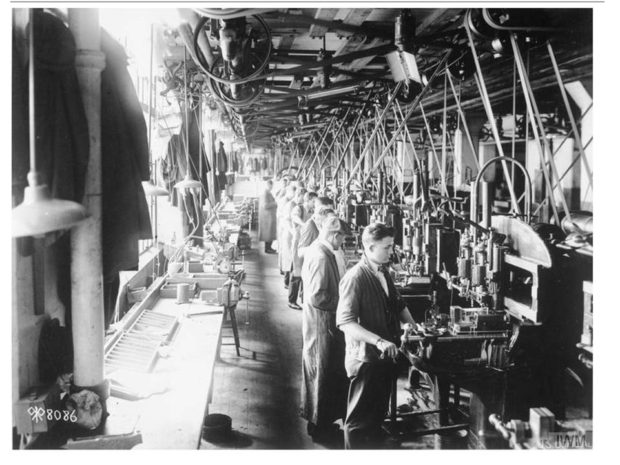
BrowningFactory1918-1-620×465
Workers assembling Browning machine guns at the Winchester Repeating Arms Company in New Haven, Connecticut, April 6, 1918. The machines shown are early 20th-century metalworking equipment, powered by overhead belt drives typical of the era.
It’s easy to think of World War I as a distant conflict, a European affair that eventually drew in the United States. But looking back, it’s clear that this “Great War” was a pivotal moment, fundamentally altering America’s trajectory, not just on the world stage, but within its own borders.
Before the war, the U.S. largely operated under a policy of isolationism, a deliberate choice to stay out of European entanglements. However, as the conflict raged, the economic realities began to shift. American industries, particularly those producing munitions and supplies, found themselves in high demand from the Allied nations. This wasn’t just about selling goods; it was a massive economic stimulus. Factories ramped up production, creating jobs and injecting capital into the economy. Farmers, too, saw a surge in demand for their produce, not only to feed American soldiers but also to supply European populations and armies. This period saw farmers confidently expanding their operations, often on credit, with banks readily supporting this growth. The industrial sector boomed, and for many, it felt like a second wave of industrialization was underway.
Beyond the economic boom, the war also spurred significant growth in the U.S. military. The Selective Service Act, essentially a draft, brought millions of men into service. While many volunteered, the sheer scale of mobilization was unprecedented. This expansion wasn’t just about numbers; it was about modernization. The war accelerated the development and adoption of new military technologies. Airplanes, which were nascent at the start of the conflict, rapidly evolved into crucial tools for reconnaissance and combat. Cannons became more powerful, and the grim reality of trench warfare necessitated advancements in defensive strategies and personal protective gear like gas masks, a stark reminder of the chemical weapons introduced. Even though the U.S. entered the war later, it benefited immensely from this technological leap, gaining expertise in building and utilizing these innovations, including submarines and other equipment supplied to the Allies even before direct involvement.
This period also saw a shift in American foreign policy. President Woodrow Wilson articulated a vision that neutrality was no longer sustainable when the peace of the world and the freedom of peoples were at stake. The attack on American interests and the subsequent involvement in the war shattered the long-held isolationist stance. America was no longer just an observer; it was an active participant, a defender of certain global ideals. This engagement, however, wasn’t without its internal complexities. The war effort required rationing, impacting daily life for civilians, and it also brought to the forefront existing social inequalities. The fight for democracy abroad contrasted sharply with the reality of second-class citizenship for many within the U.S., particularly African Americans.
Read the entire article on the Oreate AI website here:
External Web Site Notice: This page contains information directly presented from an external source. The terms and conditions of this page may not be the same as those of this website. Click here to read the full disclaimer notice for external web sites. Thank you.