Finding the Hello Girls: A Journey to Montreal and Beyond
Published: 19 February 2026
By Catherine Bourgin
Special to the Doughboy Foundation website
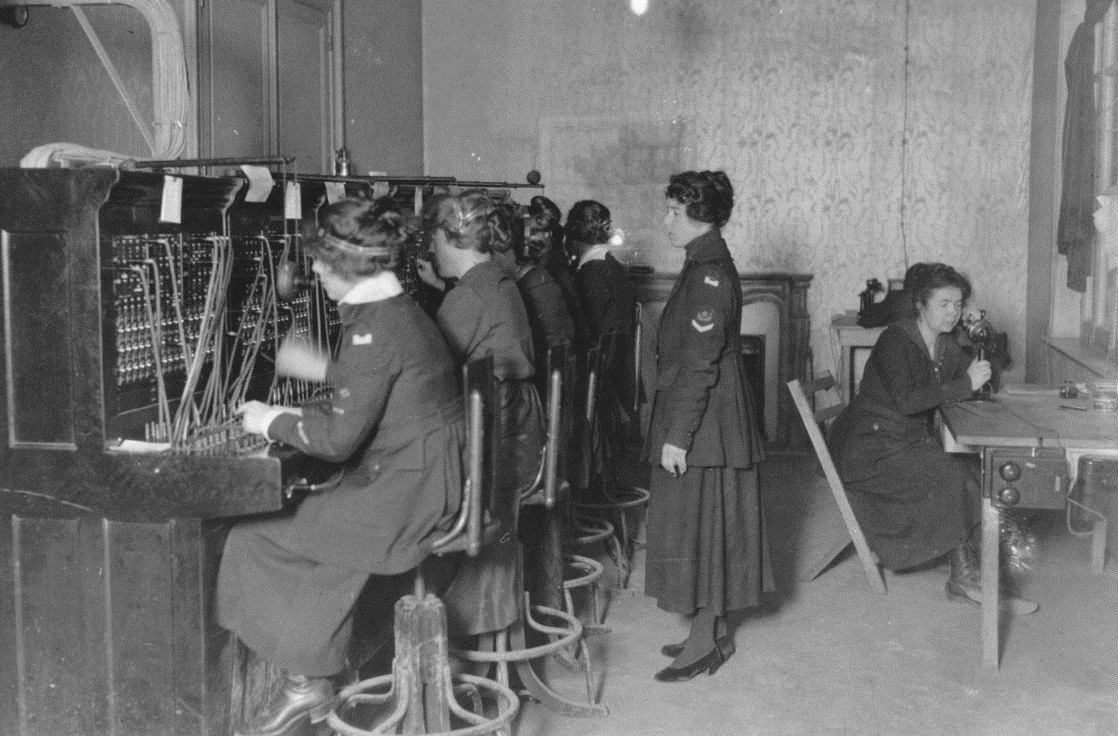
Header image Hello Girls on duty
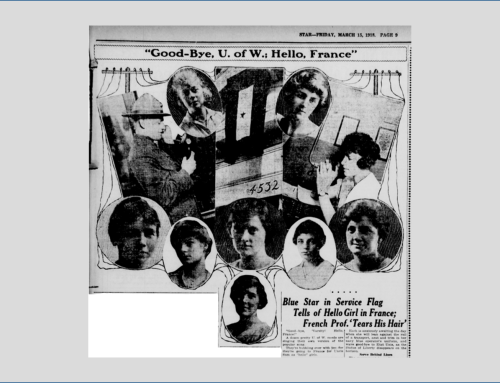
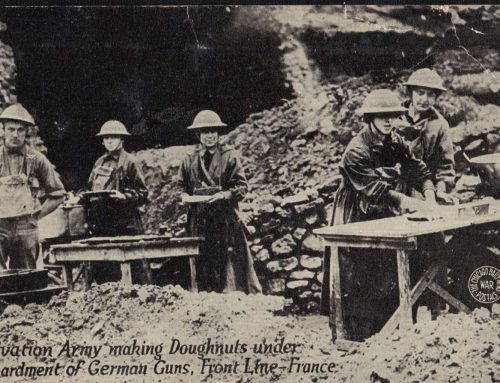
WWI U.S. Army Signal Corps Female Telephone Operators known as the "Hello Girls" running the switchboards in France as members of the American Expeditionary Forces.
Part One of a Series on the Hello Girls Military Honors and Remembrance Program
Thanks to the wonders of Ancestry.com, two years ago I discovered cousins I never knew existed in Montreal, Quebec, Canada. I’ve been fortunate to meet them on several occasions, and they have accepted me as family regardless of how our family tree grew in unexpected ways three generations ago. This past July 2025, I had another opportunity to visit them, combining family connections with Hello Girls research – specifically, verifying the grave marker status of three Hello Girls buried in Quebec.
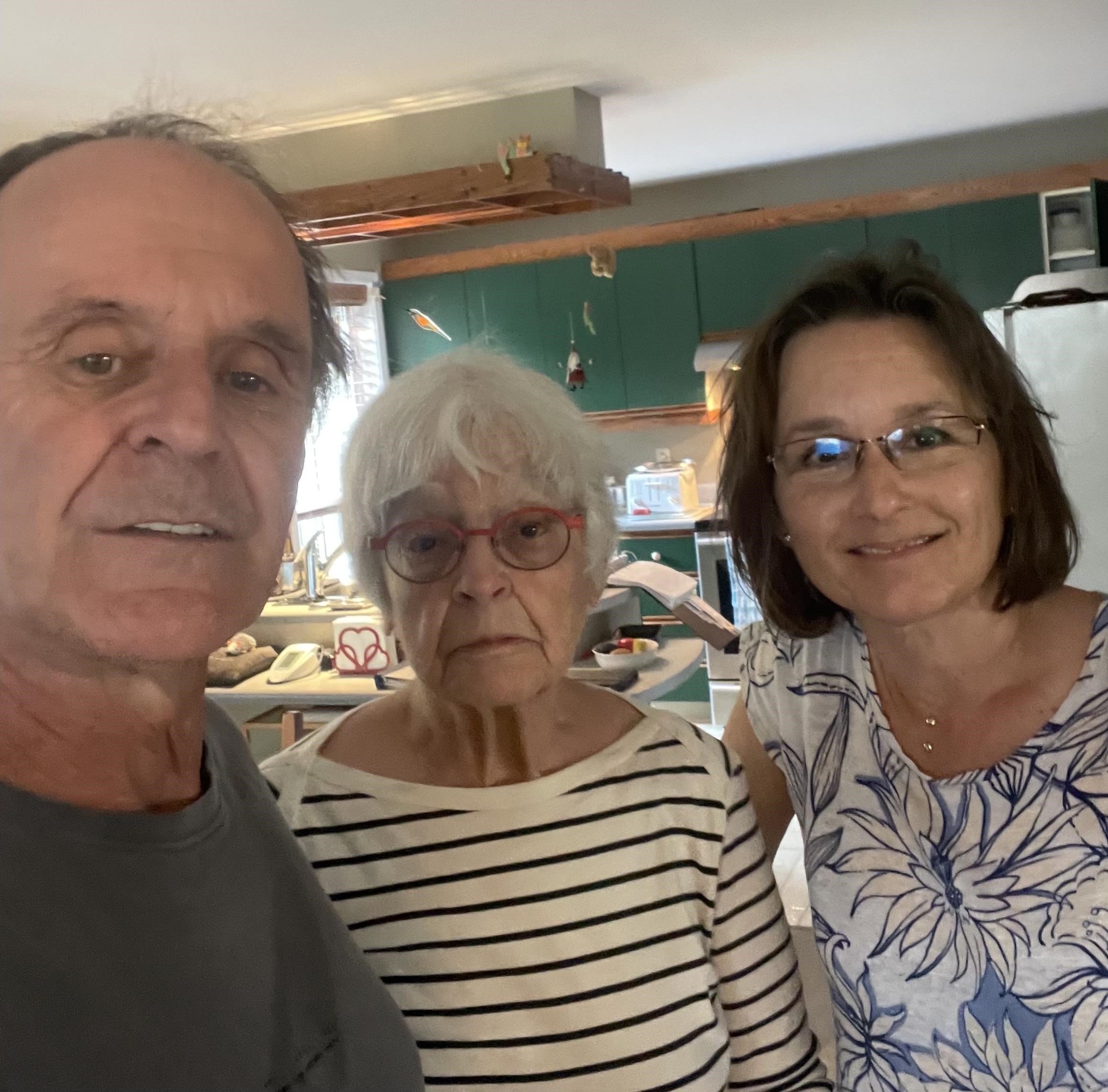
(L-R) My French-Canadian cousins Christian Longpre and Simone Leroux, and myself.
For a variety of reasons, I drive to Montreal from the DC area. It’s only a nine-and-a-half-hour drive one way. I drive a diesel car, which means gas mileage is fantastic, and it only takes a little over half a tank to get there. Another incredible discovery is that the traffic is worse right here in the District of Columbia, Maryland, and Virginia (DMV). Our Beltway is miserable. My trip takes me through more densely populated areas where traffic always seems to flow better than in the DMV. I relax when I finally cross the New York state line and get on Route 87 North.
Admittedly, I have done the nine-hour trip straight through and it’s tiring. Now I drive to the Lake George area and stop over to visit a college friend. Thanks to her, I’m also discovering upstate New York and all that it has to offer. I love driving through the beautiful Adirondack Mountains. The first time was in the fall of 2023, and those mountains with their glorious colors were a sheer delight to experience. I had the sunroof open, the windows down, and music playing, enjoying the scenery and the open road. As you approach the border with Canada, the land flattens out into what seems to me endless plains. It’s flat and you can see for miles. I never expected such openness and views for miles.
The Search Begins
With each visit to Montreal, I hope to gain additional insight into my French-Canadian roots, family stories, and to see the sites and places that maybe my grandmother experienced. This trip, I mixed in a little Hello Girls business. Through our endless research and spreadsheets, I’m assigned to research Unit 4 because my grandmother was in Unit 4. I focused on verifying grave marker status and discovered three Hello Girls buried in Quebec, but two of them didn’t seem to have a grave marker photo available.
My cousins joined me during my visit to the Côte-des-Neiges cemetery on Mont Royal in Montreal. They were interested in seeing a family plot marker, so we combined our efforts. After visiting the family plot, my search for Hello Girls Alice Raymond and Germaine Lamontagne became a real hunt because we couldn’t find them even with directions. Eventually we hailed a cemetery worker who connected us with a cemetery tour guide. She arrived with her book of burial plot maps, carefully studied them and the sites, and in both cases declared the women were in unmarked graves.
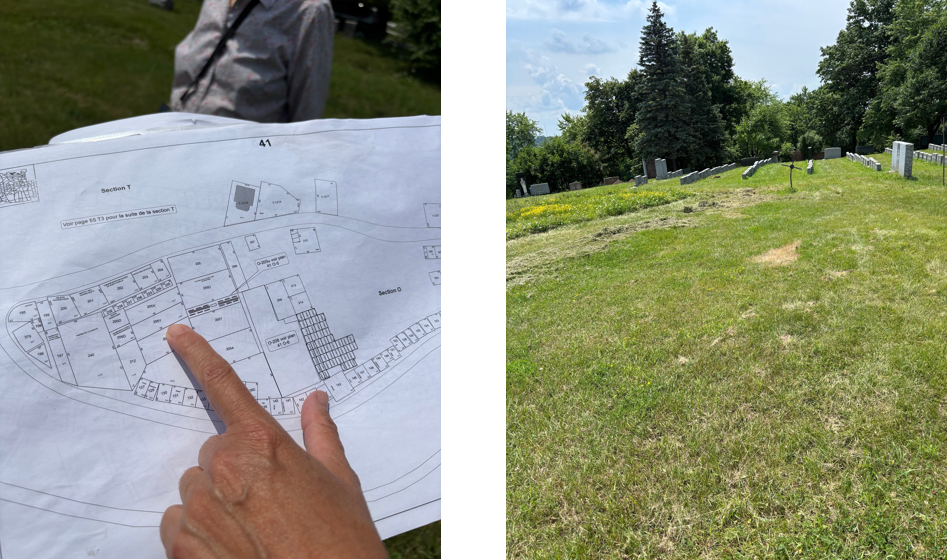
Cotes-des-Neiges cemetery guide, Solange Michaud, and her cemetery plot map trying to find Hello Girl Alice Raymond exact burial location in a common burial area marked only by two metal crosses.
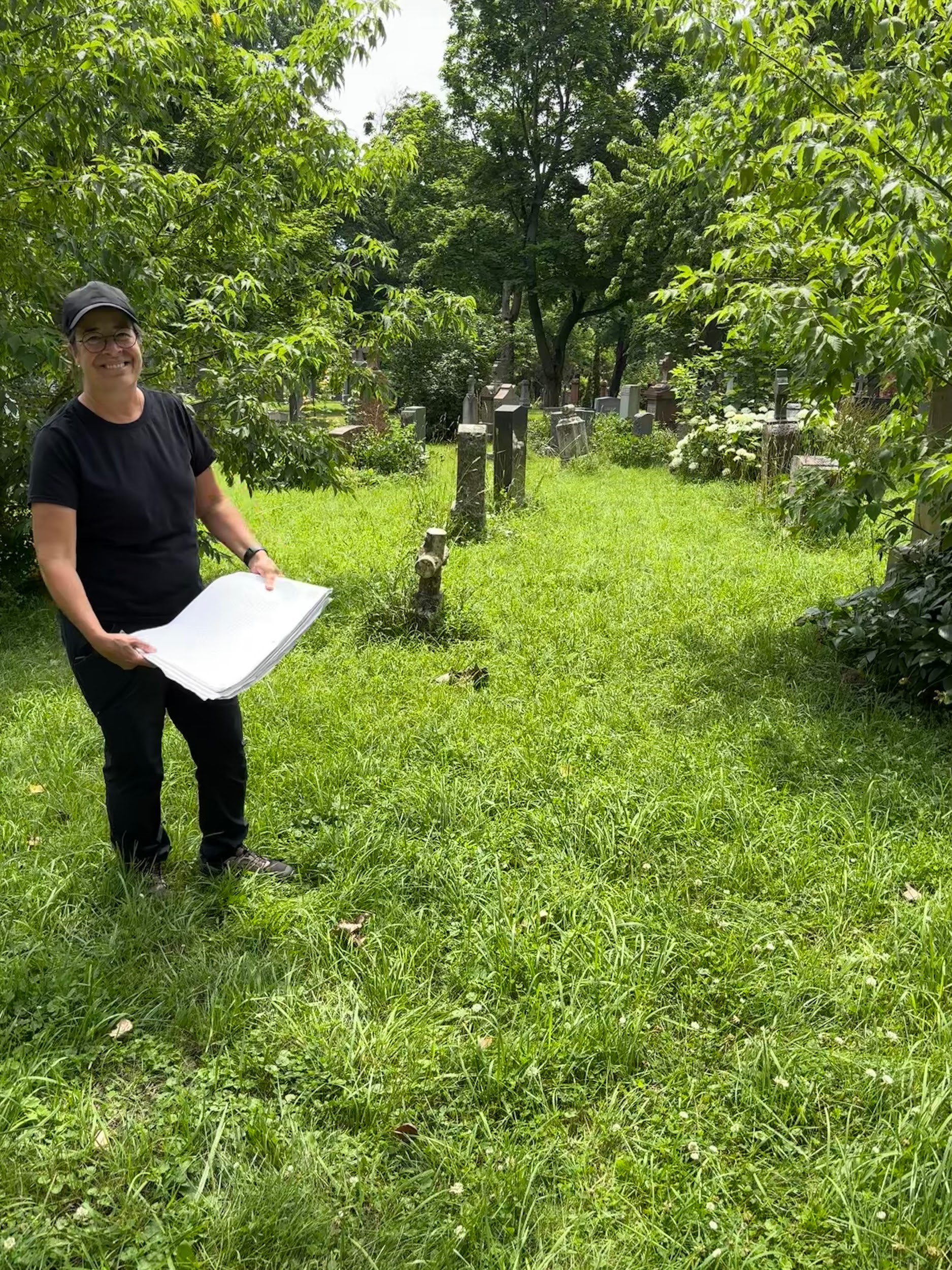
Cotes-des-Neiges cemetery guide with her cemetery plot map standing on the site where Hello Girl Germaine Lamontagne is buried in an unmarked grave.
The third Hello Girl, Albertine Belhumeur, was buried in Waterville, in the Eastern Townships south of Sherbrooke, Quebec. It’s about a 90-minute drive on a very nice and smooth highway. I mention the road condition because in Montreal itself and its suburbs, their roads are notoriously bad due to their harsh and long winters. They can never repair them fast enough. The countryside is beautiful with occasional lakes and gently rolling hills. The North Hatley lake area is quaint and chic and made for a good lunch stop.
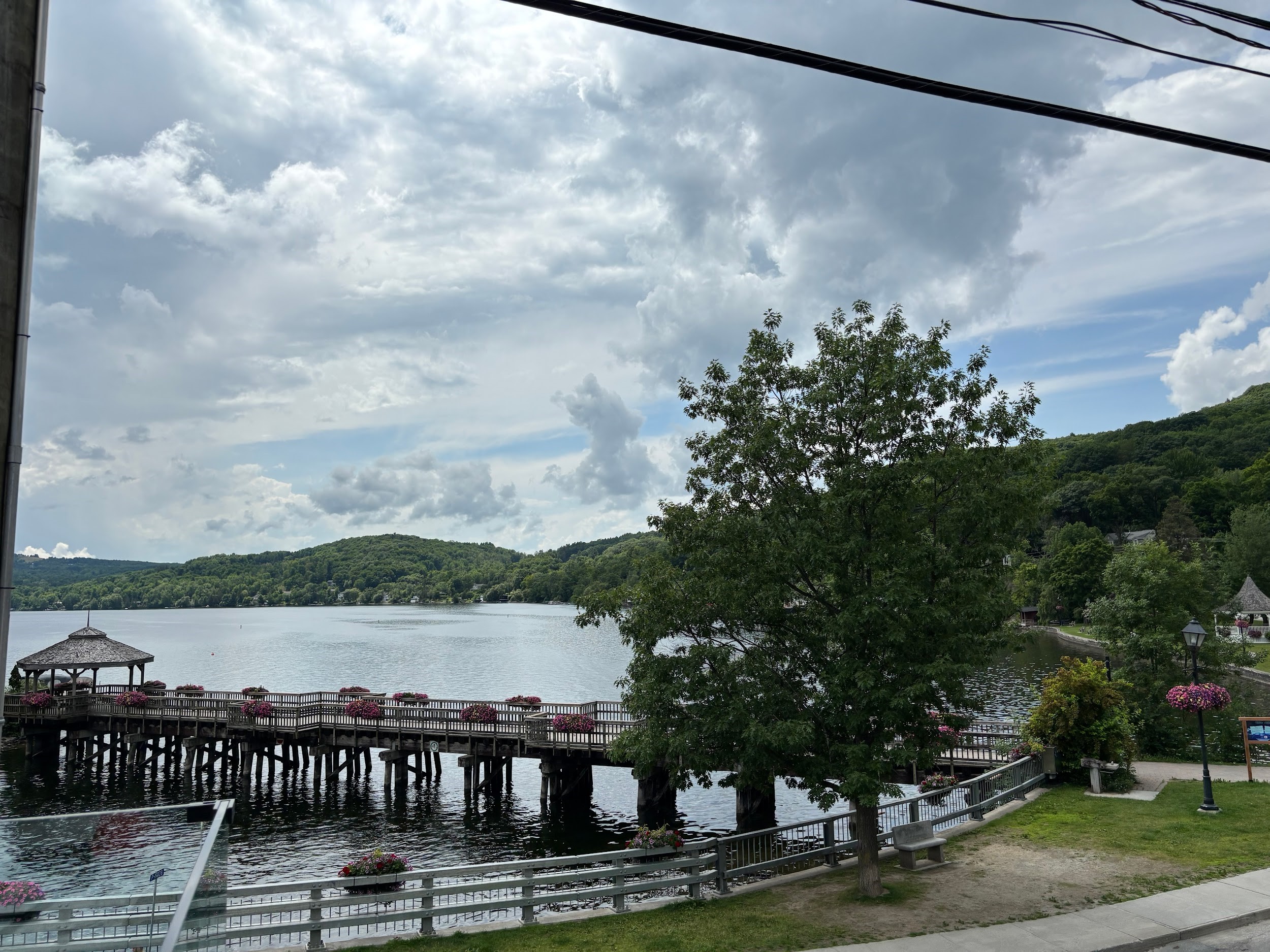
North Hatley, QC, Canada
At this point, we turned off the highway onto a smaller country road. We drove through a few towns, then small villages, then suddenly—with no grand announcement—we slowed down to pull over because there was the cemetery, right by the roadside. No parking. Across the street was a small workshop that takes leftover thin sheets of wood and makes material for boxes for Amazon. We asked if we could park in their lot off the road.
Albertine is buried with her husband, Albert David Belhumeur, in a quiet, little cemetery right off a two-lane road. As church congregations diminish, churches close and sometimes the buildings are sold or taken down. Larger churches farther away take over the caretaking of these smaller local cemeteries. Slowly over time, they too look a bit forgotten and rarely visited. Albertine and her husband have an obelisk grave monument which was erected in 1909 when he died. Her name was added when she passed, but no recognition was given for her military service. In fact, on Find A Grave, you can’t find her site by her name alone – you must look it up under her husband’s name. They are along the fence line, and from a distance their obelisk monument looks very elegant, but up close it’s very fragile. Each section is barely holding together. Someone put a brick under the front section at the base to prevent it from falling over. There is definitely room for a military service emblem, but the fear of injuring their existing delicate marker gives us pause.
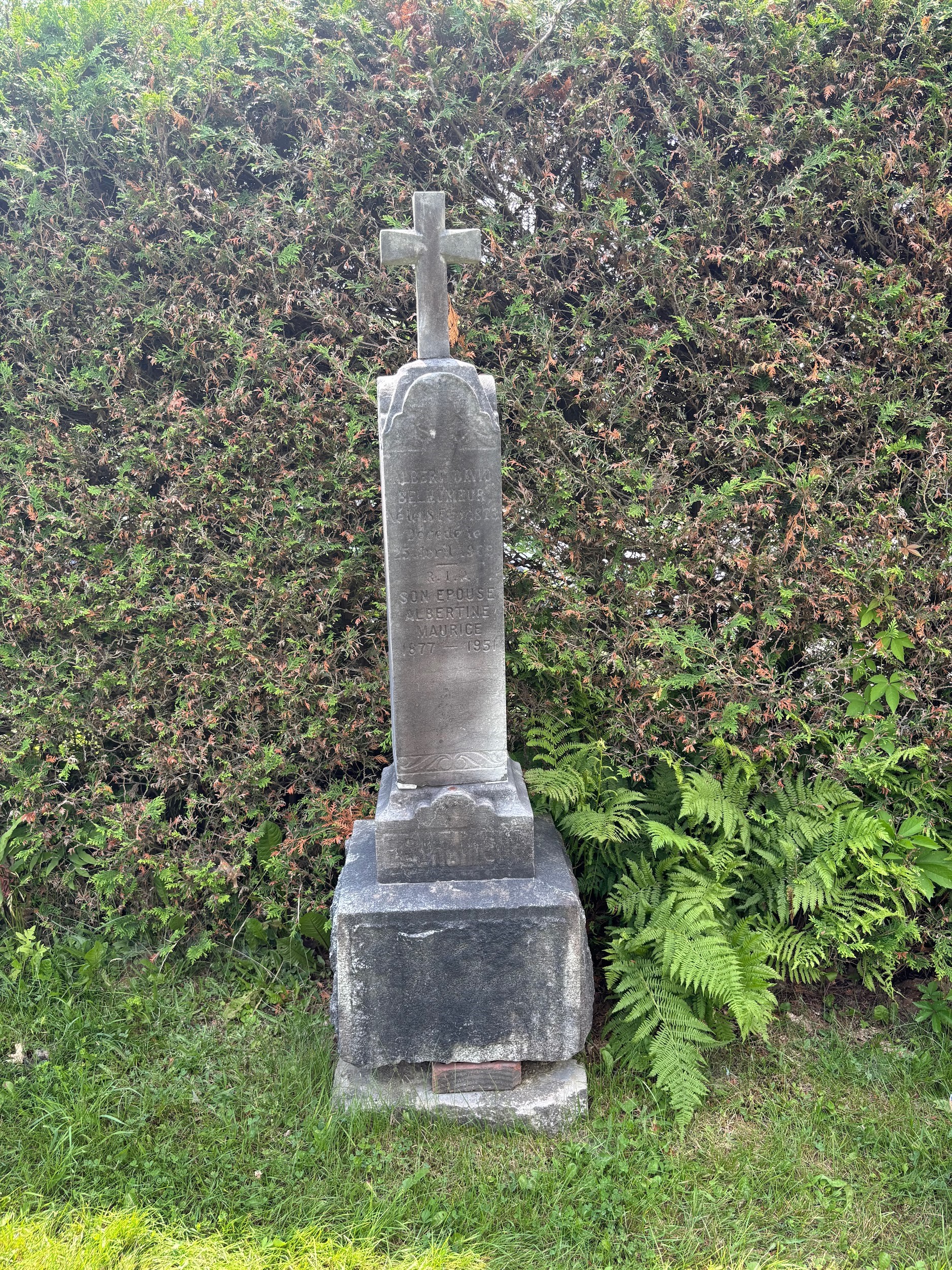
Hello Girl Albertine Belhumeur grave marker in Waterville, QC, Canada
From Campaign Strategy to Mission of Remembrance
Standing in that quiet Waterville cemetery, looking at Albertine’s fragile monument with no mention of her wartime service, I thought about Alice and Germaine in their unmarked graves in Montreal. These discoveries weren’t accidents – they were part of a systematic research effort that began in an unexpected way.
When our Congressional Gold Medal campaign shifted focus from the Senate to the House of Representatives, we quickly realized that staffers were far more responsive to constituents than to outside advocates. We needed a way to make the Hello Girls personally relevant to each Representative’s district. That’s when team member Ryan Hegg proposed a breakthrough idea: create customized flyers that included a summary of who the Hello Girls were, an impact statement—like the 26 million calls they connected—and most importantly, a biographical connection to the Representative’s district.
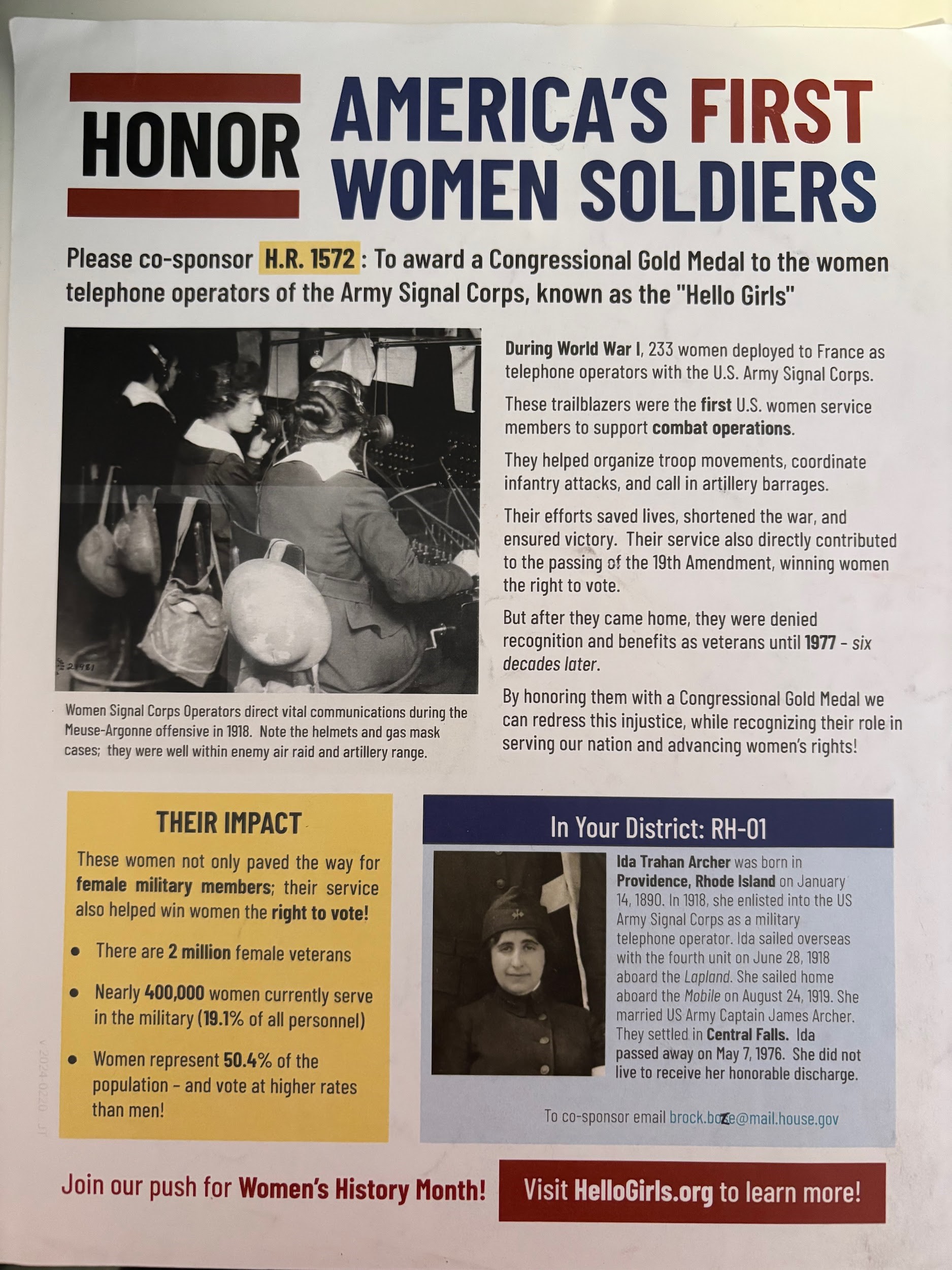
To do that, we had to dig deep. We began an intense period of genealogy research, searching for lifetime milestones that could tie a Hello Girl to a specific district: birthplaces, enlistment sites, residences, marriages, deaths, or burial locations. We built a massive spreadsheet, created tailored flyers, and hand-delivered them to all 435 House offices. In exchange, we collected business cards from veterans affairs staffers, giving us direct access for follow-up communications. And let me tell you – the Rayburn Building is enormous.
But something unexpected happened during that research. As we uncovered the personal lives of these women, we began to see the broader picture: the diversity of their backgrounds and the silence surrounding their final resting places. We discovered Hello Girls from Canada, especially Quebec, and others from Western Europe—Belgium, France, the Netherlands. We found women buried in unmarked graves. We found stories that had never been told, such as the story of Renee Messelin, who with her fluent French language skills became the first African-American woman who passed for white to wear a U.S. Army uniform and served as a supervisor operator in Unit 1 thanks to the initial in-depth research done by team member Diane Boettcher.
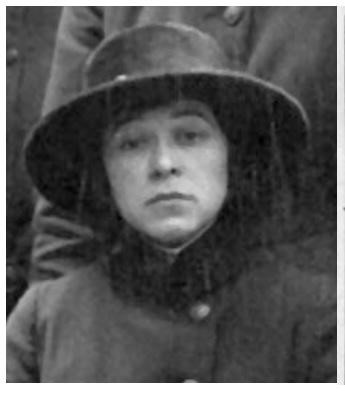
Hello Girl Renee Messelin, Unit 1
Our research became a turning point. What began as a tactical campaign strategy evolved into a mission of remembrance. Our campaign research team transformed into the Hello Girls Military Honors and Remembrance Program.
The Work Continues
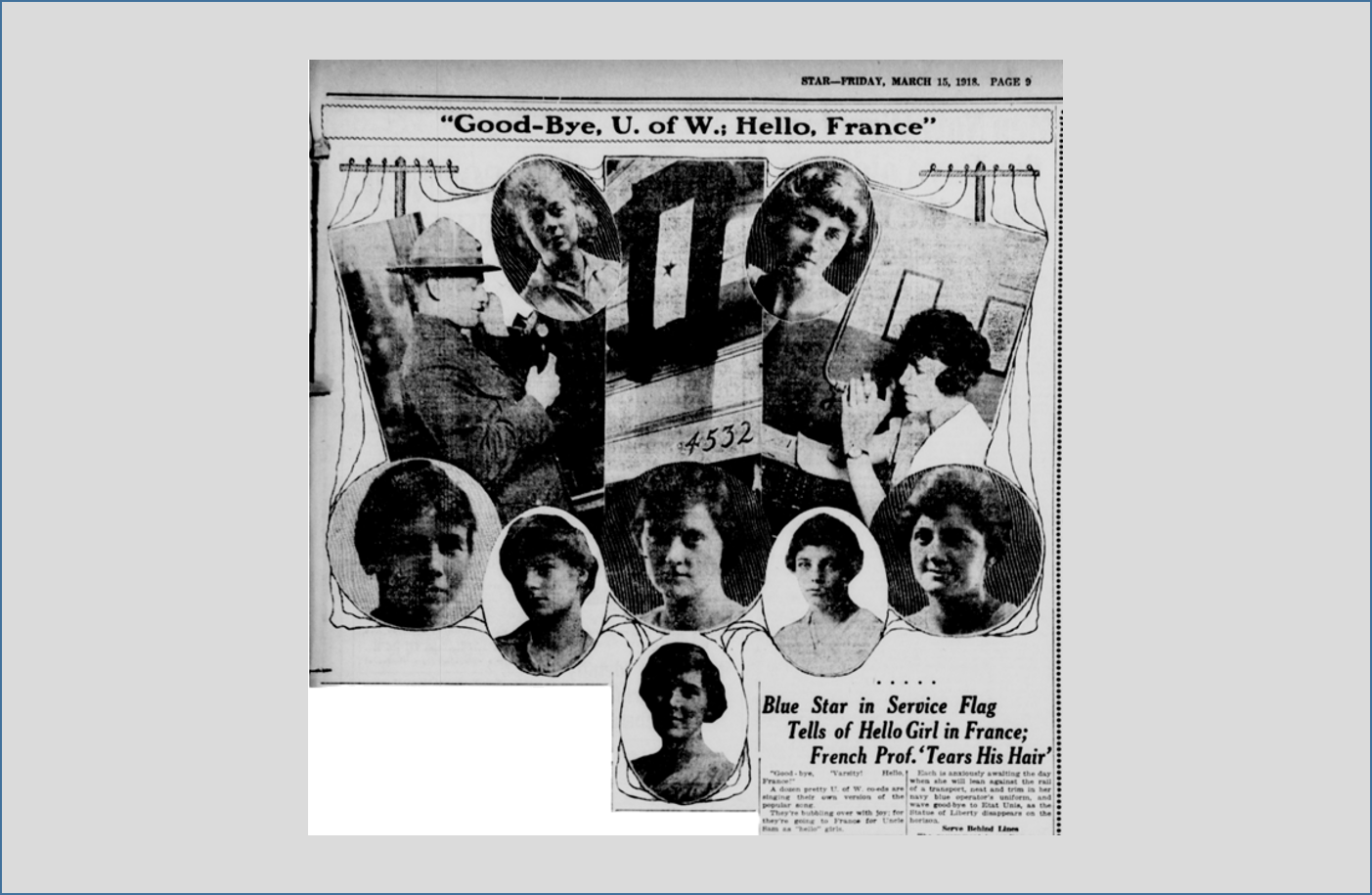
In December 2024, President Biden signed the NDAA bill, officially awarding the Congressional Gold Medal to the women of the U.S. Army Signal Corps Telephone Unit—known as the Hello Girls, a nickname given by the press back in 1918—who served under General Pershing during World War I. But while the medal is a monumental achievement, our work is far from over.
We see this recognition not as a conclusion, but as a launchpad. Our mission now is to build on their legacy – to ensure their story is told across the nation, written into history books, and taught to future generations. The Hello Girls were pioneers in both military service and women’s advancement in American society. Their contributions deserve to be known, honored, and remembered.
Today, our goal is to locate every Hello Girl’s burial site and assess whether she has a grave marker or if her grave marker reflects her military service. In nearly 90% of cases, there is no recognition—because most of these women passed away before the 1977 GI Amendment, and by 1979 only about 24 were still living to be officially notified by the Army and use their veterans burial rights. Some are buried in unmarked graves. Others have markers that say nothing of their service.
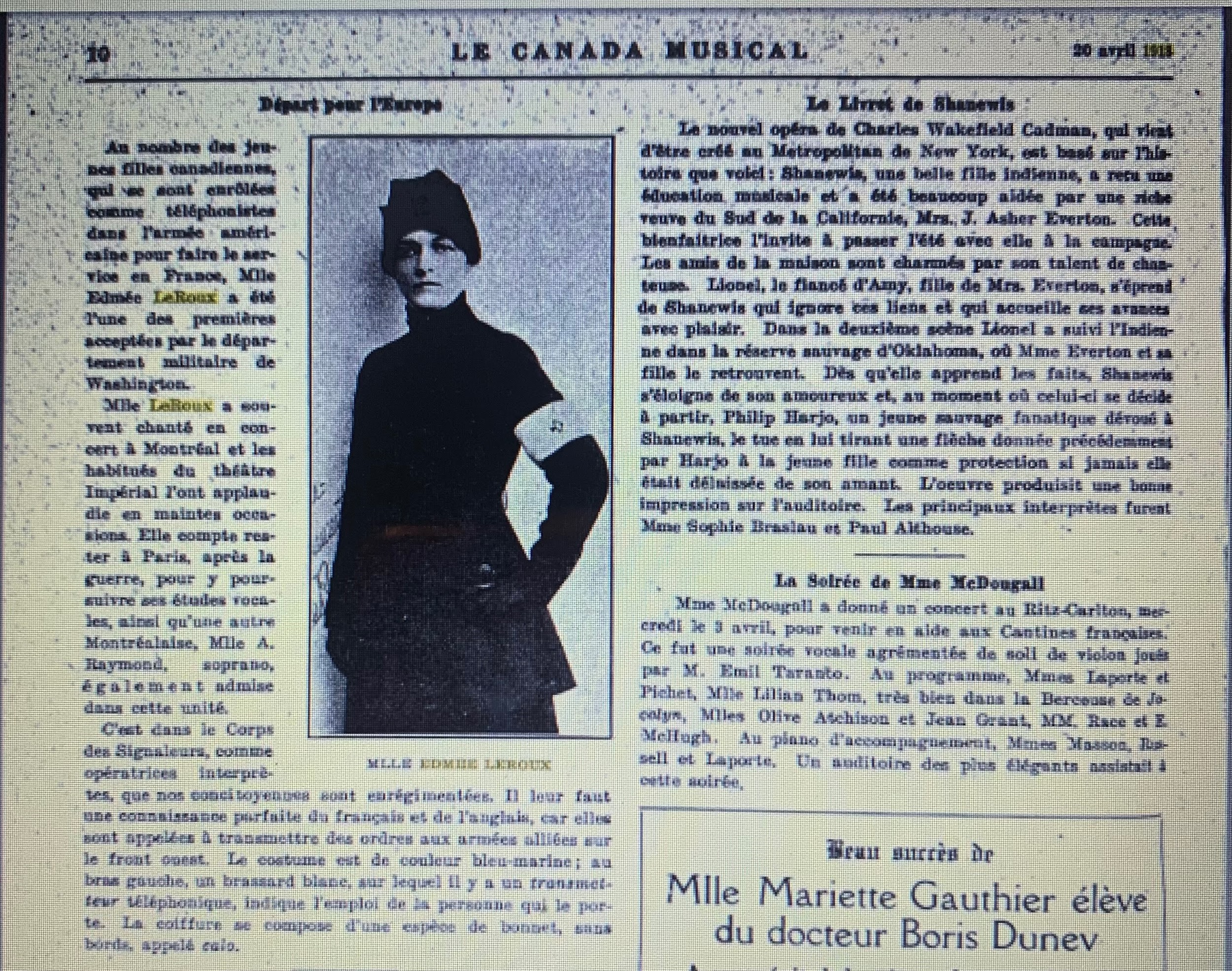
It took considerable effort to get the Côte-des-Neiges cemetery engaged with our mission to honor the two French-Canadian women who served in the U.S. Army Signal Corps, AEF, in WWI and were buried in unmarked graves. I sent several emails with documentation to cemetery staff members. I often wonder what finally convinced them. Was it the article I found in the April 1918 issue of Le Canada Musical in French? Since September, they have been ALL IN with us. Their first requirement was to find next of kin to make sure we could add an American Department of Veterans Affairs marker on each grave site. We know that Alice Raymond never married or had children. She dedicated her life to her music and teaching music. However, she had several siblings. It is a similar situation with Germaine Lamontagne, who also never married, never had children, and dedicated her life to her music studies and performances. She had three siblings, and only one had a family. It’s been an intense period of genealogy research to find living next of kin who would give us permission to honor their ancestors for their military service.
Since May 2024, the National Cemetery Administration has joined our efforts and has supported us enthusiastically ever since. Our grassroots process includes completing VA marker applications, coordinating with cemeteries, engaging local communities—often through American Legion Posts—to provide color guards and buglers, inviting local officials and descendants, and contacting the press to raise awareness.
To date, we have honored three Hello Girls in unmarked graves with VA markers (Marie Edmée LeRoux, Juliette Courtial, and Irma Armanet) and added a military service recognition plaque for Grace Banker during military honors grave marker dedication ceremonies. We’ve already begun planning ceremonies in Chicago, Illinois; Montreal, Quebec; and Linden, New Jersey—each one honoring Hello Girls whose stories were nearly lost to time.
Montreal and Beyond
My Montreal trip was one part of this larger research effort. But Montreal isn’t the only place where Hello Girls await recognition. In the next installment of this series, team member Carolyn Timbie will share her remarkable work in California, where she discovered the unmarked grave of Hello Girl Irma Armanet and coordinated a major tribute to the dozens of Hello Girls buried in the Colma area. Her dedication to honoring these women has opened doors and brought communities together in ways we never imagined.
The Congressional Gold Medal gives us a national platform, but we’re taking it further. Each grave marker we secure, each ceremony we hold, each story we tell adds another piece to the puzzle of who these women were and what they accomplished.
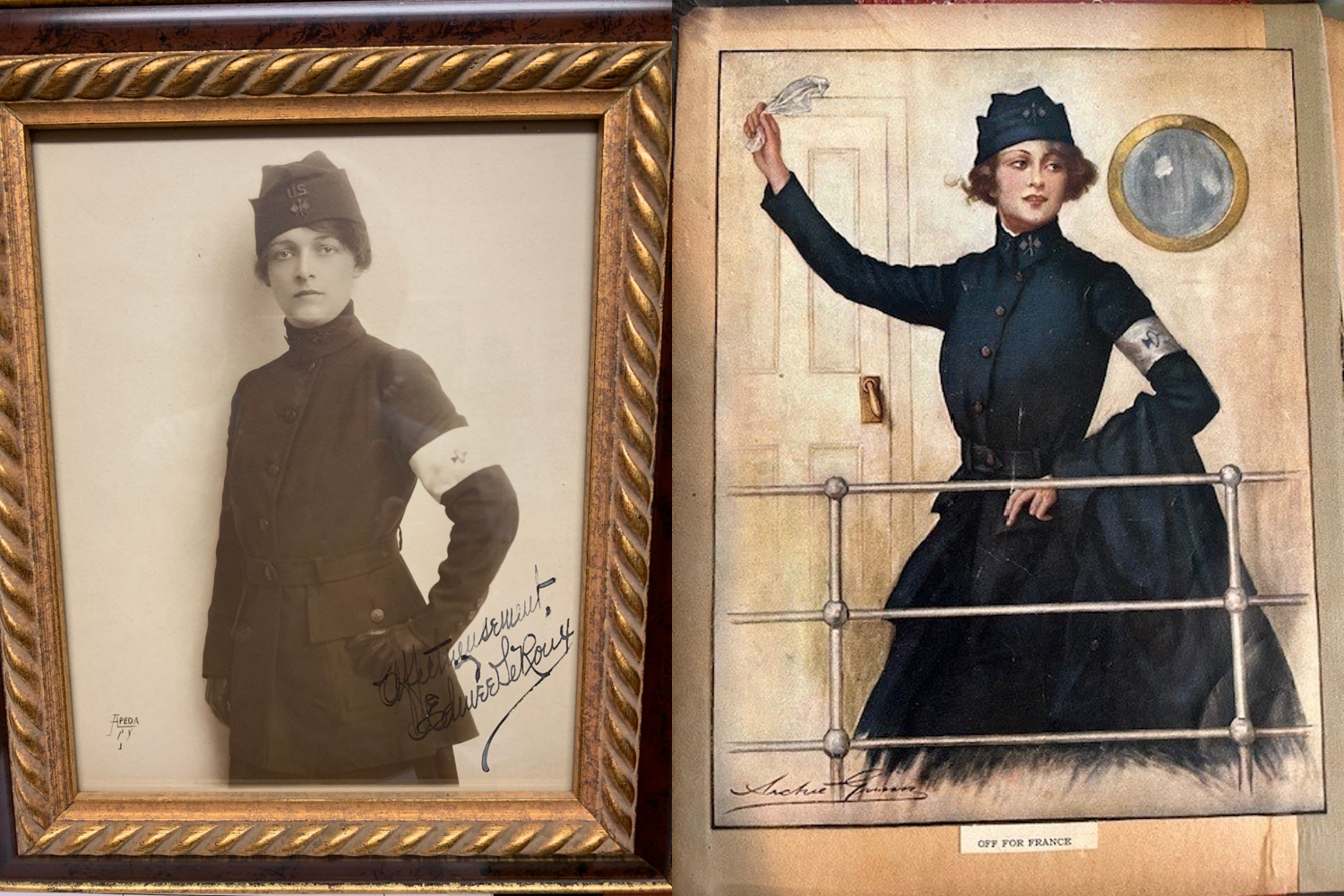
Catherine Bourgin’s grandmother Marie Edmée LeRoux, photographed in her in her official Army portrait at left, and depicted at right in the 1918 painting “The American Girl of the Signal Corps Abroad” by artist Archie Gunn.
I am proud to be the granddaughter of a Hello Girl, Edmée LeRoux, who answered the call in 1918. And I’m honored to be part of a team ensuring that she—and all her sister operators—are finally remembered as the veterans they always were.
Stay tuned for Part Two, featuring Carolyn Timbie’s California journey.