America’s Postwar Transcontinental Truck Convoy
Published: 11 March 2026
By Mike Hanlon
via the Roads to the Great War website
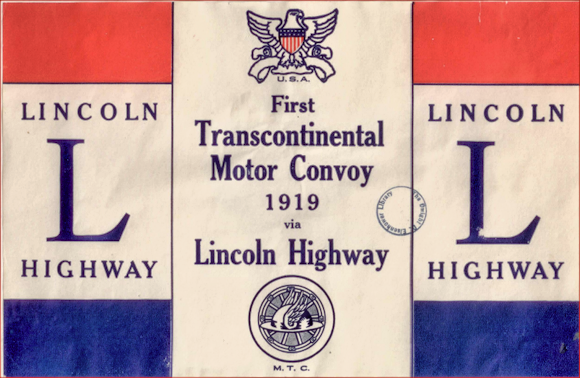
1919 convoy
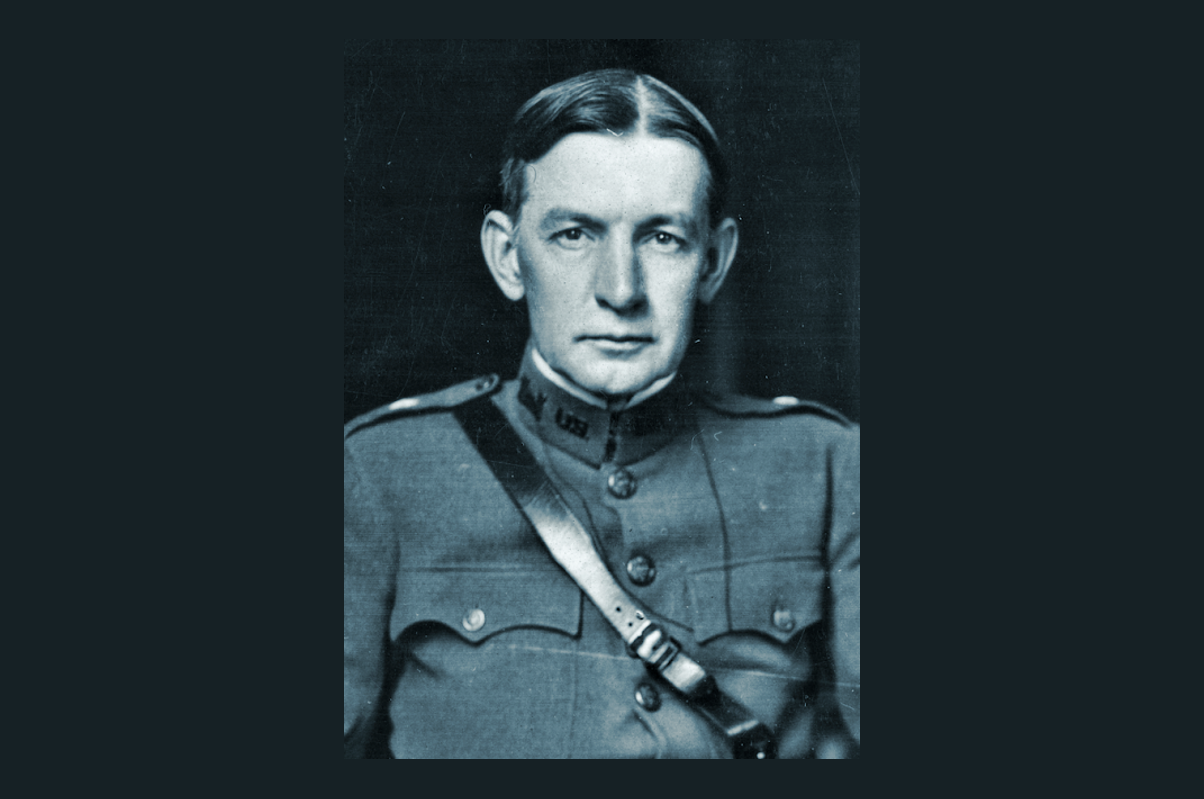
In the summer of 1919, a young Lieutenant Colonel—only four years out of West Point—named Dwight D. Eisenhower participated in the first Army transcontinental motor convoy. The expedition consisted of 81 motorized Army vehicles that crossed the United States from Washington, DC, to San Francisco. The convoy was to test the mobility of the military during wartime conditions.
As an observer for the Tank Corps, Lt. Col. Eisenhower learned first-hand of the difficulties faced in traveling great distances on roads that were impassable and resulted in frequent breakdowns of the military vehicles. These early experiences influenced his later decisions concerning the building of the interstate highway system during his presidential administration.
Since the trip was so meaningful to President Eisenhower’s career, his Presidential Library has a wonderful collection of material pertaining to the trip. This article is primarily a collection of material from that archive.
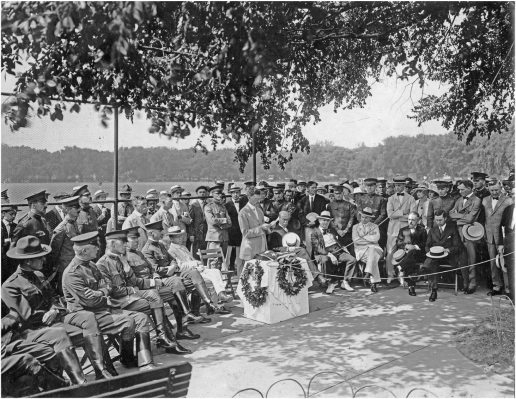
Departure
Trip Log: 7 July 1919
Departed Camp Meigs, 8:30 A.M. Dedicated Zero Milestone at the Ellipse, Potomac Park, 10 A.M. Departed Washington 11:15 A.M. Stopped for lunch at Rockville, Md., 12:30 P.M. Trail mobile Kitchen broke coupling, 2:50 P.M. Fan Belt broke on White Observation Car. Militor towed Class B, with broken magneto coupling, one mile in to camp at Frederick Fair Grounds. Fair and warm. Road excellent. made 46 miles in 7¼ hours. Arrived Frederick, Md., 6:30 P.:M. [At this time Tank Corps observer Lt. Col. Dwight D. Eisenhower joined the convoy.]
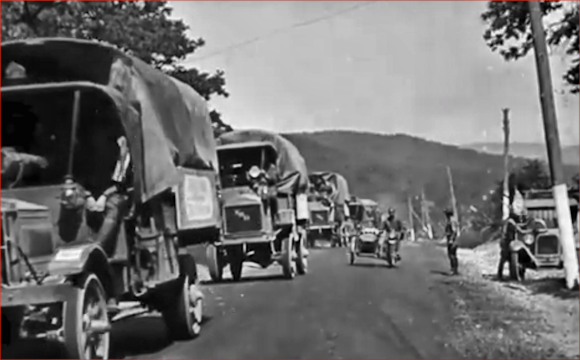
Mission
The principal objectives of the expedition were to service test the special-purpose vehicles developed for use in the first World War, not all gf which were available in time for such use and to determine by actual experience the possibility and the problems involved in moving an army across the continent, assuming that railroad facilities, bridges, tunnels, etc. had been damaged or destroyed by agents of an Asiatic enemy. The expedition was assumed to be marching through enemy country and therefore had to be self-sustaining throughout, in addition to surmounting all of the obstacles interposed by mechanical difficulties, unfavorable road, bridge, topographical, and weather conditions.
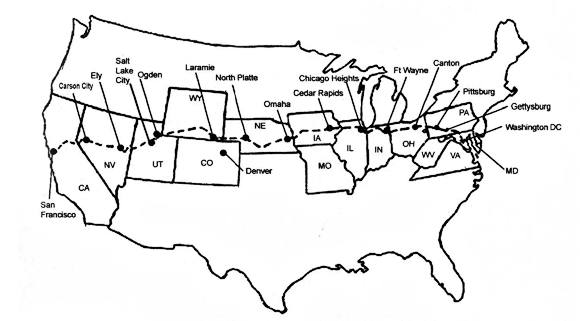
Route
The expedition crossed eleven states in addition to the District of Columbia, and passed through about 350 communities. The total distance traveled, Washington, DC, to San Francisco, CA was 3,251 miles in 62 days. The chosen route closely followed the only partially paved “Lincoln Highway”. Conceived in 1912 and formally dedicated October 31, 1913, it was the first road to cross the United States. It ran from Times Square in New York City to Lincoln Park in San Francisco. In 1925, the US Bureau of Public Roads eliminated named trails and highways, and Lincoln Highway became a drab series of numbers: US 1, US 30, US 40, US 50.
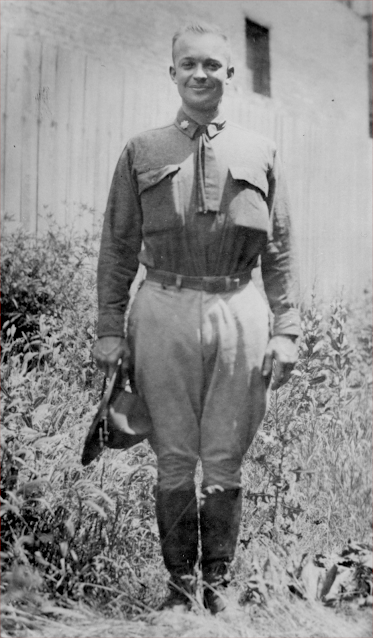
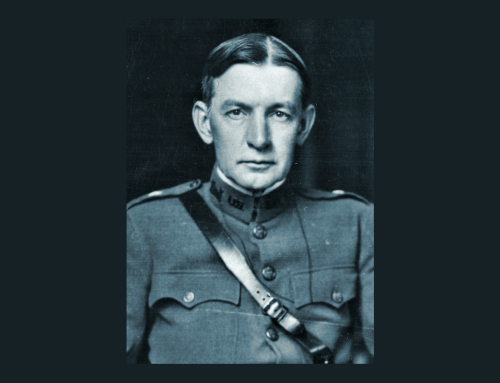
Lt. Col. Eisenhower During the Trip
Read the entire article on the Roads to the Great War website here:
External Web Site Notice: This page contains information directly presented from an external source. The terms and conditions of this page may not be the same as those of this website. Click here to read the full disclaimer notice for external web sites. Thank you.