After more than 100 years, World War I battlefields are uninhabitable
Published: 21 January 2026
By James Elphick
via the We Are The Mighty website
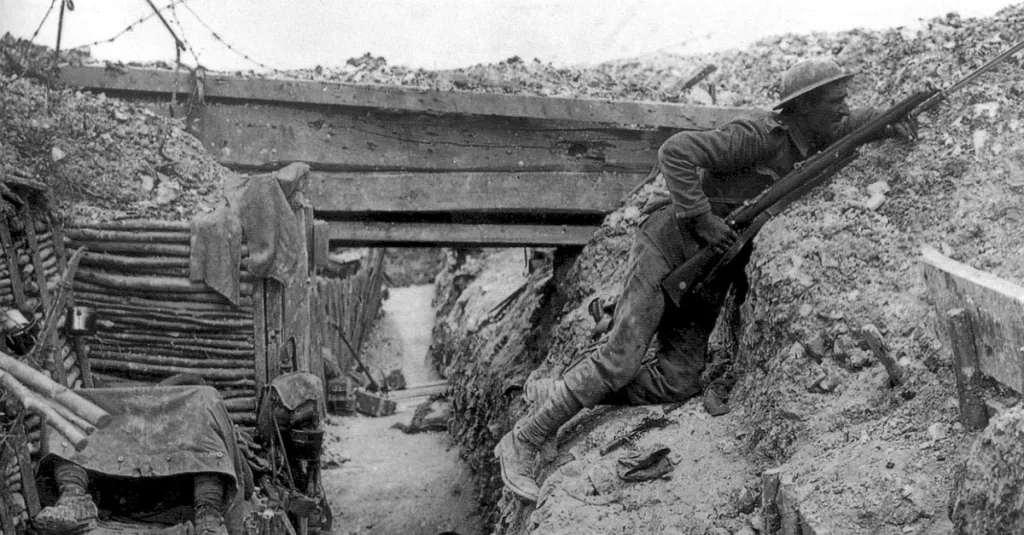
battleofsomme
British soldiers occupy a German trench during the Battle of the Somme in 1916 in France. (Imperial War Museums)
No war in recent memory can compare to the meat grinder of World War I.
Europe still bears the scars of the war, even more than a century since the armistice was signed on November 11, 1918. The gruesome and terrifying type of warfare typical of the Great War had a lasting impact on those who witnessed and experienced it. It also created such carnage on the land where it was fought that some of those areas are still uninhabitable to this day.
The uninhabitable battlefields are known as the Zone Rouge (French for “Red Zone”). They remain pockmarked and scarred by the intense fighting at places like Verdun and the Somme, the two bloodiest battles of the conflict.
During the Battle of Verdun, which lasted more than 300 days in 1916, more than 60 million artillery shells were fired by both sides; many of them contained poisonous gases. These massive bombardments and the brutal fighting inflicted more than 700,000 casualties at Verdun and over 1 million at the Somme.
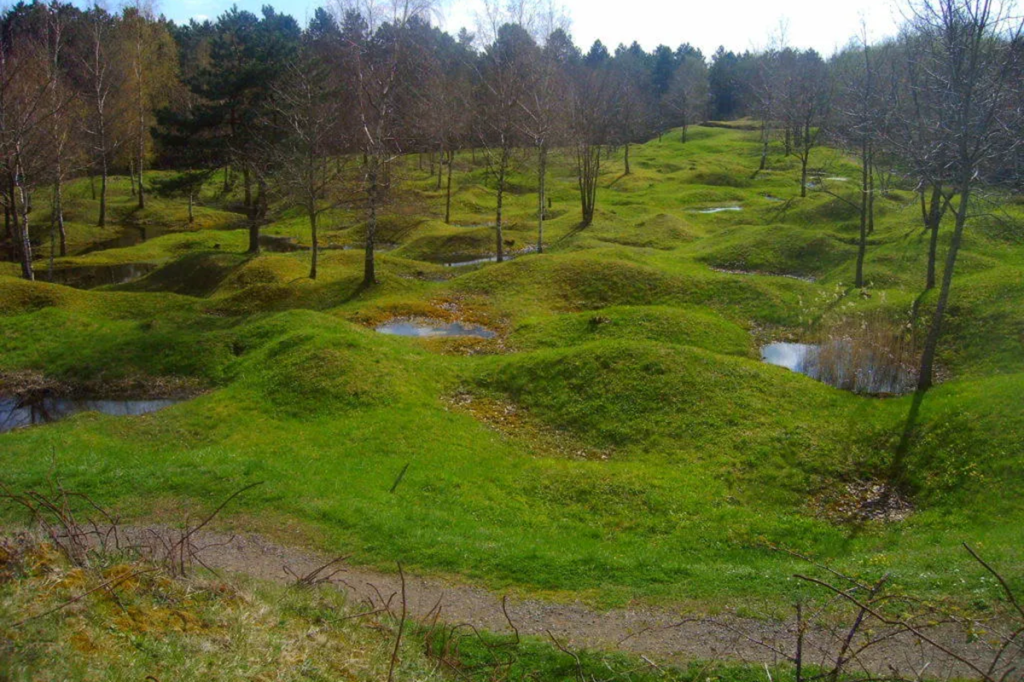
The battlefield at Verdun in northeastern France in 2016.
‘Villages that Died for France’
The most dangerous remnants of these battles, however, are the unexploded ordnance littering the battlefield.
Immediately after the war, the French government quarantined much of the land that had been subjected to the worst of the battles. Those areas that were completely devastated and destroyed, unsafe to farm, and impossible for human habitation became the Zone Rouge. The people of this area were forced to relocate elsewhere, while entire villages were wiped off the map.
Nine villages deemed unfit to be rebuilt are known today as “the villages that died for France.” Those villages were Beaumont-en-Verdunois, Bezonvaux, Cumières-le-Mort-Homme, Douaumont, Fleury-devant-Douaumont, Haumont-près-Samogneux, Louvemont-Côte-du-Poivre, Ornes, and Vaux-devant-Damloup. Inside the Zone Rouge, signs marking the locations of streets and important buildings are the only reminders that those villages ever existed.
Areas not completely devastated but heavily impacted by the war fell into yellow and blue zones. In these areas, people were allowed to return and rebuild their lives. This does not mean that the areas are completely safe, however. Every year, all along the old Western Front in France and Belgium, the population endures the “Iron Harvest,” the yearly collection of hundreds of tons of unexploded ordnance and other war materiel still buried in the ground.
Occasionally, the Iron Harvest claims casualties of its own, usually in the form of a dazed farmer and a destroyed tractor. Not all are so lucky to escape unscathed, and so the French and Belgian governments still pay reparations to the “mutilée dans la guerre” (the victims of the war) more than a century later.
Read the entire article on the We Are The Mighty website here:
External Web Site Notice: This page contains information directly presented from an external source. The terms and conditions of this page may not be the same as those of this website. Click here to read the full disclaimer notice for external web sites. Thank you.