America’s Flaming Bayonet in World War I
Published: 14 May 2026
By Tom Laemlein
via the Armory Life website
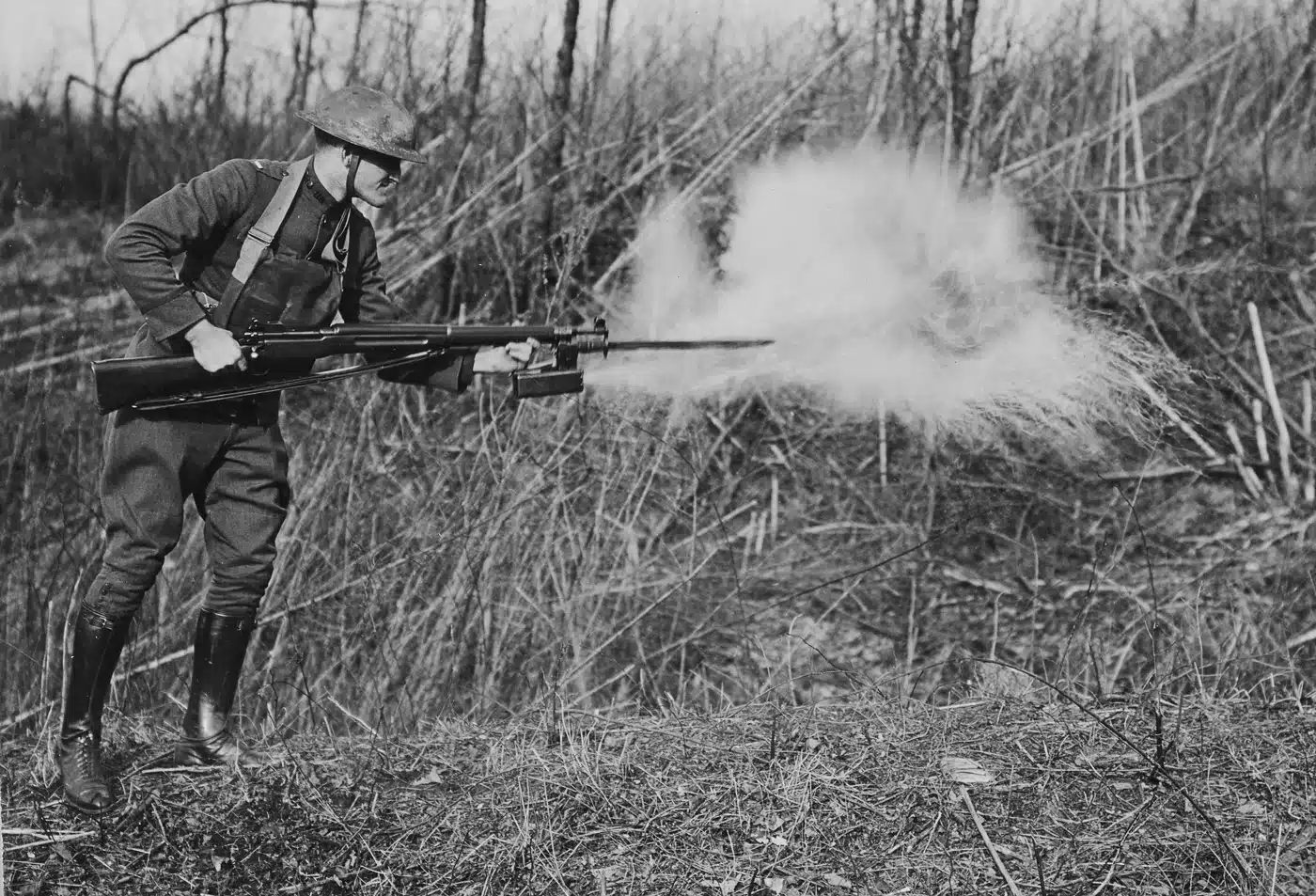
M1917-rifle-with-flaming-bayonet-in-action.jpg
The World War I-era “Flaming Bayonet” was designed to project a burst of flame from five to 15 feet. (Image: NARA)
In early 1918, as the American Expeditionary Force prepared to face battle-hardened German troops in France, the bayonet was a vital component of the Doughboys’ combat equipment.
It is difficult for many people today to understand the importance the U.S. military placed on “cold steel” during the Great War. Beyond the material components of a long blade fixed to the end of a battle rifle, the American concept of bayonet fighting was as much spiritual as it was physical.
This feeling is described in the U.S. Bayonet Fighting Manual, prepared at The School of Arms at Fort Sill, Oklahoma during February 1918 under the heading “The Spirit of the Bayonet”:
It is an easy matter to teach the few simple technical details of bayonet combat, but an instructor’s success will be measured by his ability to instill into his men the will and desire to use the bayonet.
This spirit is infinitely more than the physical efforts displayed on our athletic fields; more than the enthusiasm of the prize-ring; more, even, than the grim determination of the firing line — it is an intense eagerness to fight and kill hand to hand, and is the overwhelming impulse behind every successful bayonet assault.
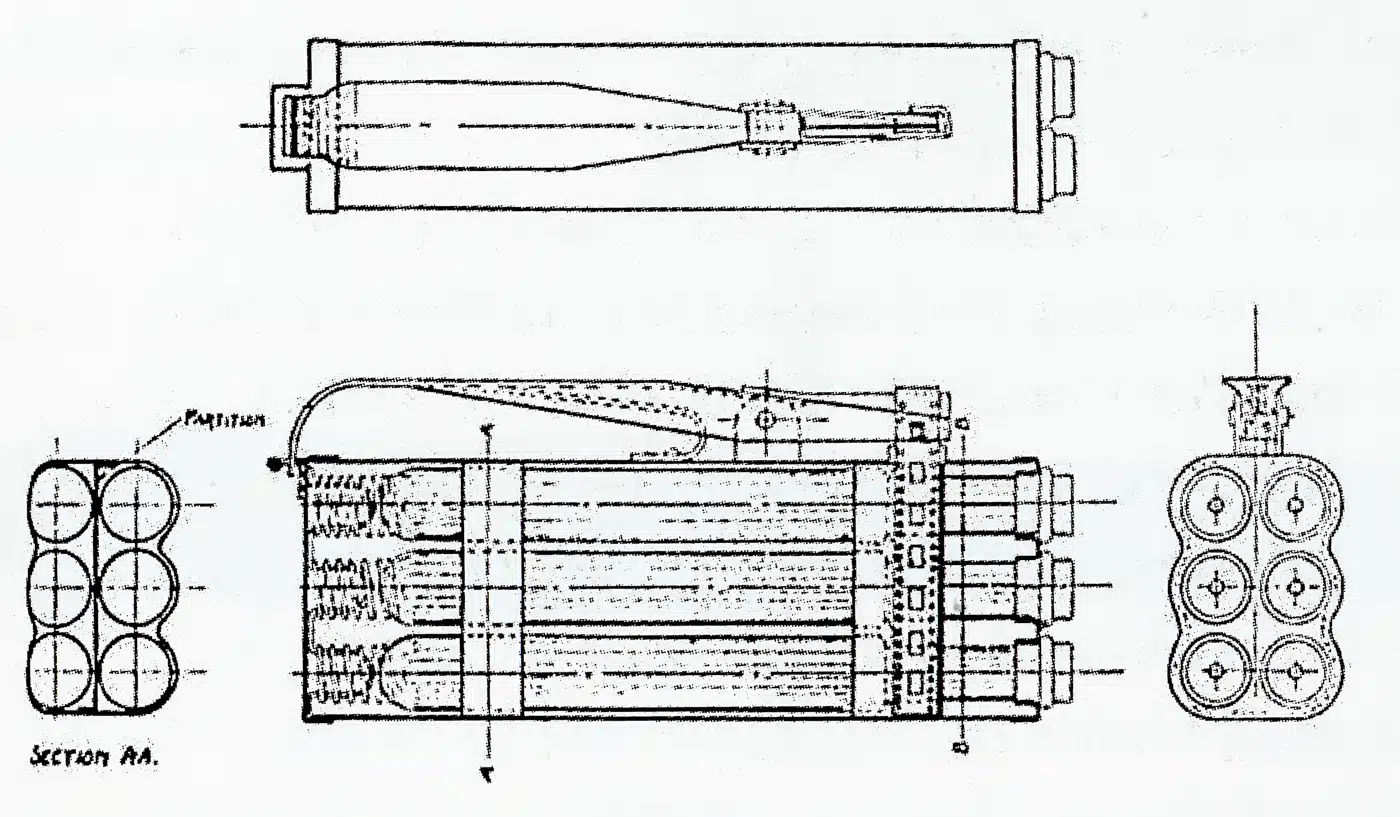
A United States ordnance drawing of the 6-shot cartridge-type projector. (Author’s collection)
Bayonet fighting is possible only because every red-blooded man naturally possesses the fighting instinct. This inherent desire to fight and kill must be carefully watched for and encouraged by the instructor. It first appears in a recruit when he begins to handle his bayonet with facility and increases as his confidence grows. With the mastering of his weapon there comes to him a sense of personal fighting superiority and a desire for physical conflict. He knows that he can fight and win. His practice becomes snappy and full of strength. He longs to test his ability against an enemy’s body; to prove that his bayonet is irresistible. He pictures an enemy at every practice thrust and drives home his bayonet with strength, precision and satisfaction. Such a man will fight as he has trained consistently, spiritedly, and effectively. While waiting for zero hour he will not fidget nervously. He will go over the top and win.
Fanning the Flame
With the fighting spirit of the bayonet in mind, U.S. Ordnance sought to give the Doughboys’ bayonet charges a unique advantage. Consequently, they produced a small flame projector to attach to the muzzle of the rifle — creating a flaming bayonet.
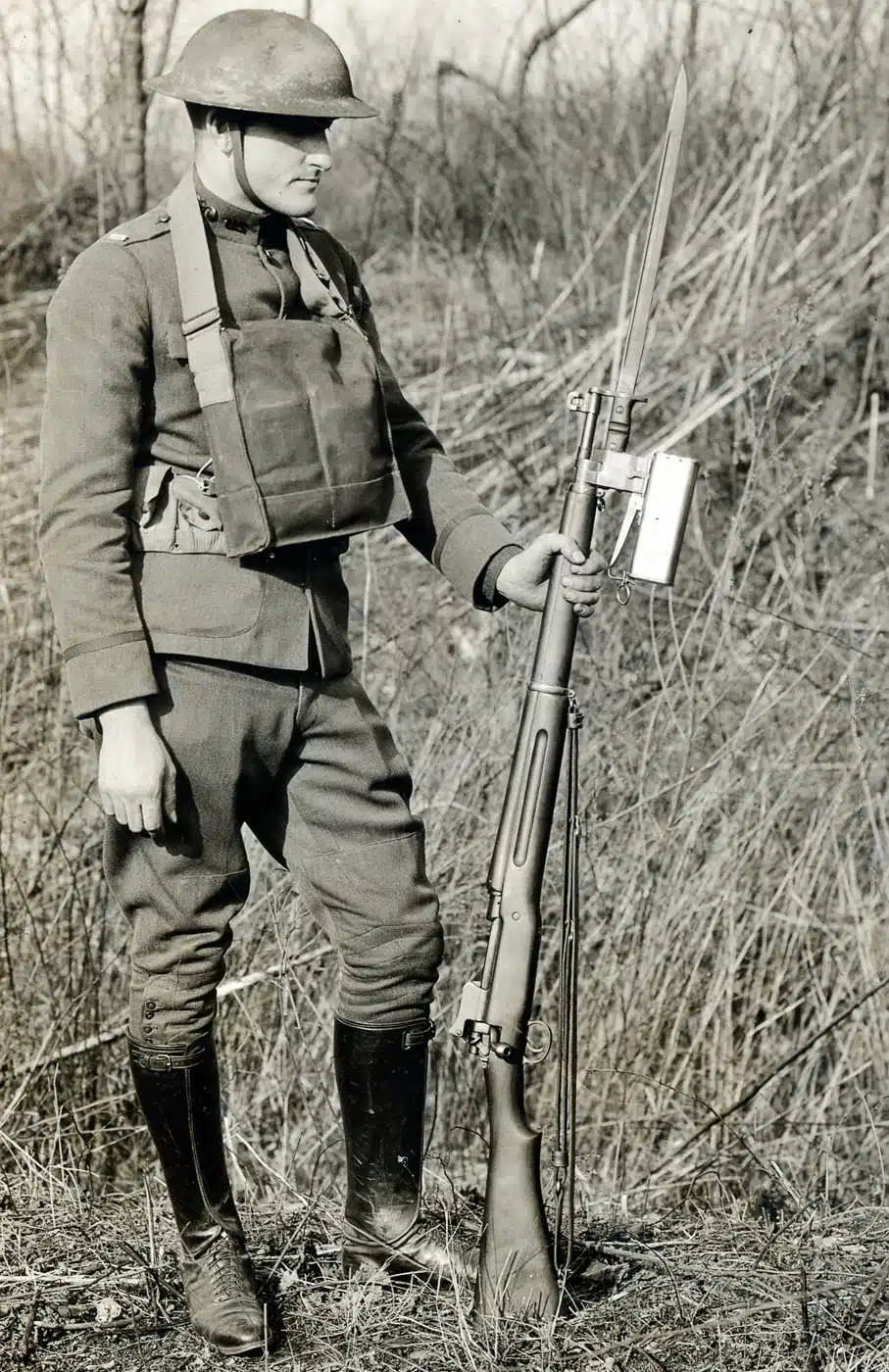
The M1917 rifle shown here is equipped with the “Flaming bayonet, cartridge type, Mark I.” The weight of the tiny flamethrower attachment was recorded as 5/8ths of a pound. (Image: NARA)
The unique device was described in a post-WWI U.S. Army Ordnance review of trench warfare materials:
“Flaming bayonet, liquid type, Mark I — the total weight charged was 7/8 pound. To be used as an accessory to the military rifle, by the projection of a spurt of flame 5 to 15 feet in length.”
At first, the flaming bayonet appears to give each infantryman his own single-use flamethrower. A little deeper examination shows that the device is not intended to replace the concept of a man-portable flame projector, but rather to enhance the individual Doughboy’s chances in bayonet fighting. The sudden burst of flame would act as a serious distraction to the enemy, causing him to turn his face away and leave his body open to the Doughboy’s bayonet attack.
Read the entire article on The Armory Life website here:
External Web Site Notice: This page contains information directly presented from an external source. The terms and conditions of this page may not be the same as those of this website. Click here to read the full disclaimer notice for external web sites. Thank you.