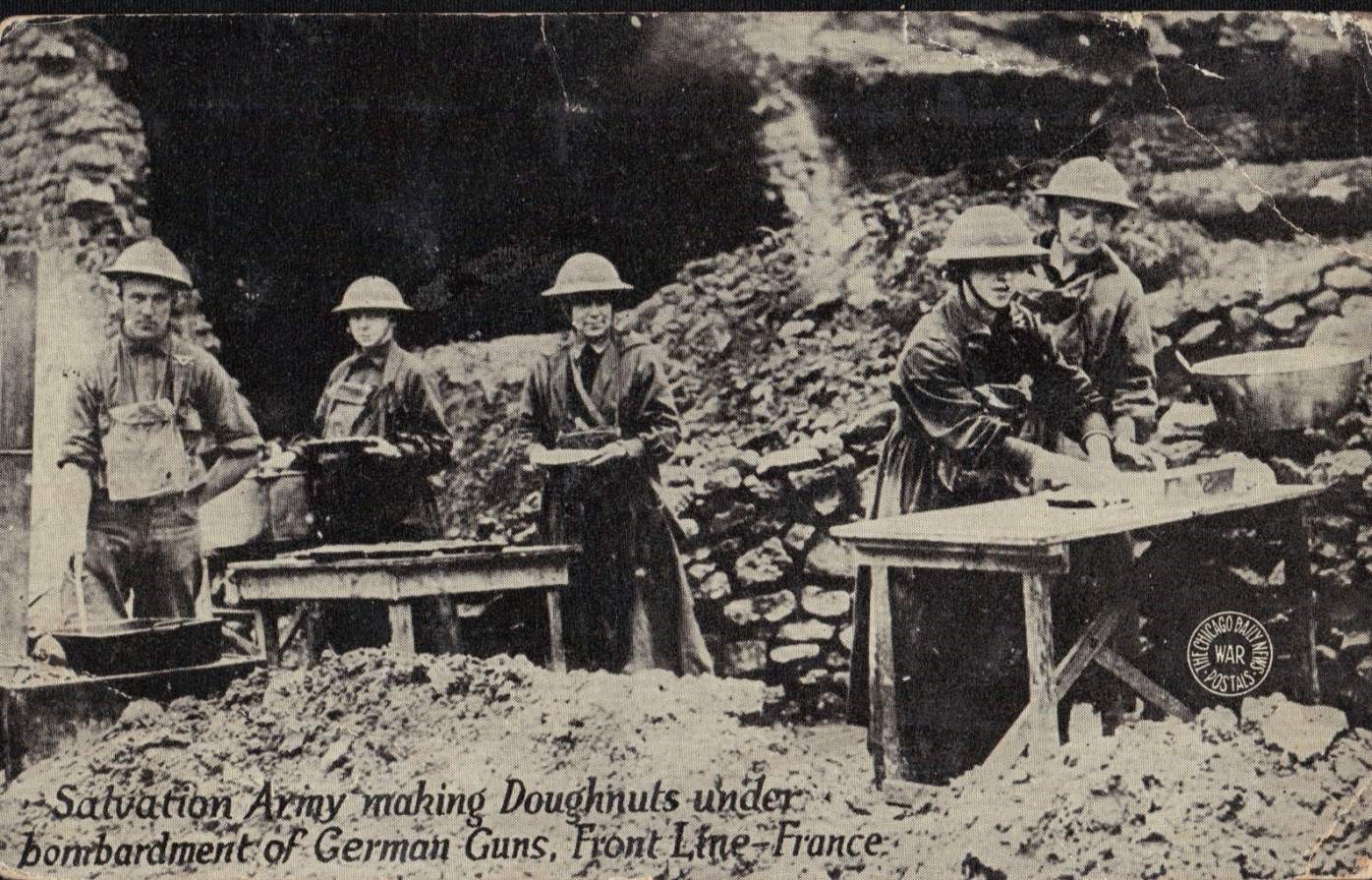
WWI Liberty Loan operation produced some of the 20th century’s most recognizable commercial art
Published: 24 April 2026
By Chris Fletcher
via the Crest Capital Resource Light website
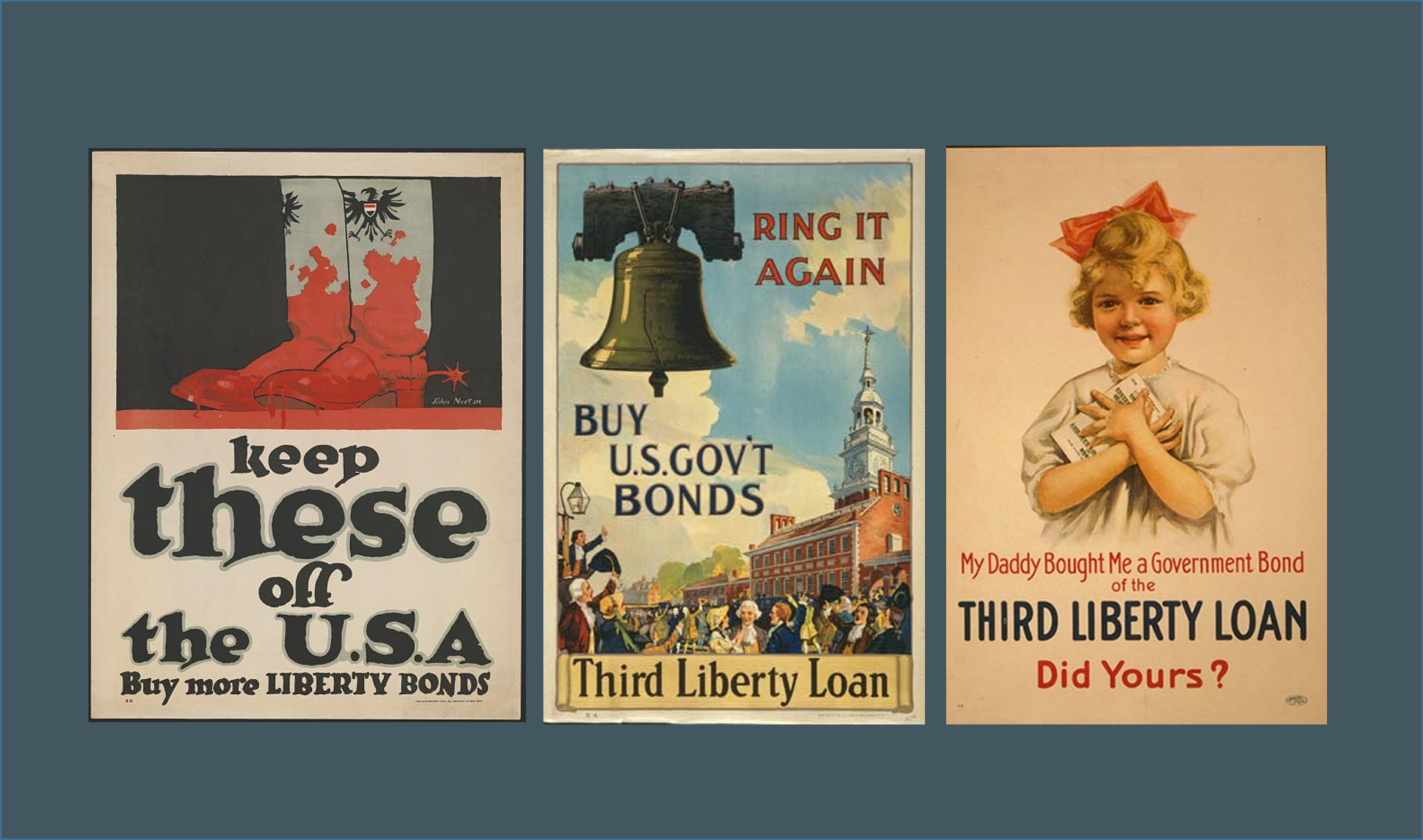
Liberty Bond posters
Every major American war has been paid for with some combination of taxes, borrowing, and — in a few cases — inflation. This page is about the borrowing part: the war loans and bonds the U.S. Treasury has sold to the American public, and occasionally to foreign governments, to raise the capital a war requires. It walks the long arc from Revolutionary War loan certificates through the Civil War’s Jay Cooke operation, the five WWI Liberty Loans, the $185.7 billion WWII Series E campaign, and today’s TreasuryDirect savings-bond program — with a few notes from an equipment-finance lender who thinks about plain-English credit-instrument communication as a working problem.
How wars actually get paid for
A government fighting a war has three basic ways to fund it. It can tax its citizens, which raises money immediately but is politically unpopular and can only go so far. It can borrow, either from banks and foreign governments or directly from its own public, which spreads the cost into the future. And, in extremis, it can print money — issuing fiat currency faster than the economy can absorb it — which is inflationary and eventually destructive. Every American war has used some mix of the first two, and a few have resorted to the third.
A war loan is an umbrella term for government debt raised specifically to fund war costs. A war bond is a specific instrument within that category: a debt security sold to individual citizens, usually in denominations small enough that ordinary households can buy them, usually marketed with an explicit patriotic appeal alongside the financial return. The pages that follow walk through how this second category — the retail-scale public war bond — has evolved across American history.
Revolutionary War and the early Republic
The American Revolution was financed by a combination of paper currency (the infamous Continental dollars, whose rapid loss of purchasing power gave English the phrase “not worth a Continental”), foreign loans from France and the Netherlands, and a series of domestic interest-bearing loan certificates issued by the Continental Congress. The certificates were a form of war loan in the modern sense — debt securities paying interest, intended to be held to maturity — but the distribution network was narrow and most holders were wealthy patriots, merchants, and foreign creditors.
The foundational act of postwar federal finance, though, was Alexander Hamilton’s 1790 Funding Act. The newly constituted federal government assumed the outstanding Revolutionary War debts of the individual states and restructured them into long-dated federal bonds. The consolidation established the full-faith-and-credit of the United States as a reliable borrower, which then made it possible to issue federal debt to fund later conflicts — beginning with the War of 1812, which was paid for largely with interest-bearing Treasury notes and bonds rather than significantly higher taxation. The American public-debt market that would later support Liberty Bonds and War Bonds starts here.
Read the entire article on the Crest Capital website.
External Web Site Notice: This page contains information directly presented from an external source. The terms and conditions of this page may not be the same as those of this website. Click here to read the full disclaimer notice for external web sites. Thank you.