In WWI, some soldiers traded future health & well-being to get away from the battlefield
Published: 30 March 2026
By Fascinating (@fasc1nate)
via the x.com website
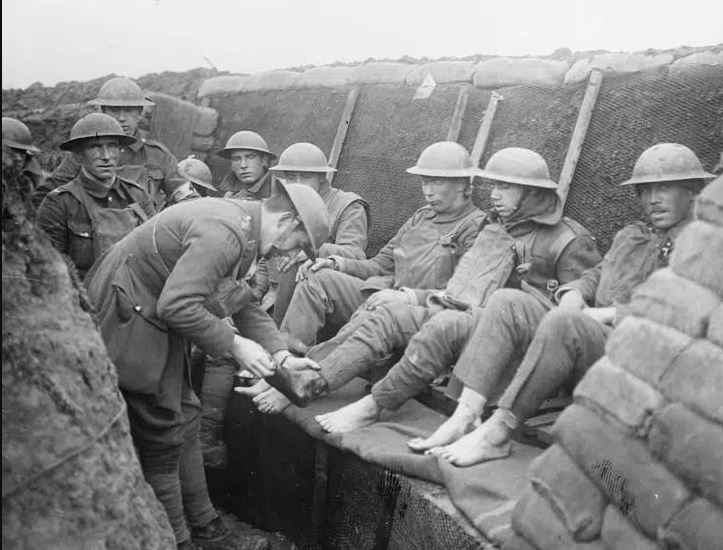
Trench Foot
Inspecting WWI soldiers for "trench foot" disease. Some soldiers deliberately sought to catch much more serious diseases in order to escape from the trenches.
During World War I, the average lifespan of a soldier in the trenches was alarmingly short—approximately six weeks. In that brief time, many soldiers faced death by artillery fire, bayonet wounds, or the horrific effects of mustard gas, which could cause severe respiratory damage. The brutal conditions of trench warfare drove many soldiers to extreme measures in their desperation to escape the front lines.
Self-inflicted injuries were one of the more direct methods soldiers used to avoid combat. However, such actions were risky, as they could result in severe disciplinary measures, including court-martial.
To circumvent these dangers, some soldiers resorted to a more insidious and desperate tactic: deliberately contracting syphilis. This sexually transmitted infection, particularly in its severe form, required treatment with mercury, a process that could render a soldier unfit for duty and provide at least thirty days away from the front lines. In some cases, the infection could even result in a permanent discharge from military service.
This strategy offered a form of “plausible deniability,” as venereal diseases were common in the unsanitary conditions of wartime brothels. Unlike self-inflicted wounds, which were easily identified and punished, contracting syphilis could be more easily explained as an unfortunate consequence of interactions with infected prostitutes.
However, the decision to contract syphilis was not without serious consequences. The disease carried a significant social stigma and posed severe health risks, including infertility, neurological deterioration, and eventual death if left untreated. Yet, for some soldiers, the temporary reprieve from the horrors of trench warfare outweighed these long-term consequences. In this desperate barter with fate, soldiers traded their future health and well-being for a few more weeks of life away from the battlefield. Some prostitutes, aware of the soldiers’ intentions, even charged higher fees, capitalizing on the soldiers’ willingness to pay for a brief respite from the war.
Read the entire article on the X website here:
External Web Site Notice: This page contains information directly presented from an external source. The terms and conditions of this page may not be the same as those of this website. Click here to read the full disclaimer notice for external web sites. Thank you.