The Tragic 100-Year Mystery of a Missing WWI Hero—and the Two Forgotten Clues That Finally Solved It
Published: 8 April 2026
By Michael Natale
via the Popular Mechanics magazine website
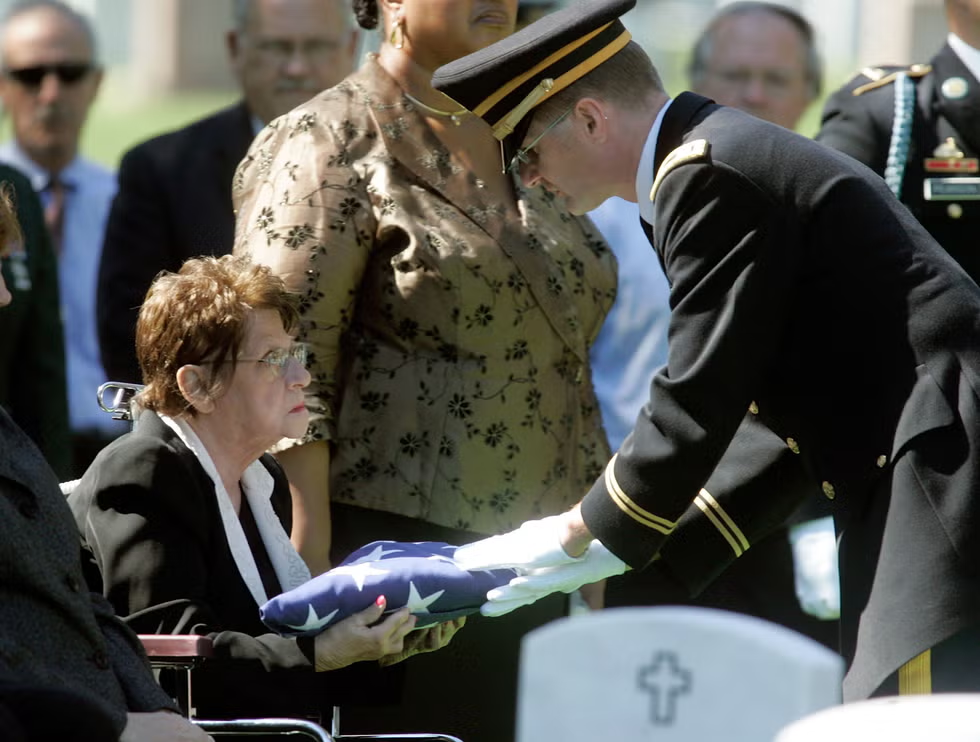
rachel-kleisinger-is-handed-an-american-flag-during-a-news-photo-1723495453
Rachel Kleisinger, niece of Army Pvt. Francis Lupo, is handed an American flag at Arlington National Cemetery during the burial of her uncle on September 26, 2006.
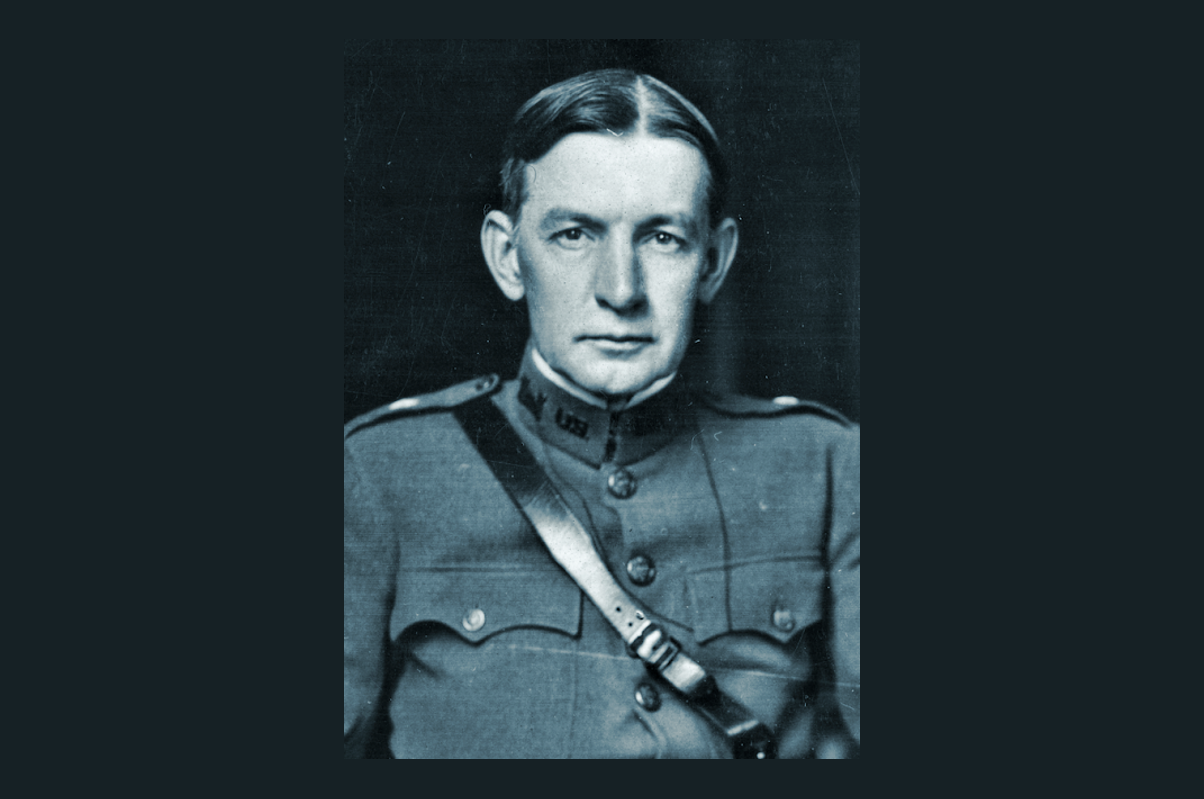
It took a century for the family of Private 1st Class Charles McAllister to finally find closure.
The level of carnage in World War I led many to believe it was “the War to End All Wars.” But for some people on the home front, there was no certainty—only the question of what had become of their loved ones who had gone off to fight.
For over a century, one family lived with the mystery of what happened to their soldier who never returned, nor had his death confirmed. Then, in 2024, his descendants received closure as his remains were identified and brought home—and the forensic expert who played a crucial role in the discovery told the story of how it all came together.
Forensic archaeologist Jay Silverstein appeared as a guest author for IFLScience to explain how the body of Private 1st Class Charles McAllister, who fought for the U.S. in the Franco-American counter-offensive at Aisne-Marne, was finally identified.
The battle, which occurred on July 18, 1918, resulted in “more than 1,000 U.S. soldiers” unaccounted for, according to Silverstein’s article. “But 85 years later, French archaeologists conducting salvage work ahead of a construction job on what would have been the centre of the battlefield encountered the remains of two American soldiers.”
Those two soldiers’ remains were turned over to the U.S. military’s central identification laboratory (CIL), where Silverstein was working at the time, in 2004. One of the soldiers, Private Francis Lupo, was swiftly identified thanks to his name being embossed on his wallet. In 2006, Lupo would be laid to rest, with full military honors, in Arlington National Cemetery.
The other soldier, then known only as CIL 2004-101-I-02, was deemed impossible to identify at the time, according to Silverstein. “But some 14 years later,” Silverstein wrote, “as we approached the 100-year anniversary of the death of this soldier and the end of the first world war, I reopened the case.”
Undertaking this effort on his own time, Silverstein felt that he could use certain factors, including “the date and location of his death, his possessions and his biological characteristics,” to whittle away possibilities from the list of soldiers reported as missing in action from the conflict. But doing so wasn’t quite as easy as it might sound at first blush:
“In an ideal world, there would be a database of the missing and I could conduct a preliminary search based on his height, his dental pattern, his age and his ethnicity. Unfortunately, these data only reside within the individual military records stored in the US National Archives. This meant I needed to determine a short list of possible soldiers and request their records.”
Silverstein knew he could begin with a simple assertion: since Lupo was buried in the same unmarked grave as the unidentified remains, “it was an easy assumption that they died at approximately the same time, July 21 1918, and in about the same location.”
From there, Silverstein referred to military maps of the campaign to triangulate which which regiments were in the area where the bodies were found. Having narrowed it down to “to hundreds of MIAs,” Silverstein then had to rely on what the body was buried with to do the rest of the identification:
“The main clues were two buttons on his uniform, one stated “WA” and the other had a “2” and a “D” on it split between two crossed rifles. I discovered that this meant: I-02 had been a member of the Washington State national guard, 2nd regiment, company D, before they were nationalised into the AEF.”
Silverstein used that information, as well as a medal the body had from a 1916 campaign against Mexico, to narrow things down to four men from Company D. Obtaining their records from the National Personnel Records Center, Silverstein used height and dental records to determine that the body recovered belonged to Pfc. Charles McAllister.
Read the entire article on the Popular Mechanics website.
External Web Site Notice: This page contains information directly presented from an external source. The terms and conditions of this page may not be the same as those of this website. Click here to read the full disclaimer notice for external web sites. Thank you.