Remembering a WWI Veteran: Capt. Fred Zinn, French Foreign Legion & U.S. Army Air Service
Published: 6 April 2026
By James Patton
via the Roads to the Great War website
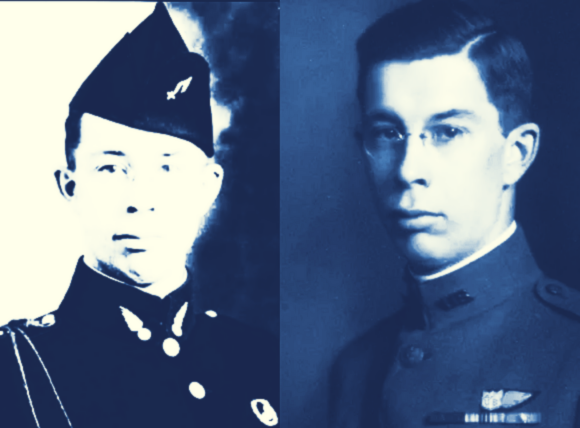
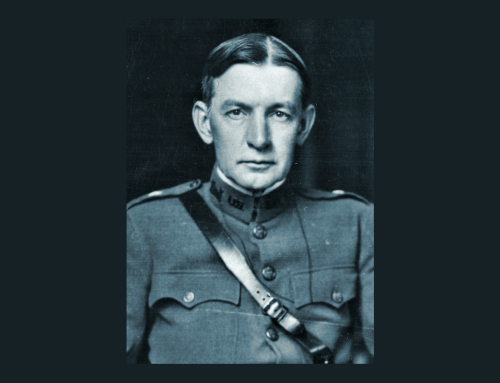
Fred Zinn in His French and American Uniforms
Fred Zinn in his French and American uniforms.
Recently The Military Times ran a feature article by Jon Guttman about how, on 7 October 1918, Cpl. Ralyn Hill, an Illinois National Guardsman in the 33rd Division, heroically rescued an injured pilot from a crash-landed plane on the German side of the Meuse River. The identity of the pilot (who died from his injuries) was not recorded at the time; it was later determined that he was 2nd Lieut. Wellford MacFadden, Jr. of the 103rd Pursuit Squadron, U.S. Army Air Service. Guttman’s story was picked up by several feeds, including NewsBreak and even Google News. If you‘re not familiar with the story, it’s well worth the read. HERE.
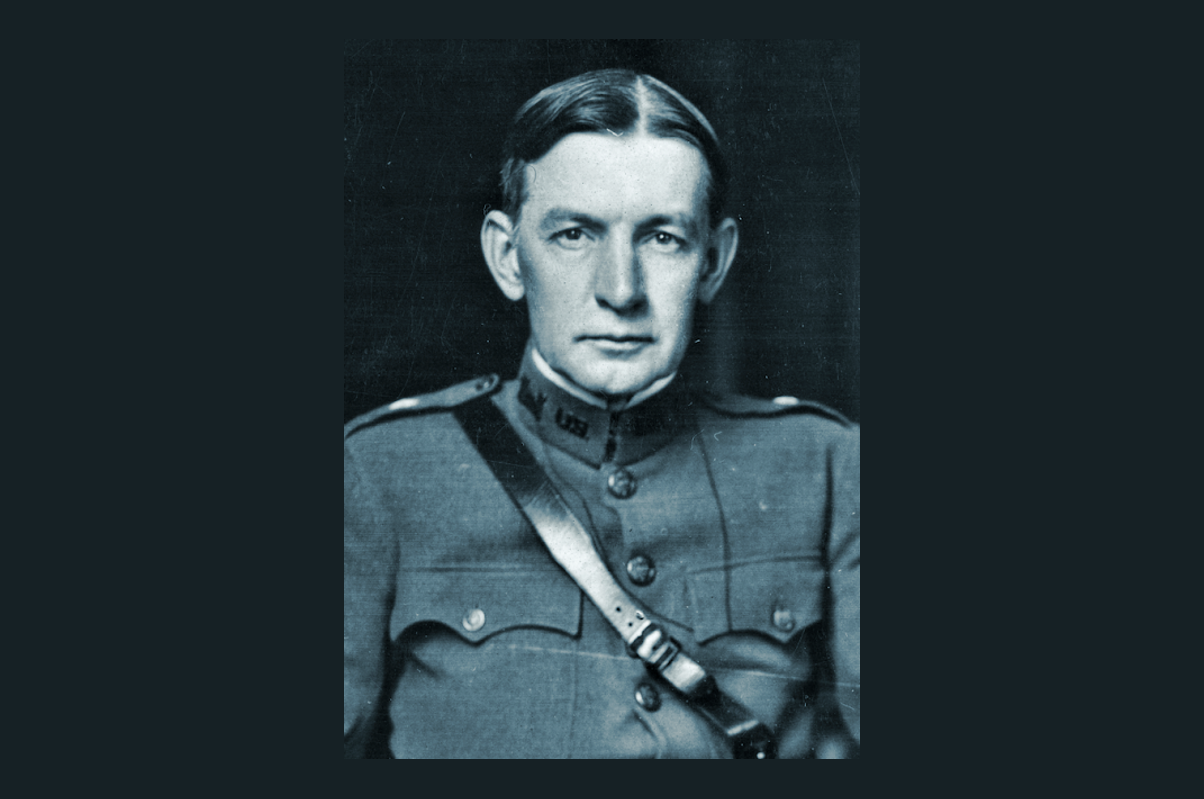
However, there’s another story worth telling, that of the person responsible for making the identification of MacFadden’s burial site. Friedrich Wilhelm “Fred” Zinn (1892–1960)—his name is very German, but he was born in Galesburg, Michigan. After he graduated from the University of Michigan, his family sent him on the “Grand Tour” of Europe. So it was that he was in Paris when war was declared, and on that day he was one of 43 Americans who impulsively joined the Légion étrangère. Serving as an infantry soldier, it is claimed that he was the first American to capture a prisoner of war. He was wounded twice, the second time on 1 February 1916
On 14 February he (and several other prominent Americans) were transferred into the Aéronautique Militaire. After a brief visit to Michigan, he went through training and was first assigned to Escadrille F-14 as an Observer/Gunner, riding in a Nieuport 12. Later he was transferred to Escadrille SOP-24, where he flew in the back seat of a Sopwith 1A.2 Strutter. Since he was an American, he is listed as a member of the Lafayette Flying Corps (not an official French unit). Although he was never assigned to the Lafayette Escadrille N-124, as they were a fighter squadron, he is known to have performed reconnaissance missions for them. Zinn was promoted several times while in French service, so had booked extensive combat zone patrol experience before the U.S. even entered the war.
He was a pioneer in the development of aerial photography techniques, especially for low level spotting of German troop locations and alerting the French forces opposing them. In October 1917, he was one of the first batch of Americans serving with the Aéronautique Militaire to be transferred to U.S. service. Reportedly, he was personally selected by Lieut. Col. “Billy” Mitchell (1879–1936), then CO of the new US Army Air Service. Zinn was commissioned as a Captain and assigned to Mitchell’s staff at GHQ Chaumont, where he established the first aviation reconnaissance and photographic interpretation programs. As the G2, he also headed up the personnel section, which included the assignment of replacement air crew.
In November 1918, although he was one of a handful of Americans who had actually served for the entire war, he didn’t see his work as done. There were nearly 200 air crew lost in combat who had no known grave, and he proposed to lead a team of Army volunteers to go out and find them. The Army said “yes,” so while most soldiers went home to triumphal parades, he went to Berlin to talk with former enemies like Ernst Udet, and comb through the German records, seeking the fate of the missing Americans.
With a staff of four, by the end of 1919, Zinn had tracked down the remains or personal effects of 194 missing men. Only then did he close up and return home to work for the family business, which was milling grain for Kellogg’s cereals.
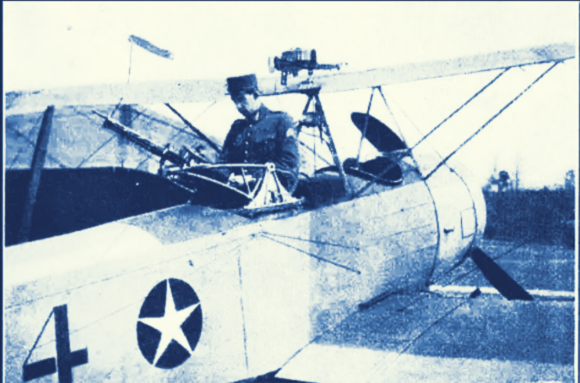
Zinn Manning the Observer/Gunner Post
As said above, Zinn’s story intersects with Ralyn HiIl’s story because it was Zinn’s team that found 2nd Lieut. MacFadden, buried two miles west of Brieulles in a French concentration cemetery. He had likely been first buried elsewhere, probably in a village or church cemetery. If MacFadden was the pilot that Hill rescued, it seems unlikely that he was shot down near Brieulles, which was not in the 33rd Division’s sector at the time.
The German records showed that there were no allied planes claimed by German pilots in that sector on that day. Since Hill’s story says that the SPAD crashed behind the German position on the east bank of the Meuse River, it seems likely that MacFadden had decided to strafe the German positions and was hit by well-aimed return fire.
Read the entire article on the Roads to the Great War website here:
External Web Site Notice: This page contains information directly presented from an external source. The terms and conditions of this page may not be the same as those of this website. Click here to read the full disclaimer notice for external web sites. Thank you.