The Trade-Off Between Innovation and Practicality in World War I Weapons
Published: 8 April 2026
By Marcus Holloway
Special to the Doughboy Foundation website
The Trade-Off Between Innovation and Practicality in World War I Weapons 1
America showed up late to the fight. By the time U.S. troops landed in France in 1917, they were hauling a strange mix of gear — some of it brand new, some of it already obsolete. World War I weapons were changing so fast during those years that no army, American or otherwise, could really keep up. But the speed of invention created its own problems. Designs that worked on paper fell apart in the mud of the Western Front. And the Doughboys caught in the middle had to figure out what actually helped them survive versus what just looked impressive on a spec sheet.
Battlefield Power vs. Real-World Use
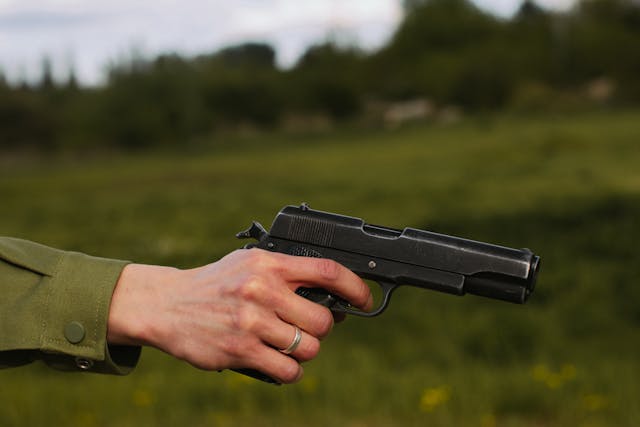
American ordnance developers during WWI cared about one thing above all else: stopping power. The Browning M1917 machine gun, the Chauchat (which U.S. forces were issued by the French and absolutely hated), the various trench shotguns — these were built to kill, not to be user-friendly. Durability mattered. Portability? Sometimes. Ease of maintenance in a flooded trench? Rarely a priority.
Here’s the thing. What proves effective under combat conditions does not automatically translate to peacetime value. Soldiers needed weapons that could survive gas, rain, and constant abuse. Yet civilians usually want different things — lighter weight, lower cost, simpler operation. Several military firearms from this era struggled badly once manufacturers tried selling them to American hunters and sports shooters after the Armistice. The priorities just didn’t overlap enough.
And that disconnect? It stuck around. Remington, Winchester, Colt — all of them spent the next few decades trying to figure out how to sell military-grade designs to people who just wanted to hunt deer. The U.S. firearms industry basically grew up around that problem.
Trench Warfare and the Art of Making Do
Official innovation couldn’t keep pace with trench reality. Not even close. American troops in the Meuse-Argonne were improvising from day one. Somebody figured out you could rig a periscope onto a rifle and shoot without sticking your head up — ugly solution, but it worked. Trench clubs — brutal, medieval-looking things — became common because bayonets were awkward in tight spaces. And grenades? Guys modified those in the field, because the factory versions were designed by someone who’d clearly never seen a German trench up close.
General Pershing had this fixation on rifle marksmanship — he genuinely believed aimed fire could win the war. And honestly? He wasn’t totally off base. The problem was that the reality of World War I weapons on the ground didn’t care much about marksmanship doctrine. Soldiers needed stuff their commanders never thought to issue them. Adaptation wasn’t optional. It was survival.
Chemical Weapons: Innovation Without a Leash
Poison gas represents maybe the clearest example of invention outrunning practical control. American forces at Belleau Wood and along the Meuse faced mustard gas, phosgene, and chlorine — sometimes all in the same week.
Early gas attacks were wildly unpredictable. Wind shifts sent clouds back over the attackers. Delivery methods improved throughout the war, sure, but protective equipment lagged behind. The gas masks issued to the American Expeditionary Forces were, to put it kindly, garbage. They fogged up. They made breathing a chore. Half the time they didn’t even seal right. On the chemical side of the war, World War I weapons outran anyone’s ability to defend against them — and the guys wearing those lousy masks paid for it.
Congress would later point to the horrors of chemical warfare as justification for the postwar Geneva Protocol discussions. The American experience with gas shaped U.S. military doctrine — and public opinion about war itself — for a generation.
Tanks and Aircraft: Big Ideas, Rough Starts
You’ve probably seen photos of early tanks. They look ridiculous now — slow, loud, and about as mechanically reliable as a tractor held together with wire. The Renault FT that American tankers drove (George S. Patton among them, before he got famous) broke down all the time. Inside? Brutal heat, engine fumes thick enough to make you pass out, noise that left crews half-deaf. On paper, tanks were the future. On the battlefield in 1918, there was a coin flip.
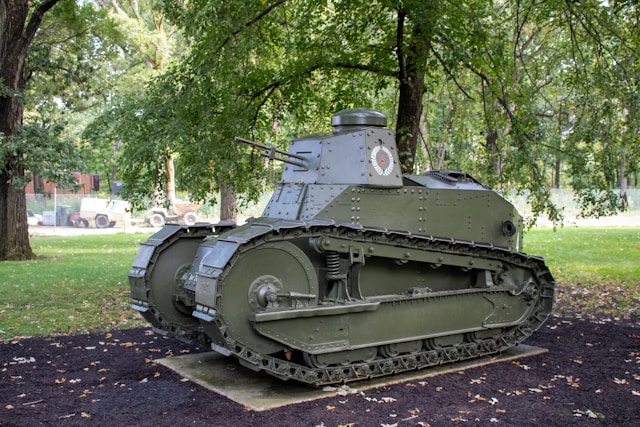
The French-made Renault FT was prone to breaking down, as were most early WWI tanks.
Aircraft told a similar story. America basically had no combat-ready planes when it entered the war — so U.S. pilots flew French SPADs and Nieuports instead. Eddie Rickenbacker scored his 26 kills in a SPAD XIII. French plane, American pilot. American-made World War I weapons in the aviation category were, frankly, embarrassing at first. The Liberty engine showed potential but arrived too late to matter much.
Neither tanks nor planes really worked well enough in 1918 to justify the hype. That took another twenty years. What started as sputtering prototypes on the Western Front eventually became the Shermans and P-51 Mustangs of World War II — but only after a lot of money, a lot of dead ends, and a willingness to admit the first versions were pretty rough.
What the Doughboys Left Behind
The American experience in WWI proved something that military planners still grapple with today. When you push an invention that hard, that fast, stuff breaks. That’s just how it goes. The Browning Automatic Rifle — probably the best infantry weapon America produced for the war — didn’t reach soldiers until the final weeks of fighting. The Liberty engine never reached full production potential before the Armistice. Dozens of promising designs arrived too late or performed too poorly to matter.
But here’s what’s weird — those imperfect World War I weapons ended up changing America more than the polished ones ever could have. They forced the country to build an industrial base capable of mass-producing arms.
They taught a whole generation of engineers and soldiers a lesson nobody wanted to learn: that a weapon only matters if some exhausted, terrified kid can figure out how to use it at 3 a.m. in a shell crater. That trade-off between ambition and reliability didn’t end in 1918. It never does.
Marcus Holloway is an amateur history buff and freelance writer based in Richmond, Virginia. He mostly focuses on American military history from the Civil War through World War II.
External Web Site Notice: This page contains information directly presented from an external source. The terms and conditions of this page may not be the same as those of this website. Click here to read the full disclaimer notice for external web sites. Thank you.