Before new development, the Bywater’s former Navy base played a big role in New Orleans history starting in WWI
Published: 22 March 2026
By Richard Campanella
via the NOLA.com website
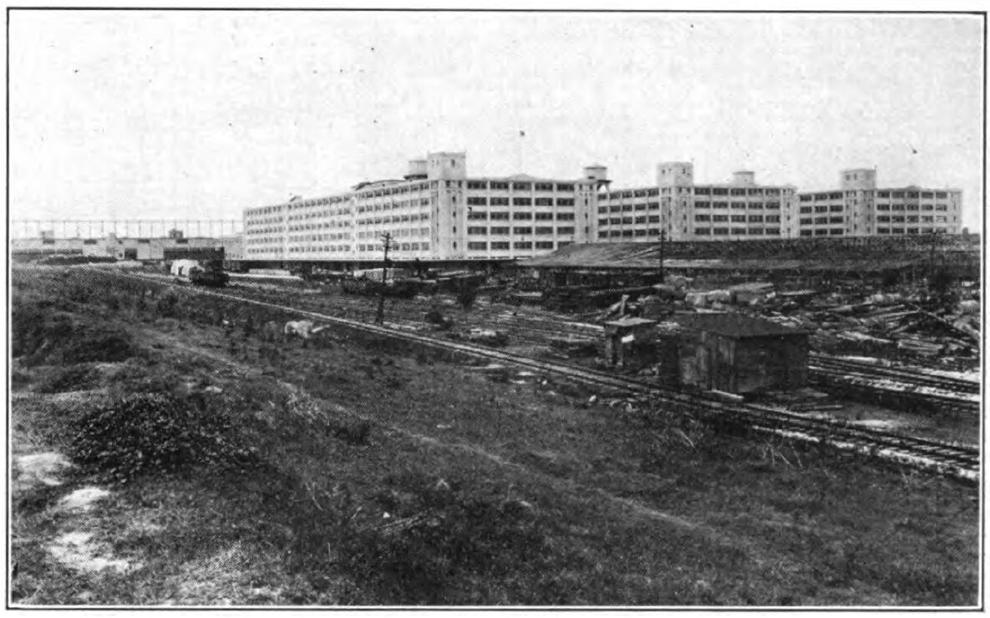
Quartermaster Depot in 1919
The New Orleans Quartermaster Depot in 1919, before workers excavated the Industrial Canal into the land on the left (Provided by Richard Campanella)
The complicated history of this sprawling facility began rather unexpectedly, at the outbreak of what would become World War I.
For over a century, the former Bywater Navy base has been a prominent riverfront landmark, and after 92 years of military use and 14 years of uncertainty, its future is finally coming into focus as a mixed-use housing and retail hub anchored by a tech-innovation center.
A place of many names since its completion in 1919, the former Naval Support Activity East Bank is made up of three 600-by-140-foot, six-story depots plus grounds so large it has two addresses (officially at 4400 Dauphine Street and paralleling 600-700 Poland Avenue) and two waterfronts (facing the Mississippi River and flanking the Industrial Canal).

Mayor Helena Moreno, center, and other officials turn dirt during a groundbreaking ceremony marking the redevelopment of the former Naval Support Activity site in New Orleans on Wednesday, Jan. 21, 2026. (STAFF PHOTO BY BRETT DUKE)
The complicated history of this sprawling facility began rather unexpectedly, at the outbreak of what would become World War I.
In 1914, American military planners quickly learned that, after decades of divesting of inland waterways in favor of railroads, the U.S. lacked the capacity to transport much-needed supplies and material to coastal ports for shipment to allies across the Atlantic. The Mississippi being the biggest of those waterways; federal authorities scrambled to commandeer private barge companies and develop what would become the Federal Barge Line, which soon rejuvenated river commerce.
New Orleans was the premier seaport on the Mississippi, and maritime advocates realized they had an opportunity to do well for the nation as well as the city. In spring 1917, when the U.S. joined the conflict in Europe, the New Orleans Board of Trade sent delegates to Washington to make the case that the Army’s Quartermaster Supply Depot ought to be located at the Port of New Orleans.
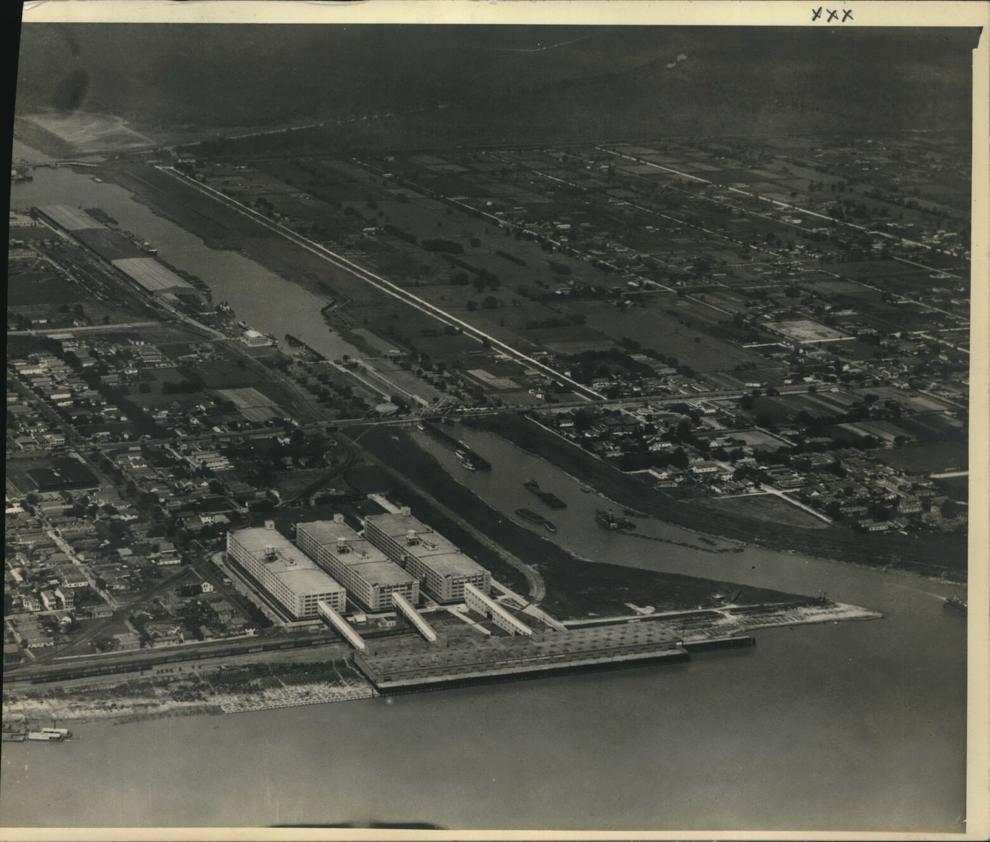
Army Supply Base at New Orleans, Louisiana (NOLA.com | The Times-Picayune)
A quartermaster is the military’s chief logistician, responsible for getting everything needed in the war effort from the homeland to the front with maximum efficiency. A quartermaster supply depot, then, is a strategically situated transshipment, storage and distribution center for military operations.
With its strategic maritime position and network of interior rail lines, New Orleans had a winning argument to secure the federal asset.
“I am pleased to say that we were successful in our efforts,” wrote board president M. J. Sanders, “which means a great deal to the trade of our city.” Brooklyn and Boston landed the other two army depots, putting New Orleans in good company.
Where to site the quartermaster depot? Clearly it had to be along the Mississippi, and all the better if it also accessed the soon-to-be-dug Inner Harbor Navigation (Industrial) Canal. Envisioned for nearly two centuries and finally approved in 1914, this river-to-lake shipping channel aimed to create a protected harbor with stable water stages and ample wharf space for freight, shipbuilding and value-added industry.
Read the entire article on the NOLA.com website.
External Web Site Notice: This page contains information directly presented from an external source. The terms and conditions of this page may not be the same as those of this website. Click here to read the full disclaimer notice for external web sites. Thank you.