World War I and Its Impact on Universities in the US
Published: 26 February 2026
By Helga Kornstone
Special to the Doughboy Foundation website
WWI impact on universities 1
When asking the question “When was World War I?” and immediately answering that the war lasted from 1914 to 1918, we should consider the following important fact. For the United States, 1917 was the decisive year. It was the time when the country officially entered the conflict. The answer to the question “When did WWI start?” often sounds like a date from a textbook. We are talking about July 28, 1914. However, for American universities, the real turning point came later. Namely, after the declaration of war on Germany in April 1917. It was then that campuses transformed from spaces of academic autonomy into mobilization centers for the nation-state. World War I changed the structure and social function of American higher education. Universities were forced to adapt their curricula and restructure their funding. They also rethought their mission in a society at war. The impact of the war was long-lasting. It transformed academic freedom. It also strengthened the connection between science and the state.
Universities on the Eve of and During World War I
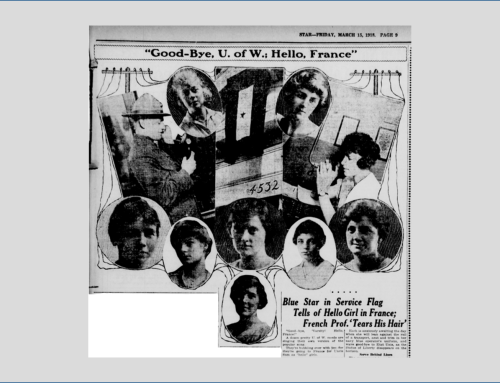
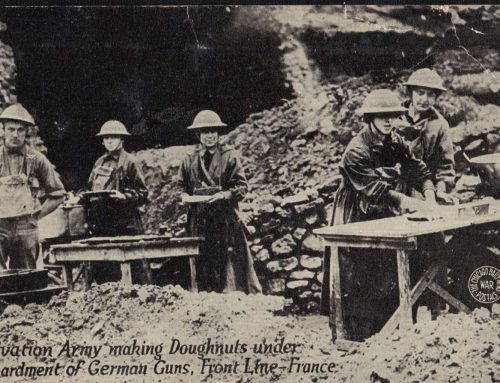
At the beginning of the 20th century, American universities were already undergoing a modernization process. Harvard University and Columbia University were actively developing graduate programs and research laboratories. However, their autonomy was relatively stable. That was before the start of World War I. From the moment the US entered the war, university campuses quickly became military training grounds. In 1918, the Students’ Army Training Corps was created. This program placed military units directly in universities. Students combined academic classes with military training. Humanities and technical faculties began to serve the needs of the state military. This militarization was unprecedented. Morning lectures were accompanied by drill exercises, and scientific laboratories began to work for defense needs. Answering the question “Why did the US enter WWI”, we can say with certainty that it was a decisive step in defense of democracy and a response to Germany’s unrestricted submarine warfare.
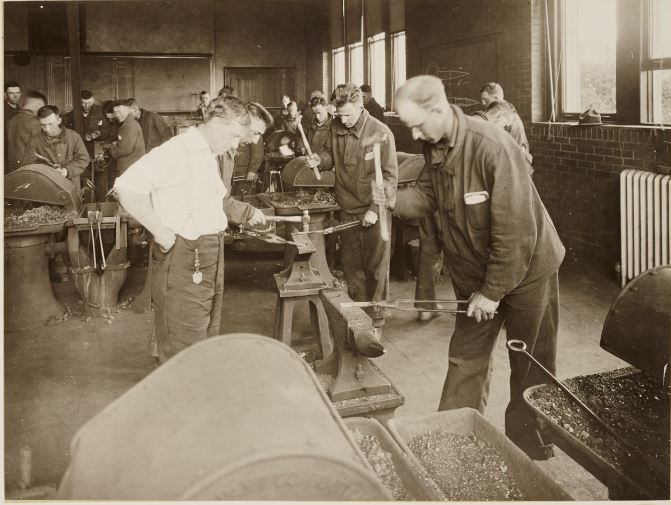
Student Army Training Corps Class at Benson Polytechnic School, Portland, Oregon. Trainees are at work in forging shop, where the students are taught forging, tempering, and hardening.
The pressure of war. Was there academic freedom?
Professors who criticized government policy and opposed the war risked losing their jobs. The American Association of University Professors recorded cases of teachers being dismissed for “disloyal” statements. At the same time, the state propaganda machine was actively operating through the Committee on Public Information. Universities often became platforms for disseminating the official position. Discussions about peace or neutrality were perceived as subversive. It is during such periods that history particularly starkly demonstrates how fragile academic autonomy can be. When universities become part of state mobilization, researchers and students are required not only to be loyal, but also to be intellectually responsible for the accuracy of every argument. Analyzing the events of World War I today also requires in-depth work with verified sources and critical thinking. Modern students researching that period often encounter a large volume of archival materials and complex historiographical debates. This raises the question of the quality of academic support, as not everyone can easily master this topic in order to present it well in writing. However, there is a service called PapersOwl, whose professional authors with proven experience offer online help for those who need expert analysis of sources and work with historical topics. The ability of hiring essay writers for academic work demonstrates that students can collaborate with professionals who have ratings and verified expertise. In the context of World War I research, this is of particular importance, as the accuracy of interpretations and work with facts determine the quality of scientific results.

Science and the state. A new model for research universities
World War I gave impetus to the development of applied research. Chemistry, engineering, and medicine received significant state funding. Research into explosives, anti-poison gas agents, antiseptics, and other areas became a priority. This experience set a precedent for systematic cooperation between the federal government and universities. After the war, the state did not abandon this model. It was during World War I that the next idea took shape. The universities should serve the national interest through science. Some WWI facts testify to the scale of mobilization:
- Thousands of students left their studies to serve in the military;
- Many campuses temporarily reduced their programs;
- University budgets depended on government contracts.
This meant a structural transformation of the higher education funding system.
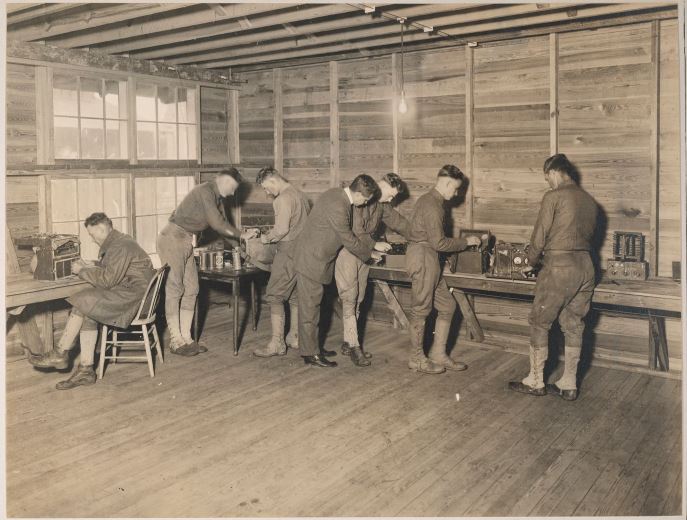
Students Army Training Corps members in the Radio – Electricity laboratory at Tulane University in New Orleans, LA.
Students and Veterans. Memory
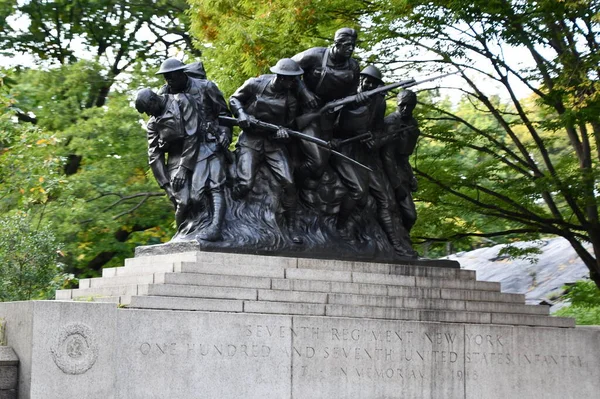
Following demobilization, veterans returned to their studies with new experiences and expectations. There was no large-scale federal program to support veterans’ education, like the subsequent Servicemen’s Readjustment Act of 1944. However, the events of World War I established a historical precedent for future improvements. Memorials on campuses honor fallen students. Universities set up honor boards and held special ceremonies. This solidified the university’s new function as a repository for collective memory and civic identity.
- Memorial Hall at Harvard University;
- World War I Memorial at Princeton University;
- Roll of Honor at Columbia University;
- WWI Memorial Tablets at Yale University.
These examples demonstrate that the memory of World War I is physically embedded in the university space.
Gender Shifts. Political Leadership
During the war, women had more possibilities at universities since a large proportion of men were mobilized. Some coeducational universities boosted the number of female students. This was hardly a great gender revolution, but it was a significant step toward redefining women’s roles in higher education. Anti-German attitude influenced the teaching of German language and culture. At many universities, German courses were reduced or temporarily closed.
Before his political career, President Woodrow Wilson was the president of Princeton University. He understood well the role of universities in shaping national ideology. His administration actively involved intellectuals in government and expert commissions.
After the war ended, universities did not return to their pre-war isolation. The experience of mobilization proved that higher education can be an instrument of geopolitical influence.
Conclusion
World War I was a time of profound transformation for American universities. From military programs on campuses to long-term partnerships between the state and science, the consequences of this period determined the trajectory of higher education for decades to come. US universities were not passive observers, but became active participants in national mobilization and, at the same time, underwent profound internal changes. It was in their classrooms and laboratories that a new model of interaction between science, the state, and society was born, one that defined the 20th century.
 An education historian, Helga studies the transformation of university institutions during periods of global conflict, particularly during World War I. In her works, she analyzes how the events of 1914–1918 changed the structure of American universities and their social role. The author is convinced that the answer to the question “Why did the US enter World War I?” cannot be complete without understanding how this war transformed the higher education system.
External Web Site Notice: This page contains information directly presented from an external source. The terms and conditions of this page may not be the same as those of this website. Click here to read the full disclaimer notice for external web sites. Thank you.